
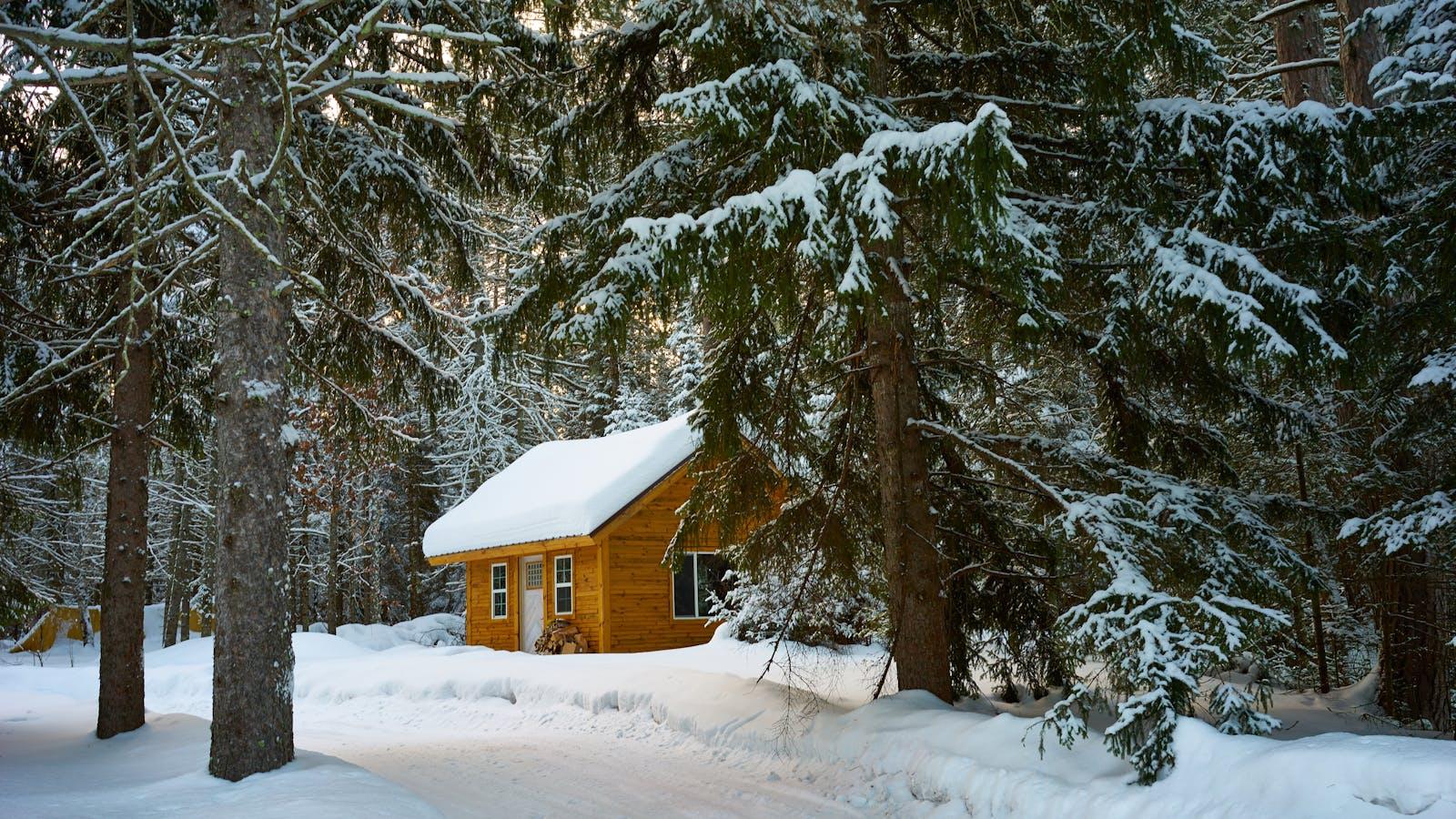
Truckee window replacement is not a Sacramento job moved uphill. At 5,817 feet of elevation in the heart of the Tahoe basin, Truckee windows have to survive ground snow loads of 200 to 300 pounds per square foot, atmospheric pressure differentials nearly triple what we see in Colfax, daily temperature swings that crack low-quality sealants, and the strictest residential energy code in California — Title 24 climate zone 16. A window that performs flawlessly in Auburn at 1,300 feet will fog up, distort, or fail outright within 8 to 12 years on a Donner Lake cabin or a Northstar second home.
I'm John, owner of Colfax Glass, and we've been replacing windows across the Sierra Foothills and into the Tahoe basin for over 25 years. The patterns we see in Truckee, Tahoe Donner, Glenshire, and Donner Summit are consistent: builder-grade sea-level IGUs failing prematurely, snow drift loads cracking large picture windows, and homeowners realizing too late that their Title 24 permit application requires NFRC-certified U-factors of 0.30 or lower because they're in zone 16.
This guide covers what actually works for Truckee window replacement — the altitude-compensated insulated glass units, the snow-load-rated frames and glass thicknesses, the Title 24 code triggers homeowners need to know before they pull a permit, and when triple pane glass earns back its premium in the Sierra. If you're planning a window project in the Truckee or North Tahoe area, this is the field reference I wish more contractors handed out before quoting.
TL;DR: Truckee sits in California Title 24 climate zone 16 — the coldest zone in the state — which requires window U-factors of 0.30 or lower for replacement permits. At 5,817 feet, you also need altitude-compensated IGUs (capillary tubes or pre-equalized units) to prevent premature seal failure, and snow-load-rated structural glazing for picture windows facing roof drift zones. Expect 30 to 45 percent shorter window life on standard sea-level units, and budget for triple pane on north and east elevations where it pays back in 7 to 10 years.
Why Windows Fail Faster in Truckee Than Anywhere Else in the Region
Truckee combines four environmental stressors that no other part of our service area sees in the same intensity. Each one alone shortens IGU life. Together they compound, and a window that should last 20 years often fails in 10 to 12.
The first is altitude. At 5,817 feet, atmospheric pressure is about 12.0 PSI compared to 14.7 PSI at sea level. A standard insulated glass unit manufactured at a factory near sea level arrives in Truckee with roughly 2.7 PSI of internal pressure pushing outward against the seal — every minute of every day for the life of the window. On a 24-by-48-inch window, that's over 3,700 pounds of sustained outward force. The math is unforgiving and the seal is the part that fails first.
The second is the snow load itself. The Town of Truckee adopts the California Building Code with a ground snow load (Pg) of 200 to 235 PSF depending on neighborhood elevation, with adjusted design loads commonly hitting 150 to 200 PSF on roofs and adjacent assemblies. When snow drifts off a roof and bears down on a window head or sidelight, that load transfers to the glazing. Standard residential glass thicknesses (3 mm or 1/8 inch) cannot handle drift loading on larger spans.
The third is daily temperature cycling. Truckee winters routinely see 30 to 40 degree F swings between sunrise lows of 5 to 15 degrees and afternoon highs of 35 to 50. Summer brings 40 to 55 degree daily ranges. Each cycle expands and contracts the glass, the spacer bar, and the sealant at different rates, fatiguing the bond between them. Over 20 years that's roughly 7,300 thermal cycles, each one a small mechanical stress on the same edge seal already loaded by pressure differential.
The fourth is UV intensity. UV radiation increases roughly 10 to 12 percent per 3,280 feet of elevation gain (World Health Organization-index)). At Truckee's elevation, UV exposure is about 18 to 20 percent higher than Sacramento. That extra UV breaks down polysulfide and silicone sealants faster, especially on south and west exposures where peak summer glass surface temperatures can exceed 150 degrees F.
| Stress Factor | Sea Level (Sacramento) | Colfax (2,422 ft) | Truckee (5,817 ft) | Effect on IGU |
|---|---|---|---|---|
| Atmospheric pressure | 14.7 PSI | 13.5 PSI | 12.0 PSI | Outward seal load 0 / 1.2 / 2.7 PSI |
| UV intensity (% above SF coast) | Baseline | +8% | +18-20% | Sealant degradation rate |
| Daily temp swing (winter) | 10-15°F | 30-35°F | 30-40°F | Thermal fatigue cycles |
| Ground snow load (Pg) | 0 PSF | 30-50 PSF | 200-235 PSF | Glazing load on heads/sills |
| Typical IGU seal life | 20-25 yrs | 12-18 yrs | 8-14 yrs (standard) / 15-20 yrs (altitude-rated) | Time to fogging / failure |
California Title 24 Climate Zone 16: The Code Tahoe Homeowners Have to Hit
Truckee falls in California Title 24 building energy efficiency standards climate zone 16 — the highest-elevation, coldest residential zone in the state. The 2022 Title 24 standards (in effect through the 2025 cycle) and the 2025 update both impose stricter window performance requirements in zone 16 than anywhere else in California (California Energy Commission).
For replacement windows in zone 16, the prescriptive U-factor maximum is 0.30 and the maximum solar heat gain coefficient (SHGC) is 0.23 for retrofits where the existing fenestration is being changed. New construction in zone 16 has even tighter targets and pairs window specs with mandatory performance compliance modeling. The U-factor of 0.30 effectively eliminates single-pane, most older double-pane builder-grade units, and many low-cost vinyl replacement windows from compliance.
The Town of Truckee Building Division enforces Title 24 at permit issuance and often at final inspection. For full window replacement (frame and sash) and for like-for-like glass-only IGU swaps in the same opening, the permit triggers vary. Like-for-like glass replacement that does not alter the rough opening typically does not require a permit, but full-frame replacement, opening changes, structural modifications, or any work in a WUI fire zone with Chapter 7A requirements does. Truckee is mostly within state-mapped Wildland-Urban Interface zones, so almost every full window replacement here also has to meet ignition-resistant assembly requirements alongside Title 24.
The practical effect is that any window product specified for Truckee replacement has to carry an NFRC label showing U-factor 0.30 or lower for prescriptive compliance. NFRC labels are non-negotiable — building inspectors check them, and the contractor needs to keep them on the windows until final inspection.
Pro Tip: Before you pay any deposit on Truckee windows, verify two label numbers on the manufacturer cut sheet: NFRC U-factor must be 0.30 or lower, and SHGC should be 0.23 or lower for prescriptive Title 24 zone 16 compliance. If a contractor quotes 'Energy Star' without showing the actual NFRC numbers, you cannot pull a permit. Energy Star is a federal program with different thresholds than California's Title 24. Demand the NFRC sticker numbers in writing.
Snow Load on Glazing: What 200+ PSF Actually Means
Snow load on a Truckee roof transfers in surprising ways to windows below. Drifting snow from sloped roofs piles against window heads, sidelights, and clerestory windows. Sliding snow from metal roofs (common in the basin) impacts windows directly with kinetic load on top of static weight. Picture windows facing a north exposure with a roof drift zone above can see 100 to 200 PSF of point loading concentrated on the head jamb and upper glazing.
Residential glazing standards under ASTM E1300 and the International Residential Code calculate glass thickness based on wind load and design pressure. In Truckee, snow drift load needs to be added to that calculation. A standard 1/8-inch (3 mm) annealed glass pane spans only about 12 to 18 inches before bending stress becomes a factor under heavy snow load. For Truckee picture windows over 4 feet wide, 3/16-inch (5 mm) glass minimum is common, and many high-exposure installations call for 1/4-inch (6 mm) tempered or laminated glass.
Laminated glass is increasingly the right answer for snow country picture windows. The interlayer (typically PVB or SentryGlas) holds the glass together if it cracks under impact load — a snow chunk falling from a roof at 30 mph onto a picture window can shatter annealed glass entirely, but laminated glass cracks and stays in the frame. For homes near roof valleys or below long sliding-snow runs, laminated safety glass is the spec to insist on.
Frame strength matters too. Snow load on a window head transfers to the frame and through to the rough opening. Vinyl frames can deflect under sustained heavy load — manufacturers rate their windows for design pressure (DP) ratings, and Truckee installations should specify DP-50 or higher for typical residential, with DP-65 or DP-80 for picture windows in high-load zones. Fiberglass and aluminum-clad wood frames generally outperform vinyl at high DP ratings.
- Picture windows over 4 feet wide in drift zones: minimum 3/16-inch glass, prefer 1/4-inch laminated for impact resistance
- Sidelights below sliding-snow roof runs: laminated glass mandatory, frame DP-65 or higher
- Clerestory and high-elevation windows: tempered or tempered laminated, with reinforced head jambs
- Standard double-hung and casement windows in non-drift zones: standard 1/8-inch double pane is adequate if NFRC certified for zone 16
- Skylights in Truckee: laminated glass required by code, with snow-load-rated frame from manufacturers like Velux Snow Country series
- Egress bedroom windows: must meet California egress requirements with snow loading factored into operability — heavy drift can prevent emergency exit if frame deflects
Altitude-Compensated IGUs: Why They're Mandatory at Truckee Elevation
An insulated glass unit (IGU) is a sealed pressure vessel. Two panes of glass are bonded to a spacer bar, the cavity is filled with argon or krypton gas, and the assembly is hermetically sealed at the manufacturing facility's atmospheric pressure. When that unit is installed at a different elevation, the internal pressure no longer matches external pressure, and the difference becomes a constant mechanical load on the seal.
At Truckee's 5,817 feet, the pressure differential against a sea-level IGU is the largest we encounter in California outside of Mammoth and a few isolated peaks. The standard solution is altitude compensation, which manufacturers handle three ways. Capillary tubes are small open tubes built into the IGU spacer that allow pressure equalization during transport from factory to jobsite. At installation, the tube is crimped shut, locking in the correct pressure for that elevation. Cardinal Glass, Andersen, and Milgard all use this approach for high-elevation orders (Cardinal Glass).
Pre-equalized units are sealed at the factory with a calculated internal pressure matched to the destination elevation. The IGU may look slightly concave when it leaves the factory, but it arrives flat at the installation site. AGNORA's Ascent IGU uses this method (AGNORA). Pre-equalized units have one significant advantage over capillary tubes: they don't lose any argon during transport, so the gas fill stays at full concentration for the life of the seal.
The third approach is regional manufacturing — ordering from a glass plant at a similar elevation to your installation site. This is harder to arrange but minimizes pressure differential from the start. For Truckee, regional manufacturing options are limited, so capillary tubes or pre-equalized IGUs are the practical choice.
Without altitude compensation, expect IGU seal life of 8 to 14 years on the standard sea-level units that builders often install. With altitude compensation, expect 15 to 20 years — close to what a sea-level home would see. The cost difference is typically $30 to $80 per window for the altitude-compensated upgrade. Over a 50-window home replacement, that's $1,500 to $4,000 in upcharge to extend window life by 7 to 12 years. The math always works in favor of compensation at Truckee elevation.
Pro Tip: Ask your installer to write the altitude compensation method into the contract. The phrase to look for is 'IGU manufactured with capillary tube altitude compensation, crimped at installation' or 'pre-equalized for 5,800 feet installation altitude.' If the contractor cannot answer the question or says it does not matter, find a different contractor. We've seen too many Truckee homes where a $40 spec decision shaved a decade off window life.
Do Truckee Homes Need Triple Pane Windows?
Triple pane is one of the most common questions we get from Tahoe basin homeowners, and the honest answer depends on the window's orientation, the room behind it, and how often the home is occupied in winter.
For full-time residences with north or east exposures in Truckee — Tahoe Donner, Glenshire, Donner Lake, or any home that sees extended days below freezing — triple pane glass earns back its premium in 7 to 10 years through reduced heating costs and better interior comfort. The math: a double pane Low-E unit at U-factor 0.28 versus a triple pane Low-E at U-factor 0.18 saves roughly 35 percent of heat loss through that window assembly. On a 4,000 square foot home with 30 large windows, that's commonly $400 to $800 per year in heating bill reduction in zone 16.
For south and west exposures, the calculus shifts. Solar heat gain through south-facing glass on sunny winter days actually warms the home — passive solar gain that triple pane partially blocks. For these orientations, double pane Low-E with a higher SHGC (0.40 or above where Title 24 allows) often outperforms triple pane in terms of net heating energy. The exception is large picture windows facing prevailing winter winds (typically southwest in the basin), where the U-factor benefit of triple pane wins.
For part-time vacation homes in Truckee, the payback period stretches longer because you're not heating the home as many hours per year. A vacation home occupied 60 to 80 nights per year may need 12 to 15 years to pay back triple pane. If you're not staying in the home long-term, double pane Low-E with altitude compensation is often the smarter spec.
Noise control is the other reason to consider triple pane. Truckee homes near I-80, near downtown commercial areas, or near snow-clearing routes get substantial nighttime noise. Triple pane reduces sound transmission by an additional 3 to 5 dB over double pane — meaningful for bedrooms. For more on sound isolation, see our soundproof window guide.
Frame Materials That Survive Truckee Winters
Frame material matters more in Truckee than anywhere else we work. The combination of moisture, freeze-thaw cycling, snow contact, and UV intensity destroys low-quality frames in 8 to 12 years. Choosing the right material upfront is one of the highest-leverage decisions in a Truckee window project.
Fiberglass is our top recommendation for Truckee. Pultruded fiberglass frames have a coefficient of thermal expansion almost identical to glass itself, so the frame and glass move together through temperature swings — virtually no thermal fatigue at the seal. Fiberglass is dimensionally stable from minus 40 to over 180 degrees F, holds paint and stain finishes for 20+ years, and resists moisture damage indefinitely. Brands like Marvin Ultimate, Pella Impervia, and Milgard Ultra C650 are proven in alpine installations.
Aluminum-clad wood is a strong second choice for the Tahoe basin. The exterior aluminum cladding handles snow, UV, and moisture, while interior wood provides the warm aesthetic that fits mountain home design. Andersen 400 series, Marvin Signature Ultimate, and Pella Reserve all perform well in Truckee. The drawback is cost — these run 25 to 50 percent more than fiberglass and require occasional interior wood maintenance.
Vinyl is risky in Truckee. Vinyl has a coefficient of thermal expansion roughly 5 times that of glass, which means major thermal cycling stress at the IGU seal. Vinyl also gets brittle below freezing — at 0 degrees F, vinyl frames can crack under impact loads from sliding snow or ice. Some premium vinyl brands (Milgard Tuscany series, Sunrise Restorations) have additives that improve cold-weather performance, but lower-cost vinyl windows fail consistently in the basin within 10 to 15 years.
Wood-only frames (no aluminum cladding) require constant maintenance in Truckee. Snow contact and ice melt destroy paint and stain finishes within 3 to 5 years on south and west exposures. Unless you're committed to refinishing every other year, skip wood-only for Truckee.
For a deeper comparison, see our window frame materials guide for the Sierra Foothills.
| Frame Material | Truckee Performance | Lifespan | Cost vs Vinyl | Best For |
|---|---|---|---|---|
| Pultruded fiberglass | Excellent — matches glass thermal expansion | 30-40 years | +30-50% | Most Truckee installations, all exposures |
| Aluminum-clad wood | Excellent — premium aesthetic, durable cladding | 30-40 years | +50-100% | High-end mountain homes, custom builds |
| Premium vinyl (cold-rated) | Good — if specifically rated for cold climates | 15-25 years | Baseline | Budget projects with limited exposure |
| Standard vinyl | Poor — brittle in cold, high thermal expansion | 10-15 years | -10-20% | Avoid for Truckee installations |
| Wood (uncladded) | Poor without constant maintenance | 10-20 years (with maintenance) | +20-40% | Historic restoration only |
| Aluminum (thermally broken) | Fair — needs thermal break or fails Title 24 | 30+ years | +10-30% | Commercial or modernist designs |
Truckee Window Replacement Permit Process
The Town of Truckee Building Division handles permits for residential window work within town limits. Areas in unincorporated Nevada County (Donner Summit, parts of Hirschdale) go through Nevada County Building Department. Both apply Title 24 climate zone 16 requirements, California Building Code structural provisions, and state WUI ignition-resistant assembly standards.
Like-for-like window replacement that does not change the rough opening, does not alter structural elements, and is in the same plane as the existing window typically does not require a permit in Truckee. This includes IGU-only swaps where the frame stays in place — what we call glass-only replacement. Always verify with the building department before assuming, because exceptions exist for WUI zones and historic districts.
Full frame replacement (removing the entire window unit) requires a permit in nearly all cases. The application requires NFRC labels showing zone 16 compliance (U-factor 0.30 or lower, SHGC 0.23 or lower for prescriptive path), product cut sheets, and for WUI areas, documentation of ignition-resistant assembly compliance per CBC Chapter 7A. Many Truckee neighborhoods are in state-mapped Very High Fire Hazard Severity Zones, which trigger additional requirements like tempered glass, dual-pane assemblies meeting fire ratings, and shutter or screen requirements on certain elevations.
New openings (cutting a new window into a wall) require structural review and engineering. Snow load calculations have to be redone for the wall section, and headers and king studs have to be sized accordingly. This is where Truckee diverges sharply from valley work — the structural engineering for a new window opening in a Truckee home is non-trivial because of snow load.
For reference on the broader California permit framework, see our California window replacement permit guide and the Title 24 compliance guide for Placer County, which uses the same framework as Nevada County and Truckee.
Permit fees in Truckee for window replacement typically run $200 to $600 depending on the number of windows and whether structural review is required. Plan for 2 to 4 weeks of permit processing during peak season (late spring through summer).
- Like-for-like IGU replacement: usually no permit required, but verify with Town of Truckee Building Division
- Full frame replacement, same opening: permit required, Title 24 NFRC labels mandatory, WUI compliance for fire zones
- New window openings: permit + structural engineering + snow load calculations required
- Egress modifications (bedroom windows): permit required, must meet California egress dimension and operability standards
- Skylights: always require permit in Truckee due to roof penetration and snow load implications
- Historic district properties (parts of downtown Truckee): additional design review board approval required
Cost Expectations for Truckee Window Replacement
Truckee window replacement costs run 20 to 40 percent higher than equivalent work in Sacramento or Auburn for several reasons. The product specs are higher (altitude-compensated IGUs, higher DP-rated frames, snow-load-rated glass, NFRC zone 16 compliance). Labor takes longer in winter due to weather and access. Material delivery into the basin adds freight. And many Truckee jobs require WUI Chapter 7A compliance on top of standard installation work.
For a typical full-frame window replacement in Truckee on a single mid-size window (3-by-5 feet), expect $900 to $1,800 installed for a quality fiberglass or aluminum-clad wood unit with altitude-compensated double pane Low-E glass. Picture windows over 5 feet wide commonly run $1,800 to $4,500 each due to the larger glass, higher DP rating, and frequent need for laminated glass.
Whole-home replacement in Truckee for a 2,500 to 4,000 square foot home with 25 to 40 windows typically runs $30,000 to $90,000 depending on product tier, window count, and complexity. Triple pane upgrade adds 15 to 25 percent. WUI Chapter 7A compliance for fire-rated assemblies adds another 5 to 15 percent. Custom shapes (round-tops, trapezoids common in mountain modern designs) add $300 to $1,200 per opening.
For a broader cost framework, see our California window replacement cost guide. Truckee jobs typically land at the upper end of those ranges, with the alpine premium baked in.
IGU-only replacement (keeping the frame, swapping the sealed glass unit) runs $350 to $900 per window in Truckee versus $250 to $700 in lower elevations — the altitude-compensated IGU costs more, and access in winter can complicate the work. For homes where frames are sound but seals have failed, IGU swap is still the most cost-effective path. See foggy double pane window repair for the decision framework.
Pro Tip: When you get bids for Truckee window replacement, compare apples to apples by asking each contractor for the NFRC U-factor and SHGC numbers, the IGU altitude compensation method, the frame material and DP rating, and whether WUI Chapter 7A compliance is included or excluded. A bid that's $5,000 cheaper than the others usually means one of those line items has been downgraded or omitted. We've audited too many Tahoe basin bids that quietly substituted standard sea-level IGUs to hit a price point.
Tahoe Basin Neighborhoods: What We See in the Field
Different parts of the Truckee and North Tahoe area present different challenges. Knowing the neighborhood helps us right-size the spec on the first call.
Tahoe Donner sits at 6,400 to 7,500 feet — even higher than downtown Truckee. Snow loads here can hit 250 PSF in heavy years. We see frequent IGU pillowing on south-facing picture windows, and the higher elevation makes altitude compensation absolutely mandatory. Heating costs are substantial, so triple pane on north and east elevations almost always pencils out.
Glenshire is a more moderate 5,800 to 6,200 feet. Snow loads are intense but slightly lower than Tahoe Donner. Many homes here are full-time residences, so triple pane payback is faster. The east-facing canyon location creates strong morning sun on east windows, but cold afternoons and evenings make U-factor critical on west exposures.
Donner Lake at the lake elevation of 5,940 feet sees lake-effect humidity that compounds with temperature swings to drive heavy condensation cycles. We frequently see seal failure on lake-facing windows within 8 to 12 years on standard IGUs. Altitude compensation plus warm-edge spacers are non-negotiable here.
Northstar and Sugar Bowl second homes are typically in the 6,500 to 7,000 foot range with intense snow loading. These homes are often part-time, so the IGU stress mechanisms still operate even when the home is unoccupied — and unattended fogging or pillowing can go undetected for months. We recommend annual fall inspections by an installer for all Northstar second homes.
Downtown Truckee and the river district at 5,800 feet have a mix of historic and modern construction. Historic district properties have additional design review requirements that can slow permitting and limit product choices. For older Truckee homes, IGU-only swaps in original frames (where structurally sound) preserve historic character while restoring thermal performance.
Donner Summit at 7,000+ feet is the most extreme installation environment in our service area. Standard residential windows simply do not last here. Specifications need to be commercial-grade or alpine-rated, with DP-65 minimum, laminated glass on picture windows, and pre-equalized IGUs.
When to Replace vs Repair in Truckee
Not every failed window in Truckee needs full replacement. The decision framework comes down to frame condition, IGU age, and the number of affected windows.
If the frame is structurally sound — no rot, no warping, no soft spots, weatherstripping in usable condition — and only the IGU has fogged, an IGU-only swap restores thermal performance at 40 to 60 percent of full replacement cost. We can swap a Truckee IGU in 1 to 2 hours per window once we have the new unit on site. The new IGU should be altitude-compensated, dual-seal construction, with warm-edge spacers and at least one Low-E surface.
If the frame shows damage from snow contact, ice melt chemicals, or sustained moisture exposure, full frame replacement is the right call. Common signs include corner separation on vinyl frames, paint failure on wood frames, or visible aluminum corrosion on older clad wood. At that point, the frame is past its service life and replacing only the IGU buys you a few years before the frame forces another project anyway.
If 8 or more windows in the same age cohort have failed, full whole-home replacement often makes sense even if some frames are still serviceable. Volume pricing brings the per-window cost down, you get a fresh manufacturer warranty across the entire home, and you can upgrade the entire envelope to current Title 24 zone 16 specs in one project rather than incremental work over years.
For windows older than 25 years in Truckee, we usually recommend full replacement regardless of current visible condition. Hardware, weatherstripping, balance springs, and frame joints have all aged together, and the next failure is rarely far behind. Modern altitude-compensated triple pane Low-E units also dramatically outperform anything from before about 2005, so the energy upgrade alone often justifies the project.
For more on the repair vs replace framework, see our foggy double pane window repair guide and signs your windows need replacing.
Energy Rebates and Tax Credits for Truckee Window Projects
Truckee homeowners replacing windows in 2026 have access to several stacking incentives that can offset 20 to 40 percent of project costs. Knowing these before you bid out the project lets you choose the spec that maximizes the rebate.
The federal Section 25C Energy Efficient Home Improvement Credit covers 30 percent of qualifying window costs up to $600 per year for windows that meet Energy Star Most Efficient criteria — typically U-factor 0.20 or lower in the northern climate zone, which includes Truckee. For a $30,000 window project, that's a $600 federal tax credit if you stage the project across two tax years to claim $1,200 total. See our federal tax credit windows guide for the full eligibility framework.
Liberty Utilities (the electric utility for most of the Truckee area) offers rebates for energy-efficient window replacement on electric-heated homes. Rebate amounts and eligibility shift annually, so check Liberty Utilities current programs at libertyenergyandwater.com. Southwest Gas (natural gas) offers similar programs for gas-heated homes.
California's Energy Upgrade California program and various PACE financing options can fund whole-home efficiency projects including windows, with payments spread over the property tax bill. PACE has tradeoffs (it stays with the property, can complicate refinancing) but the financing structure can make a large window project workable when out-of-pocket cash is the constraint.
For homes in WUI fire zones, California Wildfire Mitigation Program and CAL FIRE Forest Health grants sometimes cover hardening upgrades that include fire-rated window assemblies. See our California wildfire home hardening grants guide for current program status.
What Colfax Glass Recommends for Truckee Window Replacement
After 25 years installing windows in the Sierra Foothills and into the Tahoe basin, here's the spec we recommend by default for Truckee replacement projects.
For full frame replacement: pultruded fiberglass or aluminum-clad wood frames with DP-50 minimum (DP-65 for picture windows). Double pane Low-E glass with capillary tube or pre-equalized altitude compensation. Warm-edge spacers (stainless steel or composite). NFRC U-factor 0.28 or lower (well under the 0.30 zone 16 minimum to allow for prescriptive flexibility). SHGC 0.20 to 0.23 depending on orientation. Argon gas fill standard.
For north and east exposures on full-time residences: upgrade to triple pane Low-E with U-factor 0.18 to 0.20. The payback in zone 16 heating cost reduction is typically 7 to 10 years, and the comfort improvement is immediate.
For large picture windows in roof drift zones or below sliding-snow exposures: 1/4-inch laminated glass minimum, DP-65 frame, structural review of head and sill if span exceeds 5 feet. This is the spec that survives Truckee winters.
For IGU-only replacement: altitude-compensated dual-seal IGU, warm-edge spacer, Low-E coating on surface 2 or 3, argon fill. Insist on the altitude compensation method in writing.
For any Truckee project: confirm Title 24 NFRC label requirements, WUI Chapter 7A compliance if in a fire zone, and snow load engineering if any new openings or modifications. Pull permits when required, and keep NFRC labels on the windows until final inspection.
If you're planning Truckee or North Tahoe window replacement, we offer free in-home assessments throughout the basin. We'll measure existing openings, evaluate frames for repair vs replacement, walk you through Title 24 and WUI implications, and give you honest pricing for the spec your home actually needs. We've been the local glazier for the foothills and basin for more than two decades — we've seen what fails and what lasts, and we'll point you toward the spec that holds up.
Ready to plan a Truckee window replacement project that actually survives Sierra winters? Colfax Glass offers free in-home assessments for Truckee, Tahoe Donner, Glenshire, Donner Lake, and the broader Tahoe basin. We'll evaluate your existing windows, model Title 24 zone 16 compliance, recommend the right altitude-compensated and snow-load-rated spec for each opening, and provide transparent pricing with no high-pressure tactics. Call us or request an assessment through our website.