
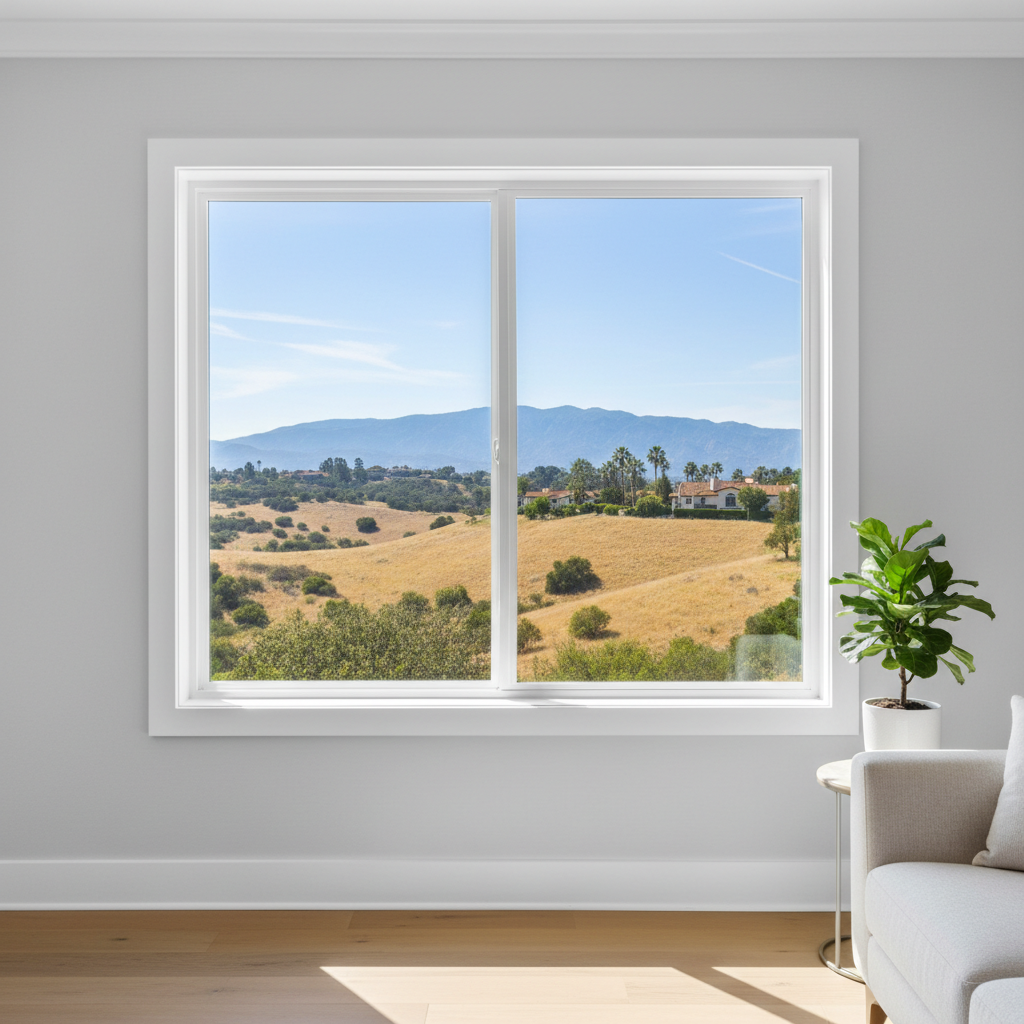
Sierra Foothills homes need dual-pane Low-E windows. That is the short answer. The climate here, from Loomis and Rocklin at the valley edge up through Colfax, Auburn, Grass Valley, Nevada City, and Foresthill, swings from triple-digit summer heat to hard freezes in winter. Single-pane windows and older dual-pane units without Low-E coatings simply cannot handle that range without leaking energy and making rooms uncomfortable. John, owner of Colfax Glass at 226 N Auburn St in Colfax, has been installing and replacing windows across the Sierra Foothills for over 25 years. The questions he hears most often are always the same: what type of window do I actually need, how much will it cost, and do I need a permit.
Colfax Glass serves homeowners throughout the foothill corridor, including Colfax, Auburn, Grass Valley, Nevada City, Foresthill, Loomis, Rocklin, Roseville, and Sacramento. John's field experience covers everything from historic craftsman homes in Auburn's Old Town to modern construction at higher elevations near Foresthill, plus coastal properties along the Oregon and Northern California coast. That range of climates and building types means the advice in this guide reflects real-world conditions, not just manufacturer spec sheets.
This guide covers every stage of the window replacement decision: how to know when replacement is the right call, which frame material and glass package suits your elevation and climate zone, what the project will actually cost, and how to find a contractor you can trust. Read through the whole thing before you call anyone for a quote.
The single most important thing a foothill homeowner should know: not all dual-pane windows perform the same. A dual-pane window without a Low-E coating can still lose nearly as much heat as a quality single-pane unit. Always confirm the window you are buying includes a Low-E coating rated for your climate zone before signing anything.
How Do You Know It's Time to Replace Your Windows?
Fogging between the glass panes is the clearest sign a window has failed and needs replacement. When you see condensation or a hazy film trapped inside a dual-pane unit, the seal between the panes has broken down and the insulating gas has escaped. That window is now performing like a single-pane unit regardless of what the label originally said. Seal failure is the number one reason foothill homeowners call Colfax Glass, and it is particularly common in foothill homes because the daily temperature swings here put far more stress on window seals than in the Sacramento Valley below.
Drafts are the second most common complaint. If you can feel cold air coming through a closed window on a winter night or hot air pushing in during a July afternoon, the weatherstripping has failed, the frame has warped, or the original installation was never properly air-sealed. Higher elevations around Foresthill and Grass Valley see this problem more often due to wind exposure and colder winters. Difficulty opening or closing a window, especially in double-hung or casement styles, usually means the frame has racked or swelled from moisture intrusion. Left alone, frame damage accelerates.
Energy bills tell the story too. If your HVAC system is running harder than it used to and nothing else has changed, windows are a logical place to look. A visual inspection of the exterior frame for rot, peeling paint, or visible gaps around the frame edge can confirm what your utility bill is suggesting.
Seal failure in dual-pane units is the number one reason foothill homeowners contact Colfax Glass. Once the seal is gone, the insulating gas between the panes escapes and the window loses most of its thermal performance. Resealing is rarely worth pursuing; replacement is almost always the right call.
- Condensation or fogging trapped between the panes of a dual-pane unit
- Cold or hot drafts noticeable around the window frame or sash with the window closed
- Difficulty opening, closing, or locking the window
- Visible rot, cracking, or warping on wood frames, especially on the exterior side
- Paint peeling repeatedly on or directly below the window frame interior
- Noticeably higher heating or cooling bills without a clear alternative cause
- Outside noise levels that seem louder than they used to be through the glass
Retrofit vs. Full-Frame Replacement: Which Do You Need?
A retrofit (also called an insert replacement) keeps the existing window frame in place and slides a new window unit into the existing opening. Full-frame replacement removes everything down to the rough framing and installs a completely new frame and window. Retrofit is faster, less disruptive, and less expensive. Full-frame is necessary when the existing frame is damaged, when you want to change the window size or style, or when the original installation was poor enough that air sealing needs to be redone from scratch.
In John's experience across foothill homes, roughly 60 to 70 percent of standard replacement jobs are retrofit candidates. Homes built in the 1980s and 1990s with aluminum or wood frames that are structurally intact but thermally outdated are usually good retrofit candidates. Older homes in Auburn's historic district or Nevada City, homes that have had water intrusion around window frames, and any home where the exterior trim shows significant damage usually need full-frame work. The cost difference is real, but paying for full-frame on a damaged frame beats patching around a problem that will resurface.
When getting quotes, ask each contractor to specify which method they are recommending and why. A contractor who recommends retrofit without inspecting the exterior frame condition in person is guessing, not assessing.
| Factor | Retrofit (Insert) | Full-Frame Replacement |
|---|---|---|
| Best for | Sound existing frame, standard size opening | Damaged frame, size change, poor original install |
| Frame condition required | Structurally intact, no rot or significant warping | Any condition; old frame is completely removed |
| Cost range (per window) | $400 - $800 installed | $700 - $1,400 installed |
| Installation time | 30 - 60 minutes per window | 1 - 3 hours per window |
| Disruption level | Low; interior work only in most cases | Moderate to high; exterior trim and siding disturbed |
Window Frame Materials: Vinyl, Fiberglass, and Wood for Foothill Climates
The frame material you choose matters more in the Sierra Foothills than in most of California. The temperature swings here expand and contract frame materials on a daily cycle, and at higher elevations that stress is more severe. Vinyl is the most popular choice across the foothill region from Loomis and Rocklin at the valley edge up through Colfax and Auburn, roughly 1,000 to 3,500 feet in elevation. Modern vinyl frames are well-engineered, low-maintenance, and thermally efficient. They handle the lower-elevation foothill climate well and cost significantly less than fiberglass or wood.
Fiberglass frames are the better choice at higher elevations, particularly for homes in Foresthill, Grass Valley, and Nevada City where winter temperatures drop well below freezing and summer sun is more intense. Fiberglass expands and contracts at nearly the same rate as the glass itself, which means less stress on the seals over time. John recommends fiberglass most often for clients above 2,500 feet or for homes on exposed ridgelines regardless of elevation. The upfront cost is higher, typically 30 to 50 percent more than comparable vinyl, but the long-term durability at those elevations justifies the premium.
Wood-clad frames, where the exterior is aluminum or fiberglass and the interior is wood, are the right call for historic homes in Auburn's Old Town or Nevada City where local design standards or personal preference favor a wood interior look. Pure wood exterior frames are not generally recommended for foothill climates given the moisture cycling and maintenance demands. Wood-clad gives you the aesthetic without the ongoing upkeep vulnerability.
John recommends fiberglass frames most often for homes above 2,500 feet in the foothills. At those elevations, the daily temperature swings are severe enough that vinyl can stress seals over time. Fiberglass costs more upfront, but John has seen far fewer callbacks on fiberglass installs at high-elevation properties in the Foresthill and Grass Valley areas.
Glass Options That Actually Matter for California's Foothills
Low-E, which stands for low-emissivity, is a microscopic metallic coating applied to one or more surfaces of the glass during manufacturing. It reflects heat in both directions: it keeps radiant heat outside during summer and keeps interior heat inside during winter. According to the U.S. Department of Energy, the two numbers you will see on spec sheets are U-factor and SHGC. U-factor measures the rate at which a window transmits non-solar heat flow — lower is better. SHGC (Solar Heat Gain Coefficient) measures how much solar radiation passes through the glass; lower SHGC blocks more sun heat, which matters on south and west-facing windows in foothill homes that get intense afternoon exposure.
Argon gas fill is the second major upgrade worth paying for. Argon is pumped between the panes during manufacturing, replacing the air that standard dual-pane units contain. Argon is denser than air and conducts heat more slowly, improving the U-factor meaningfully. The cost premium over standard dual-pane is usually modest, around $30 to $60 per window depending on size, and the performance gain is real enough that John includes argon fill as a standard recommendation across all foothill projects.
Triple-pane windows add a third layer of glass and a second gas-filled cavity. They make the most sense at elevations above 3,000 feet where winters are genuinely severe, on north-facing walls with no solar gain benefit, or in rooms where comfort is a priority over cost. The Department of Energy estimates that heat gain and heat loss through windows account for 25% to 30% of residential heating and cooling energy use, so getting the glass package right has measurable impact. California Title 24 energy code, which applies to any permitted window replacement project, sets minimum requirements by climate zone. Most foothill communities fall in climate zones 12 or 16. Zone 16 (higher elevations, including parts of the Foresthill divide and northern Nevada County) requires lower U-factors than zone 12, so triple-pane or premium dual-pane Low-E with argon often becomes necessary to meet code at those elevations. ENERGY STAR sets a prescriptive U-factor of 0.27 or lower for the Northern climate zone, with equivalent performance paths allowing up to 0.30 when paired with higher solar heat gain.
California Title 24 is not optional. Any window replacement that requires a building permit must meet the energy code for your climate zone. Even for permit-exempt replacements, installing windows that meet Title 24 is good practice because it protects your home's resale value and keeps you eligible for utility rebate programs.
| Glass Option | Best For | Energy Impact | Cost Premium |
|---|---|---|---|
| Standard double-pane | Budget replacements in mild climates below 1,500 ft | Modest improvement over single-pane; no Low-E benefit | Baseline (no premium) |
| Double-pane with Low-E | Most foothill homes, all elevations | Significant reduction in heat gain/loss; meets Title 24 in most zone 12 applications | $20 - $50 per window |
| Double-pane Low-E + argon | Standard recommendation for Colfax, Auburn, Grass Valley, Foresthill | Best performance for dual-pane; meets Title 24 zone 12 and many zone 16 requirements | $50 - $90 per window |
| Triple-pane Low-E + argon | High elevation (3,000+ ft), north-facing, extreme comfort priority | Maximum thermal performance; meets all California climate zone requirements | $120 - $250 per window |
What Does Window Replacement Actually Cost in the Sierra Foothills?
Based on projects Colfax Glass has completed across the foothill region, a standard retrofit replacement runs between $400 and $800 per window installed. That range covers a typical double-hung or sliding window in vinyl with Low-E and argon fill. Full-frame replacement runs $700 to $1,400 per window installed for the same glass package, reflecting the additional labor and material for new frames and trim work. Premium fiberglass windows in either retrofit or full-frame configuration typically land between $900 and $2,000 per window installed depending on size and style.
For a whole-house project, most foothills homes have between 10 and 15 windows. A mid-range retrofit project with vinyl Low-E argon windows on a 12-window house will commonly land between $5,500 and $9,500 installed. The same project with fiberglass frames or several larger picture windows will push toward the higher end of the range or beyond. Custom shapes, specialty glass, or historic-style profiles add cost on top of the base window price. Lead time for standard vinyl orders from regional suppliers is typically 3 to 6 weeks from the date of order. Custom sizes or profiles can run 6 to 10 weeks. Plan your project timeline accordingly, especially for fall installations before the wet season.
What drives cost up most predictably is choosing the wrong replacement method early in the process. Retrofitting a window into a frame that actually needs full replacement means the underlying frame damage persists, often requiring a second project within a few years. Getting an accurate in-person assessment before ordering saves money in the long run.
The most common mistake that inflates total project cost is ordering windows before a proper in-person measurement and frame condition assessment. Box-store measurements and phone quotes frequently miss frame damage or sizing errors that require special orders, adding weeks of delay and hundreds of dollars per window in rework costs.
Do You Need a Permit to Replace Windows in California?
For a like-for-like replacement, where you are installing a new window into the same size opening with no structural changes, a building permit is generally not required in California. That covers the large majority of standard window replacement projects. The existing opening stays the same, the frame type is similar, and the project is considered routine maintenance rather than an alteration. However, several situations do trigger a permit requirement: enlarging or changing the shape of the rough opening, making any structural changes to the wall framing, or in some jurisdictions, switching from one frame material to another in a significant way.
In Placer County, which covers Colfax, Auburn, Loomis, Rocklin, and Foresthill, the building department generally follows the standard California Building Code approach for like-for-like replacements. Nevada County, which covers Grass Valley and Nevada City, follows similar guidelines but has some additional review requirements for properties in designated historic districts. When a permit is required, the project must comply with California Title 24 energy standards for the applicable climate zone, and the contractor must provide documentation of window energy ratings (NFRC label data) at inspection.
One area where permit requirements become more specific is in Wildland-Urban Interface zones, which cover large portions of the foothill communities above the valley floor. California Building Code Section 710A establishes requirements for windows in WUI areas related to ignition resistance. In designated WUI zones, replacement windows may need to meet specific glazing and frame requirements regardless of whether a permit is otherwise required for the scope of work. Checking with your local building department before starting any project is always the right first step.
Always check with your local building department before starting a window replacement project. Rules vary by jurisdiction, lot zoning, and whether your property is in a WUI fire hazard zone. A five-minute call can prevent a stop-work order or a failed resale inspection.
The Window Replacement Process: What to Expect
A professional window replacement project follows a predictable sequence from first contact through final walkthrough. Knowing the steps helps you ask the right questions and plan your schedule around the project. John and the Colfax Glass team walk every client through this sequence before any order is placed.
For most foothill homes, installation day for a full-house retrofit project takes 6 to 8 hours for 10 to 12 windows with a two-person crew. Each window opening is worked one at a time: the old unit comes out, the opening is inspected, any weatherstripping or flashing issues are addressed, the new window is shimmed and leveled, fastened, insulated, and trimmed. Clients do not need to leave their home during installation. Clearing furniture and window treatments from the affected rooms before the crew arrives speeds up the day considerably. At the end of the project, John does a walkthrough with the homeowner on every window: operation check, lock function, and visual inspection of the trim and seal.
- In-home measurement and condition assessment: John or a crew member visits in person to measure every opening and inspect frame condition before any product is selected
- Product selection: based on elevation, sun exposure, existing frame condition, and budget, a specific window line and glass package is recommended
- Order placement: windows are ordered from the manufacturer or regional distributor; lead time is typically 3 to 6 weeks for standard sizes
- Scheduling confirmation: installation date is set once windows are confirmed in at the shop
- Installation day: crew arrives with all windows; each opening is worked one at a time with attention to shimming, flashing, and air sealing
- Cleanup: all old window units, packaging, and job-site debris are removed; interior and exterior surfaces around each opening are left clean
- Final walkthrough: every window is tested for operation and lock function; any adjustments are made on the spot
- Warranty documentation: manufacturer warranty and installation warranty terms are reviewed and left with the homeowner
How to Choose a Window Contractor in the Sierra Foothills
The most important credential to verify is the contractor's California Contractor State License Board (CSLB) license. Window installation in California requires a C-17 glazing license or a B general building contractor license. You can check any license number in seconds at cslb.ca.gov. A valid license confirms the contractor carries the required workers' compensation and general liability insurance through the state's verification system. Ask for a certificate of insurance directly and confirm it is current.
Get at least two written quotes for any project. A written quote should specify the window manufacturer and product line, the model number or series, the frame material, the glass package including Low-E specifications and gas fill, whether the job is retrofit or full-frame, and what the quoted price includes for trim, haul-away, and any permit fees. A quote that does not specify the product in writing gives you no protection if a cheaper substitute shows up on installation day. Local references from foothill homeowners specifically, not just general testimonials, are worth asking for. A contractor who has done work in Colfax, Auburn, or Grass Valley will understand local building department expectations and common construction types in the area.
Ask specifically about their installation process: how they handle flashing at the head and sill of each window, how they shim and fasten the frame, and what weatherstripping or foam they use to air-seal the gap between the new window and the existing framing. These details separate a well-sealed installation that performs as the window is rated from one that leaks air around a quality window.
Ask any contractor you are evaluating these three questions: How do you handle the flashing detail at the top of the window? What do you use to air-seal between the frame and the rough opening? What is your process if a window arrives from the manufacturer damaged or out of spec? The answers tell you whether you are talking to someone who installs windows or someone who actually knows the craft.