
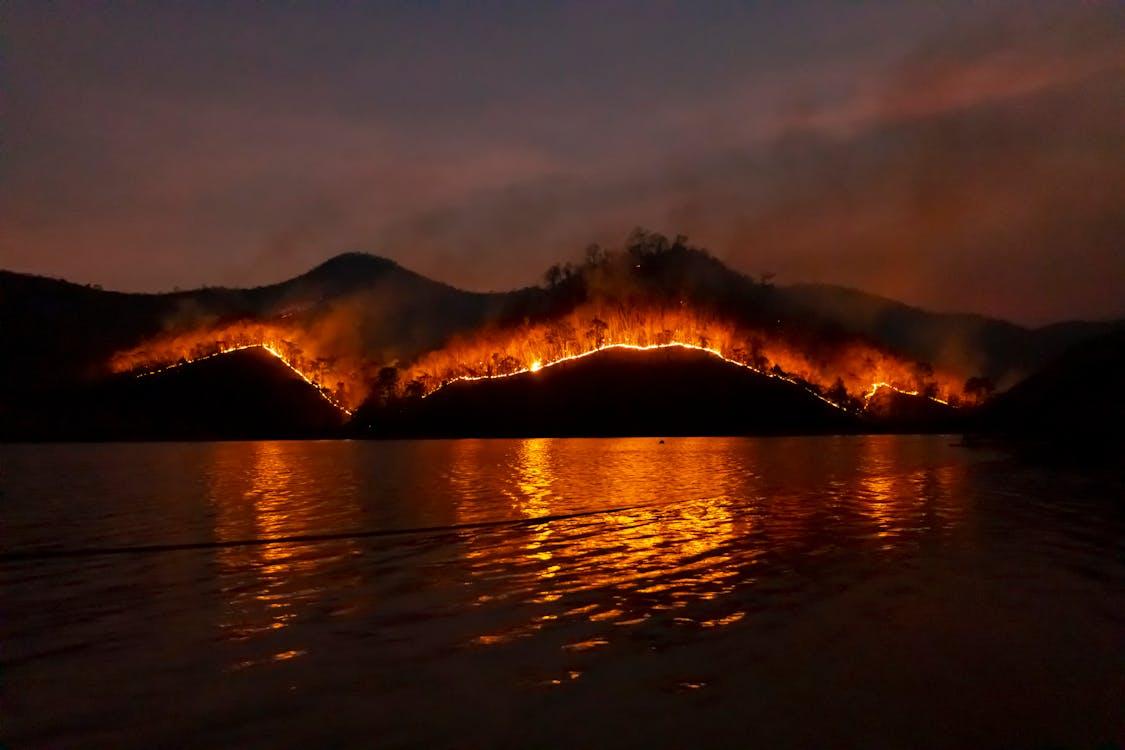
California wildfire home hardening grants can cover a significant portion of fire-resistant window replacement costs for homeowners in the Sierra Foothills — but only if you know which programs exist, which ones actually fund windows, and how to qualify. As of spring 2026, at least four distinct state and federal programs provide financial assistance for window upgrades in wildfire zones: the FEMA-funded California Wildfire Mitigation Program (CWMP), the new California Safe Homes grant under AB 888, FAIR Plan insurance discounts for multi-pane windows, and the Safer from Wildfires insurance framework that requires carriers to reward home hardening.
For homeowners in Colfax, Auburn, Grass Valley, and the broader Placer County foothills — where large portions of the I-80 corridor fall within High or Very High Fire Hazard Severity Zones — these programs represent real money. A typical 15-window fire-resistant upgrade runs $7,500 to $15,000 for retrofit installations, and the combination of grants, insurance discounts, and tax credits can reduce that out-of-pocket cost by $2,000 to $5,000 or more depending on your eligibility.
I'm John, owner of Colfax Glass. We've been helping Sierra Foothills homeowners navigate fire-resistant window requirements since the updated WUI code took effect January 1, 2026. The most common question I hear right now is not whether to upgrade — it's how to pay for it. This guide covers every available program, the eligibility requirements, and a practical strategy for stacking multiple funding sources on a single window replacement project.
Quick answer: Yes, California has grants and financial incentives that can help pay for fire-resistant windows in 2026. The CWMP covers windows in select project areas at no cost to qualifying homeowners. The FAIR Plan offers up to 16.4% premium discounts for multi-pane windows and other hardening measures. The Safer from Wildfires regulation requires all carriers to offer rate adjustments for home hardening. And the California Safe Homes grant (AB 888) funds Zone Zero improvements including window-adjacent upgrades. Get a free wildfire window assessment.
Overview: Every California Program That Helps Pay for Fire-Resistant Windows
Before diving into each program individually, here is a side-by-side comparison of the four main funding pathways available in 2026. Each program works differently — some are direct grants, some reduce your insurance premium, and one is a tax credit. The good news: they are not mutually exclusive. You can potentially benefit from multiple programs on the same window project.
Pro Tip: The CWMP is the only program that covers the full cost of window replacement at no charge to the homeowner. However, it operates in specific project areas — Placer County is not currently an active CWMP zone. The programs most immediately useful for Sierra Foothills homeowners are the FAIR Plan discounts and Safer from Wildfires insurance adjustments, which are available right now with no waiting period.
| Program | Type | Windows Covered? | Max Benefit | Income Limit? | Status (Spring 2026) |
|---|---|---|---|---|---|
| CWMP (FEMA/Cal OES) | Direct grant — no cost to homeowner | Yes — windows, doors, vents, roof | Full project cost (75% FEMA / 25% state) | Prioritizes low/moderate income | Active in select counties |
| CA Safe Homes (AB 888) | Grant — Dept. of Insurance | Indirect — Zone Zero and roofing focus | TBD (initial $3M state funding) | Low-income limit by county | Application portal expected spring 2026 |
| FAIR Plan Discounts | Insurance premium reduction | Yes — multi-pane windows qualify | Up to 16.4% premium reduction | No — any FAIR Plan policyholder | Active since Nov. 15, 2025 |
| Safer from Wildfires | Insurance rate adjustment (all carriers) | Yes — multi-pane windows listed | Varies by carrier (5–15% typical) | No | Active — regulation adopted 2022 |
Program 1: California Wildfire Mitigation Program (CWMP)
The California Wildfire Mitigation Program is the most comprehensive home hardening assistance program in the state. Developed jointly by the Governor's Office of Emergency Services (Cal OES) and CAL FIRE, the CWMP provides full-cost home hardening retrofits — including window replacement — at no charge to qualifying homeowners. The program is funded 75 percent through FEMA Hazard Mitigation Grant Program funds and 25 percent with state appropriations.
The CWMP covers a defined set of home hardening measures based on the California Wildfire Mitigation Program Minimum Quality Standards (CWMP MQS). For windows specifically, the program replaces single-pane windows with dual-pane tempered glass units that meet the WUI building code requirements. It also covers Class A fire-rated roofing, ember-resistant vents, enclosed eaves, noncombustible Zone Zero clearance, and door replacements.
The catch: the CWMP operates in designated project areas, not statewide. As of early 2026, active project areas include portions of Siskiyou County, Tuolumne County, San Diego County, and Shasta County. According to the Cal OES CWMP homeowner page, applications from properties outside current project areas will be rejected. Placer County is not yet an active CWMP area.
The CWMP has been expanding steadily since its launch. CAL FIRE and Cal OES select new project areas based on wildfire risk, social vulnerability data, and available FEMA funding. Given that the I-80 corridor through Placer County consistently ranks among the highest-risk wildfire zones in Northern California, expansion to this area is a realistic possibility. Filing an interest form now puts you in line if and when Placer County becomes active.
- What it covers: windows, doors, vents, roofing, eaves, Zone Zero — full home hardening package
- Cost to homeowner: zero (75% FEMA / 25% state funded)
- Eligibility: must be in an active project area, must be legal property owner, must allow home assessment and contractor access
- Income priority: low and moderate-income households receive priority, but no strict income cutoff for eligibility
- Placer County status: not currently an active CWMP project area — monitor Cal OES announcements for expansion
- How to prepare: submit an interest form through the Cal OES CWMP homeowner page so your property is on file when the program expands
Program 2: California Safe Homes Grant (AB 888)
The California Safe Homes grant program, established by Assembly Bill 888, is the newest wildfire funding program in the state. Signed into law and effective January 1, 2026, AB 888 created a grant program within the California Department of Insurance to help qualifying homeowners pay for fire-safe improvements. According to CalMatters reporting, the program received an initial $3 million in state budget funding to launch.
The Safe Homes grant prioritizes two categories of improvements: fire-safe roof replacement (to meet Safer from Wildfires standards) and creation of a five-foot noncombustible zone around the structure — known as Zone Zero. Windows are not the primary focus of AB 888, but homeowners should understand how the program intersects with window projects.
Zone Zero improvements can include replacing combustible materials within five feet of the structure. In many Sierra Foothills homes, windows on the ground floor fall within this five-foot zone — particularly where decks, fences, or vegetation sit immediately adjacent to the exterior wall. The vegetation half of that five feet is a different trade from ours; 916 Trees does defensible space clearing across the same Placer and El Dorado foothill communities, and a Zone Zero scope generally needs both the plantings pulled back and the glazing addressed before it holds up on an inspection. If a window is part of a Zone Zero remediation scope, it may qualify under the program's broader mandate. The Department of Insurance is still finalizing specific eligibility details and grant amounts as of spring 2026.
For most Sierra Foothills homeowners, AB 888 is more useful as a roofing grant than a window grant. If you need both a roof and windows, applying for the Safe Homes grant for roofing frees up your budget to invest in fire-resistant window upgrades separately. Think of it as a way to stretch your total home hardening dollar rather than a direct window funding source.
- Primary focus: fire-safe roofing and Zone Zero (5-foot noncombustible perimeter)
- Windows: not the primary scope, but may qualify as part of Zone Zero improvements where windows are within 5 feet of combustible materials
- Eligibility: property must be in a ZIP code overlapping a High or Very High Fire Hazard Severity Zone
- Income limit: household income must be at or below the low-income limit for your county (set by the California Department of Housing and Community Development)
- Application status: the Department of Insurance anticipated having the application portal operational by March 2026 — check insurance.ca.gov for current status
- Funding: initial $3 million statewide — limited funds mean early applicants have the best chance
Program 3: FAIR Plan Wildfire Hardening Discounts
The California FAIR Plan — the state's insurer of last resort for homeowners who cannot obtain coverage in the private market — launched a wildfire hardening discount program effective November 15, 2025. This program is immediately relevant to Sierra Foothills homeowners because a large and growing number of Placer County properties are insured through the FAIR Plan after private carriers exited high-fire-risk areas.
The FAIR Plan discount program offers up to 12 separate discounts applied to the wildfire portion of your premium. Dwelling Fire policyholders who earn all 12 discounts could see savings of up to 16.4 percent, according to the FAIR Plan's discount documentation. Multi-pane windows are explicitly listed as a qualifying improvement under the structure discount category.
The structure-related discounts include Class A fire-rated roofing, enclosed eaves, ember-resistant and fire-resistant vents, upgraded multi-pane windows or functional shutters, and noncombustible exterior wall materials. Each qualifying improvement earns its own discount increment. You do not need to complete all 12 improvements to start receiving discounts — each one you complete adds savings independently.
A Colfax homeowner on the FAIR Plan paying $4,000 per year in wildfire premiums could save $400 to $650 annually by completing multi-pane window installation plus two or three additional structure improvements. Over a 10-year window lifespan, that adds up to $4,000 to $6,500 in cumulative insurance savings — a meaningful offset against a $7,500 to $15,000 window replacement project.
- Multi-pane windows: explicitly listed as a qualifying improvement — dual-pane tempered glass satisfies the requirement
- No income limit: any FAIR Plan policyholder can qualify regardless of income
- Immediate availability: discounts apply to policies with effective dates of November 15, 2025 or later
- Maximum savings: up to 16.4% on the wildfire portion of your Dwelling Fire premium
- Documentation: contact your insurance broker to submit proof of multi-pane window installation
- Stacking: window discounts combine with other structure improvements (roofing, vents, eaves) for cumulative savings
| FAIR Plan Discount Category | Qualifying Improvement | Applies to Windows? |
|---|---|---|
| Structure — Roofing | Class A fire-rated roof | No |
| Structure — Eaves | Enclosed/boxed eaves | No |
| Structure — Vents | Ember-resistant vents | No |
| Structure — Windows | Multi-pane windows or shutters | Yes — dual-pane tempered glass qualifies |
| Structure — Walls | Noncombustible exterior materials | No |
| Defensible Space | Zone 0, Zone 1, Zone 2 clearance | No (but reduces overall premium) |
Program 4: Safer from Wildfires Insurance Regulation
The Safer from Wildfires regulation, adopted by the California Department of Insurance in fall 2022, is the broadest insurance incentive for home hardening. Unlike the FAIR Plan discounts (which apply only to FAIR Plan policyholders), the Safer from Wildfires framework applies to every property insurer that uses wildfire risk as a rating factor — which is virtually all of them in Placer County.
The regulation requires insurers to account for wildfire mitigation investments when setting rates. In plain terms: if you harden your home, your insurer must factor that into your premium. The California Department of Insurance developed a specific list of qualifying measures that includes both community-level designations and property-level improvements.
Multi-pane windows are explicitly listed as a qualifying home hardening measure under the Safer from Wildfires framework. The regulation covers two community-level designations, five defensible-space measures, and five structure-hardening measures. Installing dual-pane tempered windows checks one of the five structure boxes.
The practical discount varies by carrier. Based on industry data and homeowner reports, typical premium adjustments range from 5 to 15 percent for homes with multiple verified hardening improvements. California Assembly Bill 1 (the Insurance and Wildfire Safety Act) further requires the Department of Insurance to review and update the Safer from Wildfires regulations to reflect advances in mitigation science, with the first mandatory review by January 1, 2030.
- Applies to: all California property insurers that use wildfire risk in rating (not just FAIR Plan)
- Multi-pane windows: explicitly listed as a qualifying structure improvement
- Typical discount: 5 to 15 percent on wildfire-related premium components (varies by carrier)
- How to claim: contact your insurer, provide documentation of multi-pane window installation, and request a rate review — see our homeowners insurance window replacement guide for details on what carriers require
- No income limit or geographic restriction beyond being in a wildfire-risk-rated area
- Mandatory review: AB 1 requires the Department of Insurance to update the regulation every five years starting 2030
Proposed Tax Credit: Fire Safe Home Tax Credits Act (SB 269)
In addition to grants and insurance discounts, the California Legislature has introduced tax credit legislation that would directly reimburse homeowners for fire-resistant window installations. Senate Bill 269, known as the Fire Safe Home Tax Credits Act, proposed a 50 percent tax credit on qualified home hardening costs — including multi-pane window upgrades.
As introduced, SB 269 would allow credits for taxable years beginning January 1, 2026 through December 31, 2030. The maximum annual credit varies by fire zone: up to $1,000 for properties in High Fire Hazard Severity Zones and up to $2,000 for properties in Very High zones. A separate credit of up to $500 would cover vegetation management (defensible space). According to the Franchise Tax Board's bill analysis, eligibility requires adjusted gross income below $140,000 (joint filers) or $70,000 (single filers), and the property must carry a homeowner's exemption.
A companion bill, Assembly Bill 389, proposed a similar 40 percent credit capped at $400 per year ($2,000 cumulative). As of early 2026, AB 389 was filed with the Chief Clerk under Joint Rule 56, effectively stalling it. SB 269's status should be monitored — if it passes, Sierra Foothills homeowners in Very High zones could claim up to $2,000 per year on window hardening costs.
Pro Tip: Even though these tax credits are not yet enacted, plan your window project with them in mind. Keep all receipts, contractor invoices, product specifications, and permit documentation. If SB 269 passes, you will need this paperwork to claim the credit on your state tax return. The credit would be retroactive to January 1, 2026 if enacted in its current form.
| Tax Credit Bill | Credit Rate | Annual Maximum | Income Limit (Joint) | Status (Spring 2026) |
|---|---|---|---|---|
| SB 269 (Fire Safe Home Tax Credits Act) | 50% of qualified costs | $1,000 (High) / $2,000 (Very High) | $140,000 | In committee — monitor for progress |
| AB 389 (Fire-Resistant Home Improvements) | 40% of qualified costs | $400/year ($2,000 cumulative) | None specified | Filed under Joint Rule 56 — stalled |
How to Stack Multiple Programs on One Window Project
The best financial outcome comes from combining multiple programs. These funding sources are not mutually exclusive — a single window replacement project can benefit from insurance discounts, potential tax credits, and grant-funded complementary improvements simultaneously.
Here is a practical stacking strategy for a Sierra Foothills homeowner replacing 15 windows with dual-pane tempered Low-E glass.
Start with insurance. Before your project begins, contact your insurer (or broker, if you are on the FAIR Plan) and ask what documentation they need to verify multi-pane window installation. Complete the project, submit the documentation, and request a rate review. This puts premium savings in your pocket starting with your next renewal cycle.
Apply for the Safe Homes grant for roofing. If your roof also needs replacement and you meet the income requirements, applying for AB 888 funding for roofing frees up cash that would otherwise compete with your window budget. You handle windows out-of-pocket (or through financing) while the grant covers roofing.
File the CWMP interest form. Even though Placer County is not an active CWMP area today, filing an interest form at Cal OES ensures you are in the queue if the program expands. If it does, the CWMP could cover remaining hardening work (vents, eaves, doors) at no cost to you.
Preserve tax credit documentation. Keep every receipt and spec sheet. If SB 269 or similar legislation passes, you can claim up to $2,000 per year in credits on your state return.
Example scenario: A Colfax homeowner replaces 15 windows for $11,000 (retrofit install). FAIR Plan multi-pane discount saves $350/year on premiums. If SB 269 passes, they claim $2,000 in tax credits in year one and $2,000 in year two. If the CWMP expands to Placer County, remaining hardening work (vents, eaves) is covered at no cost. Total estimated benefit over 5 years: $5,750 or more — reducing the effective window cost to roughly $5,250.
- Step 1: Contact insurer — request Safer from Wildfires or FAIR Plan discount documentation requirements before starting work
- Step 2: Complete window replacement with dual-pane tempered glass (meets WUI code and all insurance discount criteria)
- Step 3: Submit proof of installation to insurer — request rate review for multi-pane window discount
- Step 4: Apply for AB 888 Safe Homes grant for roofing and Zone Zero (if income-eligible) to offset total home hardening costs
- Step 5: File CWMP interest form with Cal OES for future program expansion
- Step 6: Save all receipts and product specs for potential SB 269 tax credit filing
Which Glass Types Qualify for Grant and Insurance Programs?
Not every window upgrade qualifies for every program. Understanding the minimum glass specifications ensures your investment checks all the boxes — WUI code compliance, insurance discount eligibility, and potential grant or tax credit qualification.
The baseline requirement across all programs is multi-pane glazing. Single-pane windows do not qualify for any insurance discount or grant program, and they fail the WUI building code in Fire Hazard Severity Zones. The minimum qualifying configuration is a dual-pane insulated glass unit (IGU) with at least one pane of tempered glass.
For maximum value, we recommend dual-pane tempered glass with Low-E coating. This configuration satisfies WUI code requirements, qualifies for every insurance discount program, meets the Safer from Wildfires multi-pane standard, and delivers energy savings that further reduce your monthly costs. The incremental cost of adding Low-E to a tempered dual-pane unit is roughly $50 to $75 per window — a fraction of the total project cost with outsized returns.
For homeowners in Very High Fire Hazard Severity Zones or properties with limited defensible space, laminated glass with a tempered outer pane provides the highest level of protection. The laminated interlayer holds glass fragments in place after breakage, maintaining an ember barrier even when the glass is compromised. This premium configuration qualifies for all the same programs as standard tempered dual-pane.
We install Milgard, Ply Gem, and JELD-WEN windows with fire-rated tempered glass configurations as standard options for Sierra Foothills projects. Every window we install in a Fire Hazard Severity Zone includes documentation formatted for insurance submissions — manufacturer tempered glass certifications, product spec sheets, and installation photos. This documentation is critical for claiming FAIR Plan discounts and Safer from Wildfires rate adjustments.
| Glass Configuration | WUI Code? | FAIR Plan Discount? | Safer from Wildfires? | Approx. Cost per Window |
|---|---|---|---|---|
| Single-pane (any type) | No | No | No | $250–$450 |
| Dual-pane annealed (no temper) | No | Yes (multi-pane) | Yes (multi-pane) | $400–$700 |
| Dual-pane, one tempered | Yes | Yes | Yes | $450–$800 |
| Dual-pane tempered + Low-E | Yes | Yes | Yes | $500–$900 |
| Laminated + tempered dual-pane | Yes | Yes | Yes | $650–$1,100 |
How to Check If Your Property Is in a Fire Hazard Severity Zone
Every grant, discount, and tax credit program described in this guide requires your property to be in a designated Fire Hazard Severity Zone. If you are not in a zone, the WUI code does not apply — and most funding programs will not either. Confirming your zone classification is the first step before pursuing any financial assistance.
Placer County updated its Fire Hazard Severity Zone designations in 2025, aligning with the California State Fire Marshal's revised statewide maps. The Placer County interactive FHSZ map lets you enter your address and see your classification: Moderate, High, or Very High. Many properties with a Colfax mailing address are actually in unincorporated Placer County and fall under the county's zone map rather than the city's jurisdiction.
The I-80 corridor from Auburn east through Colfax and into the upper foothills includes extensive High and Very High zones. Communities including Foresthill, Meadow Vista, Weimar, and Alta are almost entirely within Very High zones. Even areas further down the corridor — Loomis, Rocklin, and parts of Roseville — include pockets of Moderate and High zones near open space preserves and creek corridors.
If your property is in a Moderate zone, you may still qualify for some programs (SB 269 proposes credits for Moderate zones at a lower cap) but the WUI code and most grant programs focus on High and Very High designations.
- Placer County FHSZ map: engage.placer.ca.gov/fhsz — enter your address to confirm your zone
- CAL FIRE statewide map: fire.ca.gov/fire-hazard-severity-zones — the official state source
- Colfax city limits vs. unincorporated Placer County: many Colfax-address properties are under county jurisdiction
- Very High zones: Foresthill, Meadow Vista, Weimar, Alta, upper I-80 corridor
- High zones: much of Colfax, Auburn, Grass Valley, Nevada City
- Moderate zones: some parts of Loomis, Rocklin, and Roseville near open space
Documentation Checklist for Claiming Grants and Insurance Discounts
Every program requires documentation. Missing paperwork is the most common reason homeowners fail to receive discounts they have earned. Before your window project starts, set up a folder (physical or digital) to collect the following items. Your contractor should provide most of these — at Colfax Glass, we include formatted documentation packages as part of every fire-zone window installation.
Insurance companies, grant administrators, and tax authorities each require slightly different proof, but the core documents overlap. Collecting everything once saves time across all programs.
Pro Tip: Take photos during installation, not just before and after. Insurance adjusters and grant reviewers sometimes request photos showing the glass label (which identifies tempered vs. annealed), the IGU spacer bar, and the frame anchoring into the rough opening. A few extra photos during the install take seconds and can prevent weeks of back-and-forth later.
- Building permit (if required for your project scope — major remodels and new construction always need one)
- Product specification sheets showing dual-pane tempered glass configuration and WUI code compliance
- Manufacturer tempered glass certification for each window unit installed
- Contractor invoice itemizing window model, glass type, frame material, and installed cost per unit
- Before and after photos of each window opening (exterior view showing old and new units)
- Installation completion certificate or contractor sign-off letter
- FHSZ zone verification printout from the Placer County or CAL FIRE map
- Homeowner's insurance policy number and declaration page (for insurance discount claims)
- Income verification documents (for AB 888 and SB 269 income-limited programs)
- Cal OES CWMP interest form confirmation (for future program expansion)
Common Questions About Wildfire Home Hardening Grants for Windows
These are the questions I hear most from homeowners exploring financial assistance for fire-resistant window projects in the Sierra Foothills. If your situation is not covered here, contact our team for a free consultation — we help homeowners in Colfax, Auburn, Grass Valley, and the surrounding area navigate both the technical and financial sides of wildfire window upgrades.