
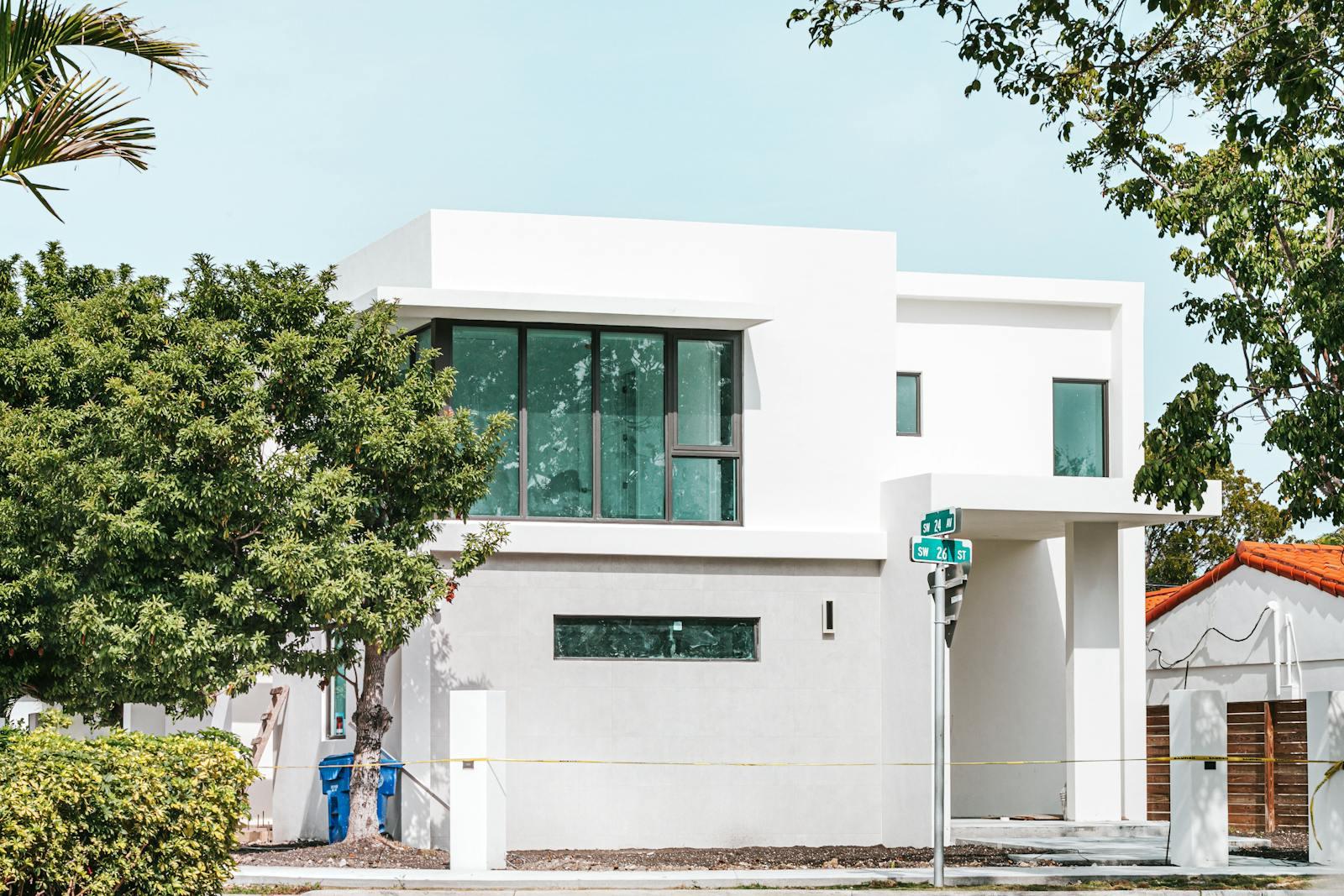
Impact-resistant windows in California — the products marketed as "hurricane windows" — are laminated dual-pane assemblies tested to Florida's ASTM E1886 cyclic-pressure and ASTM E1996 large-missile impact protocols. They were engineered for the Atlantic hurricane debris field, not the Sierra Nevada wildfire belt. The honest 2026 answer for a Colfax or Sierra foothills homeowner asking whether they are worth it: they are an excellent upgrade for break-in resistance and post-failure glass retention, a meaningful but partial benefit for wildfire radiant exposure, and they are not required by California's WUI code, which already mandates tempered dual-pane glazing through Chapter 7A §707A.3 of the California Building Code.
I'm John, owner of Colfax Glass. I've been installing and specifying glazing across Colfax, Auburn, Foresthill, Grass Valley, and the I-80 Sierra foothill corridor for 25-plus years. We get the hurricane window question every spring once wildfire-season ads start running on TV — usually from homeowners who recently moved here from Florida, Texas, or the Gulf Coast, or homeowners watching their insurance premiums climb and looking for any documented hardening upgrade. The product is real, the engineering is well-tested, but the value math in Northern California is different from the value math in Miami-Dade County.
This comparison walks through what hurricane windows actually are at the lamination and assembly level, where laminated impact glass overlaps with California's wildfire and wind-zone code requirements, what the cost premium looks like in 2026 dollars, and the three Sierra foothill use cases where the upgrade pencils out — versus the larger set where the standard Chapter 7A tempered dual-pane is the better dollar.
TL;DR: Hurricane (impact-resistant) windows use laminated glass with a PVB or SentryGlas interlayer tested to ASTM E1886/E1996 large-missile impact and cyclic pressure. In California, they cost 30 to 100 percent more than tempered dual-pane Chapter 7A windows. They deliver strong break-in and forced-entry resistance, modest wildfire ember and radiant-heat benefit (when paired with proper §707A.3 detailing), and meaningful UV and acoustic gains. They are not code-required in any California climate zone outside a few coastal high-wind exposure categories. Best Sierra foothill use cases: ground-floor security, large fixed picture windows in high-wind ridge sites, and homes inside Cal Fire FAIR Plan Brush Score territory where carriers reward documented hardening above code minimum. For most Colfax homes, code-minimum tempered dual-pane Low-E hits the budget-to-protection sweet spot. Get a Colfax wildfire and wind-zone window assessment.
What Are Impact-Resistant (Hurricane) Windows? The Lamination Stack
An impact-resistant window — the product the industry markets as a hurricane window — is a complete window assembly whose primary defining feature is laminated glass at the outboard or inboard pane. Laminated glass is two glass plies bonded with a polymer interlayer, most commonly polyvinyl butyral (PVB) or, for premium products, DuPont SentryGlas ionoplast. The interlayer is what holds the glass together when the pane fractures — the glass cracks but does not fall out of the opening, which is the entire engineering point.
For the product to legitimately carry the hurricane window label, the complete assembly — frame, glass, glazing bead, anchorage — has to be tested to ASTM E1886 (Standard Test Method for Performance of Exterior Windows, Curtain Walls, Doors, and Impact Protective Systems Impacted by Missile(s) and Exposed to Cyclic Pressure Differentials) and ASTM E1996 (Standard Specification for Performance of Exterior Windows, Curtain Walls, Doors, and Impact Protective Systems Impacted by Windborne Debris in Hurricanes). The most stringent class — Large Missile Level D — requires the assembly to survive a 9-pound 2x4 lumber projectile fired at 50 feet per second, followed by 9,000 cycles of positive and negative wind-pressure loading without losing the glass from the frame.
The key conceptual contrast with a standard California code-compliant window is this: tempered glass (the Chapter 7A §707A.3 minimum for WUI zones) is heat-treated to fracture into small relatively safe granules when broken — but it does not retain pane integrity. The opening becomes a hole. Laminated glass cracks into a spider web while remaining in place, sealing the opening against ember intrusion, wind-driven rain, and burglar entry until it can be replaced. That post-failure pane retention is the single most important behavior to understand when evaluating whether the upgrade is worth the premium for a given Sierra foothill home.
- Laminated construction: two glass plies bonded with PVB or SentryGlas polymer interlayer
- Test standards: ASTM E1886 (cyclic pressure) + ASTM E1996 (large missile impact)
- Top rating: Large Missile Level D — 9-lb 2x4 at 50 ft/s + 9,000 pressure cycles
- Manufacturers: PGT WinGuard, ESW Impact, Andersen Stormwatch, CGI Sentinel, Milgard Impact
- Frame requirements: tested as a complete assembly — frame, anchorage, glazing bead all certified
- Behavior on failure: glass spider-webs but remains in opening, blocking debris and embers
What's the Difference Between Impact, Tempered, and Laminated Glass?
These three terms get used interchangeably in marketing and conflated constantly by homeowners — and they are not the same thing. The distinction matters because the wrong product for the threat wastes money, and the wrong product for the code can fail inspection.
Tempered glass is single-ply glass that has been heat-treated in a furnace to roughly 1,150°F and then rapidly cooled, putting the outer surface in compression and the interior in tension. It is approximately four times stronger than annealed (standard) glass and, critically, fractures into small dice-sized granules rather than long sharp shards. This is the California Building Code §2406 safety-glazing requirement for hazardous locations — within 24 inches of a door, in bathtub and shower enclosures, in stair railings, and in any glazing below 60 inches above a walking surface near a wet location. It is also the minimum compliance path for Chapter 7A §707A.3 ember-resistant glazing in WUI Fire Hazard Severity Zones, typically delivered as a tempered outer pane in a dual-pane Low-E insulating glass unit.
Laminated glass is two glass plies bonded with a polymer interlayer. The plies themselves can be annealed, heat-strengthened, or tempered — and when tempered glass is laminated, the product gets called tempered-laminated. Laminated glass holds together when broken because the interlayer keeps the fragments adhered. It is the only glass type that meets ASTM E1996 large-missile impact requirements; standard tempered glass cannot pass the 2x4 missile test because it shatters on first impact. Laminated glass is also the highest-performance acoustic glass — the polymer interlayer damps sound transmission far more effectively than the air gap in a dual-pane unit alone — and it blocks roughly 99 percent of UV-A and UV-B radiation, which matters for fabric and hardwood-floor fading.
Impact-resistant glass — the hurricane window category — is laminated glass installed in a complete tested window assembly. The product is laminated, but the regulatory term "impact-resistant" specifically refers to the assembly-level certification to ASTM E1886/E1996. A homeowner can install laminated glass in any opening without it being a true impact-resistant window. To call it impact-resistant for code or insurance purposes, the entire assembly — frame, glazing, anchorage — has to carry the test certification.
For a full Sierra foothill side-by-side on the underlying glass types, see our tempered vs. laminated glass guide.
Pro Tip: When a salesperson uses the term "hurricane glass" without specifying the ASTM E1886/E1996 certification or the missile rating (Small Missile, Large Missile Level C, Large Missile Level D), they are describing laminated glass, not a tested impact-resistant assembly. Both are useful, but only the tested assembly satisfies coastal high-wind exposure codes and triggers the larger insurance discounts. Ask for the NOA number (Notice of Acceptance from Miami-Dade) or the Florida Building Code product approval ID, then verify on the issuing authority's website before signing a contract.
| Property | Annealed (standard) | Tempered | Laminated | Impact-Resistant Assembly |
|---|---|---|---|---|
| Construction | Single ply, untreated | Single ply, heat-treated | Two plies + PVB/SentryGlas | Laminated glass + tested frame |
| Breakage pattern | Long sharp shards | Small safe granules | Spider-web, stays in frame | Spider-web, stays anchored |
| Relative strength | 1x (baseline) | ~4x annealed | Glass strength + retention | Tested assembly performance |
| Test standard | ASTM C1036 | ASTM C1048 / CPSC 16 CFR 1201 | ASTM C1172 | ASTM E1886 + E1996 |
| Chapter 7A §707A.3 fit | Not compliant | Compliant in dual-pane IGU | Compliant | Compliant (exceeds minimum) |
| Forced-entry resistance | Low | Low (shatters and falls out) | High (stays in opening) | Highest (frame anchored) |
| Typical California cost premium | Below code in most uses | Baseline ($) | $$ (1.5–2.5x tempered) | $$$ (1.8–3x tempered) |
Do Impact Windows Help with Wildfires? The Honest Answer
The honest answer is yes, partially, and only in combination with the rest of the Chapter 7A detailing. Laminated impact glass is not a silver bullet for California wildfire exposure — but it does provide measurable benefit in two specific failure modes that standard tempered dual-pane windows handle less well.
The first benefit is post-thermal-failure pane retention. Insurance Institute for Business & Home Safety (IBHS) Wildfire Prepared Home testing has documented that under sustained radiant heat exposure at flame-front intensity (typically 30 to 50 kW/m² for 60 to 180 seconds during fire-front passage), single-pane glass fails within 90 to 180 seconds. Tempered dual-pane glass extends survival time to over 10 minutes by failing the outer pane while the inner pane remains intact — but once the outer tempered pane fails, the opening is exposed to ember intrusion through the broken pane until the inner pane finally fails or the front passes. Laminated outer-pane construction keeps the broken glass in the opening even after thermal failure, blocking ember entry through the fractured pane and significantly extending the time-to-interior-ignition window.
The second benefit is wind-driven debris impact during wildfires. The 2018 Camp Fire, 2020 LNU Lightning Complex, and 2024 Park Fire all generated high-velocity wind events with debris fields that included burning vegetation, roofing material, and structural debris from upwind ignitions. Standard tempered dual-pane windows are designed for ember and radiant heat — not for a flaming pine cone hitting the glass at 60 mph. Laminated impact assemblies were literally designed for that scenario in a hurricane context, and the engineering translates well to wildfire wind-debris conditions.
The partial nature of the benefit is important. Laminated impact glass does not stop radiant heat transmission better than tempered dual-pane — the BTU/hr transfer through the glass itself is similar. Laminated glass does not eliminate the eventual thermal failure of the outer pane under sustained flame-front exposure; it just retains the broken pane in the opening. And laminated impact glass does nothing about the rest of the building envelope — the eaves, vents, deck, roof, and Zone 0 ground plane that drive most wildfire structure ignitions. The IBHS Wildfire Prepared Home research consistently identifies vents and embers landing on combustible roof and deck materials as the dominant ignition pathway, ahead of window-pane failure.
For a complete walk-through of the Chapter 7A window-product requirements and the SFM 12-7A-2 tested assembly path, see our fire-resistant windows for WUI zones guide and the broader Chapter 7A wall assembly guide.
- Wildfire benefit 1: post-thermal-failure pane retention — broken laminated glass stays in the opening
- Wildfire benefit 2: wind-debris impact resistance during fire-driven high-wind events
- Wildfire limitation: similar radiant heat transmission through intact glass vs. tempered dual-pane
- Wildfire limitation: does not address vents, eaves, deck, or Zone 0 ground-plane ignition pathways
- Code position: laminated dual-pane exceeds §707A.3 minimum but is not required for compliance
- Insurance position: documented impact-rated install supports IBHS Wildfire Prepared Home Plus tier
Florida Hurricane Code vs. California WUI Code: Two Different Threat Models
The hurricane window category exists because Florida — and to a lesser extent Texas, Louisiana, and the rest of the Gulf and Atlantic Coast hurricane corridor — built a body of code, testing, and product certification around wind-driven debris impact during hurricanes. The Florida Building Code wind-borne debris regions (defined by 130+ mph design wind speed zones) require all exterior openings to either be impact-rated or to be protected by tested shutters. The Miami-Dade County NOA process and the Florida product approval program drive the most rigorous third-party certification regime for impact-rated assemblies anywhere in North America.
California's threat model is fundamentally different. The state's WUI code — Chapter 7A of the California Building Code, adopted 2008, amended in every code cycle since — targets wildfire exposure: embers, radiant heat, and flame-front passage. The window-product standard §707A.3 requires multi-pane tempered glazing or SFM 12-7A-2 tested assembly performance, with the test methodology focused on ember intrusion and surface-flame exposure rather than projectile impact. California does have wind-zone provisions for windows — Chapter 16A of the CBC and the ASCE 7 structural wind-pressure design tables apply to all exterior openings — but the design wind speeds in most of California are well below the Florida hurricane corridor, and standard structural-grade windows meet those wind-pressure requirements without needing impact-rated lamination.
The practical consequence: a window product that earns a Florida NOA for Large Missile Level D in Miami-Dade County will exceed every California code requirement for wind, ember, and impact — but most of that performance is invisible to California enforcement. The homeowner pays for hurricane-grade performance in a state that does not require it. The exception is the small set of California wind-zone exposure categories — primarily coastal Sonoma, Marin, San Mateo, and isolated high-ridge sites with documented sustained high-wind exposure — where the structural wind-pressure design pushes toward laminated or tested impact-rated assemblies for code compliance.
For a Colfax, Auburn, or Foresthill home in Placer County, the design wind speed under ASCE 7-22 is generally Category II Exposure C, with design speeds in the 95-110 mph range. Standard tempered dual-pane windows from Milgard, Andersen, JELD-WEN, Marvin, or Pella with appropriate structural ratings meet that wind-pressure requirement comfortably. Hurricane-rated impact assemblies exceed it by a factor of two to three — performance the building envelope does not need to deliver structural compliance, but performance the homeowner may still want for break-in, wildfire, or acoustic reasons.
| Code Area | Florida Hurricane Code | California WUI / Chapter 7A |
|---|---|---|
| Primary threat model | Wind-borne debris impact + sustained wind pressure | Embers, radiant heat, flame-front passage |
| Window product test standard | ASTM E1886 + E1996, Miami-Dade NOA | CBC §707A.3 tempered minimum, SFM 12-7A-2 assembly |
| Design wind speed range | 130-180 mph in HVHZ counties | 85-110 mph in most CA, higher in coastal/ridge zones |
| Trigger for impact-rated requirement | All openings in wind-borne debris region | Generally not required; voluntary upgrade |
| Failure mode addressed | Pane-and-frame retention against 2x4 missile | Ember intrusion and outer-pane thermal failure |
| Typical cost premium over baseline | Embedded in Florida baseline cost | 30-100 percent over tempered dual-pane |
Hurricane Windows California Cost: 2026 Pricing for Colfax and the Sierra Foothills
Installed cost for impact-rated assemblies in California in 2026 runs roughly 30 to 100 percent above tempered dual-pane Low-E baseline, depending on size, frame material, manufacturer, and missile rating. The premium is wider on small and medium openings (where the laminated glass premium dominates) and narrower on large picture windows (where the structural frame premium for any high-performance assembly is already significant).
For a Colfax homeowner planning a whole-house window replacement project, the typical 2026 pricing tiers look like this. The tempered dual-pane Low-E baseline — Milgard Trinsic, Andersen 100 Series, or JELD-WEN Premium Vinyl — runs $550 to $850 per opening installed for standard residential sizes. A laminated dual-pane upgrade — same frame, laminated outer pane instead of tempered — adds $200 to $400 per opening, landing at $750 to $1,250. A true impact-rated assembly with ASTM E1886/E1996 certification — PGT WinGuard, ESW Impact, Andersen Stormwatch, CGI Sentinel — runs $1,100 to $1,800 per opening installed for standard sizes, and $2,500 to $4,500 for large picture windows or multi-panel sliding patio doors.
The project-level math for a typical 15-window Colfax home replacement: tempered dual-pane baseline at $9,000 to $13,000, laminated dual-pane upgrade at $12,000 to $19,000, full impact-rated assemblies at $17,000 to $27,000. The delta is significant — $8,000 to $14,000 of incremental cost — and that delta is the right number to weigh against the specific benefits a given home actually captures.
For the broader Colfax window-replacement pricing context, including frame material tradeoffs and which manufacturer lines are available locally, see our window replacement cost California guide and best window brands for the Sierra foothills. For the retrofit vs. full-frame decision — impact-rated retrofits are technically possible but require careful flashing detailing — see that separate post.
Pro Tip: The Section 25C federal tax credit that supported energy-efficient window upgrades expired December 31, 2025. The 2026 math no longer includes a 30 percent federal credit. California state-level incentives — the Wildfire Mitigation Program (CWMP) for income-qualified parcels and the FAIR Plan Safer from Wildfires premium discounts — remain the primary financial offsets, and both pay roughly the same regardless of whether the product is tempered dual-pane code minimum or laminated impact-rated above code. The CWMP grant pays for the work, not for the premium product. See the California wildfire home hardening grants for windows post for current eligibility.
| Product Tier | Per-Opening Installed (Standard Size) | 15-Window Project Total | Best Use Case |
|---|---|---|---|
| Tempered dual-pane Low-E (Chapter 7A baseline) | $550–$850 | $9,000–$13,000 | Code-minimum compliance, budget projects |
| Laminated dual-pane Low-E (no impact rating) | $750–$1,250 | $12,000–$19,000 | Acoustic, UV, break-in resistance without full impact cert |
| Impact-rated ASTM E1886/E1996 assembly | $1,100–$1,800 | $17,000–$27,000 | Coastal high-wind sites, security priority, IBHS Plus tier |
| Impact-rated large picture window or multi-panel slider | $2,500–$4,500 per opening | +$10,000–$20,000 incremental | Ridge-site exposures, view-window protection |
Wind Zone Windows Northern California: Where High-Wind Exposure Actually Lives
Northern California has documented high-wind exposure zones, but most are not where homeowners think they are. The Sierra foothills are not generally a high-wind zone in the ASCE 7 structural wind-design sense — design wind speeds in Colfax, Auburn, Grass Valley, Nevada City, and Foresthill run in the 95-105 mph range under ASCE 7-22 Exposure Category B or C. The exceptions are isolated ridge-line sites with documented topographic wind-speed-up effects and properties above 5,000 feet elevation in the Sierra crest zone.
The genuine Northern California high-wind exposure categories are coastal: the immediate Pacific Coast in Sonoma, Marin, San Mateo, Santa Cruz, and Monterey counties; the western slopes of the Mendocino and Sonoma coastal ranges with marine exposure; and high-elevation Sierra crest sites with sustained winter ridge-line winds. For homes in those zones, ASCE 7-22 Category II Exposure D or C with topographic factor (K-zt) above 1.0 can push design wind pressures into ranges where laminated or impact-rated assemblies become the easier engineering path for compliance — and where the per-opening cost premium pays for itself in code-required structural performance rather than voluntary upgrade.
For a Colfax-area homeowner whose property is on a documented ridge site with topographic wind-speed-up — typically the upper Iowa Hill, Foresthill divide, or Yankee Jim's ridge properties — a structural engineer should confirm the design wind pressure for the project. If the engineering pushes window assemblies above standard Milgard or Andersen structural ratings, laminated or impact-rated assemblies become a defensible engineering choice. For most flat-lot foothill homes inside Colfax city limits or in the Highway 174 / Highway 49 corridor, standard tempered dual-pane with appropriate DP (design pressure) rating from any major manufacturer meets the wind-pressure requirement without needing impact-rated assemblies.
Wind speeds during wildfire fire-front passage are a separate question from sustained ASCE 7 design wind. Fire-driven plume-dominated wind events can generate sustained 40-60 mph surface winds with embedded gusts of 80-100 mph at the fire front, well above the ambient design wind speeds. Standard tempered dual-pane windows handle the static wind pressure during a fire-front pass; the concern is the wind-borne ember-and-debris content, not the wind pressure itself. That is the threat laminated impact glass addresses uniquely.
- Sierra foothill design wind speed: typically 95-105 mph under ASCE 7-22 Exposure Cat B/C
- Coastal CA high-wind zones: immediate Pacific coast in Sonoma/Marin/San Mateo/Santa Cruz/Monterey
- Sierra crest high-wind zones: above 5,000 ft elevation with documented ridge-line exposure
- Topographic factor K-zt above 1.0: triggers higher design pressures at ridge sites
- Fire-driven wind events: 40-60 mph sustained with 80-100 mph gusts at fire front
- Code path: structural engineer confirms design pressure; product DP rating must match
When Are Hurricane Windows Worth It in California? Three Sierra Foothill Use Cases
The honest decision framework for Colfax and Sierra foothill homeowners reduces to three use cases where impact-rated assemblies pencil out, and a larger set of use cases where the standard Chapter 7A tempered dual-pane is the better dollar. The cases below are the ones I see actually work out in 2026 economics.
Use case one: ground-floor break-in and forced-entry security on rural foothill properties. Colfax, Foresthill, and the I-80 corridor have a documented rural-property burglary pattern — break-ins target second homes, weekend cabins, and rural primary residences with extended owner-away periods. Laminated impact glass dramatically extends the time required to defeat the glazing through a forced-entry attack from seconds (tempered dual-pane shatters and falls out) to minutes (laminated holds the broken glass in the opening, forcing the attacker to chop through the interlayer with a hatchet or pry bar). Combined with multi-point locking and a monitored alarm, the time delay buys the response window that turns a successful burglary into a deterred one. For a Colfax homeowner with a second-home pattern or a primary residence in the more rural parts of the county, this is the strongest economic case for the upgrade. See our security window film guide for the comparison against film-based retrofit.
Use case two: large fixed picture windows on ridge sites with documented wind exposure. A 60-square-foot picture window on a Yankee Jim's or Foresthill divide ridge property is structurally the most vulnerable opening on the home — large area, fixed (no operable resistance to wind pressure), often on the upwind-facing elevation. Impact-rated picture-window assemblies cost significantly more per opening, but they solve a code and engineering problem in one product. For ridge-site homes where the engineering confirms above-standard design pressure, this is a defensible upgrade path.
Use case three: homes inside FAIR Plan Brush Score territory where the carrier rewards above-code documented hardening. The California FAIR Plan and several admitted carriers offer Safer from Wildfires premium discounts that scale with the number of hardening checklist items completed. Impact-rated windows count, particularly when documented as IBHS Wildfire Prepared Home Plus tier installation. For Colfax homes in High or Very High Fire Hazard Severity Zone with annual premiums in the $4,500-$8,000 range, the recurring 10-16 percent discount on premium can recover a meaningful fraction of the impact-rated cost premium over 5-10 years — particularly when stacked with other hardening items already underway.
Pro Tip: If two or more of the three primary use cases apply to your property — for example, a Foresthill ridge-site second home in High FHSZ — the impact-rated upgrade gets significantly easier to justify because the benefits stack. A single use case usually does not carry the premium on its own; two or three together typically do. Walk the property with the contractor and identify which openings actually capture which benefits, then upgrade selectively rather than uniformly across the whole house.
- Use case 1: ground-floor break-in security for rural foothill and second-home properties
- Use case 2: large picture windows on ridge sites with documented topographic wind exposure
- Use case 3: FAIR Plan Brush Score homes pursuing IBHS Wildfire Prepared Home Plus tier
- Marginal use case: acoustic-priority bedrooms near I-80 or Highway 49 traffic noise
- Marginal use case: south- and west-facing fabric/hardwood UV protection for finishes
- Skip: code-minimum compliance projects where Chapter 7A tempered dual-pane is sufficient
Laminated Impact Windows in the Sierra Foothills: Acoustic, UV, and Marriage with Title 24
The two ancillary benefits of laminated impact glass that homeowners often discover after install — and that frequently end up driving as much satisfaction as the primary impact protection — are acoustic performance and ultraviolet rejection. Both are worth quantifying because they show up on every install regardless of whether the impact or wildfire benefit ever gets activated.
On the acoustic side, laminated glass dramatically outperforms standard dual-pane at the same pane thickness for sound transmission. The polymer interlayer damps mid-frequency sound — the range that includes most road noise, voices, and HVAC equipment — significantly more effectively than the air gap in a standard dual-pane IGU. Sound Transmission Class (STC) ratings for laminated dual-pane assemblies typically run 5-10 points higher than equivalent tempered dual-pane, with Outdoor-Indoor Transmission Class (OITC) gains of 4-8 points. For Colfax homes near I-80, the Highway 49 corridor through Auburn, or rail-line properties along the historic Central Pacific corridor, that acoustic gain is the single most-noticed upgrade after install — see our soundproof and noise-reducing windows guide for the full acoustic comparison.
On the UV side, laminated glass blocks roughly 99 percent of UV-A and UV-B radiation versus 50-75 percent for standard Low-E coatings. For homes with south- and west-facing exposures, that translates to significantly reduced fabric, art, hardwood-floor, and cabinet fading over 10-20 year service life. The financial value is hard to quantify on a single project, but the lifestyle and finish-preservation benefit is real and shows up immediately.
Laminated and impact-rated windows pair well with Title 24 Part 6 prescriptive compliance because the same product can be ordered with high-performance Low-E coatings and warm-edge spacers that hit Title 24 climate zone 16 U-factor and SHGC targets. The lamination does not interfere with Low-E performance — the coating goes on the inboard surface of the outer pane or the outboard surface of the inner pane (Surface 2 or Surface 3), and the laminated assembly is the outer or inner pane structure. For the full Title 24 window compliance walkthrough for Placer County, see that separate post.
The one place laminated impact glass does compromise is light transmission and slight color shift. Visible light transmittance (VLT) typically drops 3-7 percent versus equivalent tempered dual-pane, and the polymer interlayer can introduce a subtle blue or green tint depending on the manufacturer. For most installations the difference is imperceptible; for very large picture windows where the homeowner is paying attention to view clarity, it is worth getting a sample piece to evaluate before specifying the whole project.
Insurance, FAIR Plan, and IBHS Wildfire Prepared Home: Documenting the Upgrade
The economic case for impact-rated windows in California in 2026 rests significantly on documented insurance discounts under the Safer from Wildfires regulation and the IBHS Wildfire Prepared Home certification program. Both programs reward documented hardening above code minimum, and both treat laminated impact-rated assemblies as the highest tier of window-product compliance.
The California Department of Insurance's Safer from Wildfires regulation, adopted in 2022 under Insurance Commissioner Lara, requires admitted carriers to offer rate reductions for combinations of hardening measures. The FAIR Plan offers discounts up to 16.4 percent for full hardening compliance, with the admitted-market discounts varying by carrier but generally landing in the 10-22 percent range. Multi-pane ember-resistant windows are on the checklist; laminated impact-rated assemblies satisfy the windows requirement with the highest-performance documentation tier and stack with the other checklist items (Class A roof, ember-resistant vents, 5-foot defensible space Zone 0, fire-resistant siding, ember-resistant deck, gutter screens).
The IBHS Wildfire Prepared Home certification adds a separate program-level designation. The Prepared Home tier requires the Chapter 7A baseline; the Prepared Home Plus tier requires elevated performance including IBHS-recognized impact-rated assembly windows or SFM 12-7A-2 tested assemblies. The Plus certification opens the door to a smaller but growing set of carriers who underwrite specifically against IBHS designation rather than checklist counts, which can be a meaningful difference in high-FHSZ markets where carriers are pulling back from non-certified properties.
For a Colfax homeowner pursuing the documented hardening path, the practical 2026 sequencing is: complete the Zone 0 ground-plane items first (free or low-cost — see our Zone 0 windows California guide), upgrade to Chapter 7A §707A.3-compliant windows on a planned timeline (tempered dual-pane minimum or laminated impact-rated for Plus tier ambition), document everything with NFRC labels, contractor invoices, permit finals, and IBHS or carrier-specific inspection records, and present the documentation package at every annual renewal cycle. The recurring discount compounds over 5-10 years and recovers a meaningful fraction of the impact-rated cost premium.
For homeowners insurance and window replacement coverage, and the related California wildfire home hardening grants, see those separate posts.
Hurricane Windows in California: The Final Decision Framework
The decision framework for whether impact-rated hurricane windows are worth the premium for a Colfax or Sierra foothill home in 2026 reduces to a small set of yes/no questions, and the answers usually point clearly one direction or the other once the homeowner runs through them honestly.
First, is the home in a High or Very High Fire Hazard Severity Zone under the OSFM 2024 SRA or 2025 Placer County LRA maps? If yes, then Chapter 7A §707A.3 already requires tempered dual-pane minimum on any permitted window replacement project — the question is whether to go beyond code, not whether to comply with it. If no, the wildfire benefit becomes a tertiary consideration and the security and acoustic benefits drive the decision.
Second, does the property have documented break-in risk — rural location, second-home pattern, history of attempted burglaries in the immediate area, or extended owner-away periods? If yes, the security benefit of laminated impact glass is substantial and difficult to replicate with any other product (security film is a partial alternative — see our security window film guide for that comparison). If no, the security benefit is marginal.
Third, does the property have documented high-wind exposure — ridge site, coastal exposure, or topographic factor K-zt above 1.0? If yes, the structural engineering may push toward laminated or impact-rated assemblies as the easier compliance path. If no, standard tempered dual-pane DP-rated windows meet ASCE 7-22 wind-pressure requirements throughout the Colfax service area.
Fourth, is the homeowner pursuing IBHS Wildfire Prepared Home Plus tier or maximum FAIR Plan / admitted-carrier Safer from Wildfires discount stacking? If yes, the impact-rated assembly is a documented checklist item that supports the Plus tier and the larger discount fraction. If the goal is code-minimum compliance for insurance acceptability without pursuing the Plus tier, Chapter 7A tempered dual-pane is sufficient.
Fifth, does the budget accommodate the 30-100 percent premium without forcing tradeoffs on other hardening items? The Cal Fire and IBHS data is clear that vents, eaves, roof, deck, and Zone 0 ground plane drive a larger share of structure ignitions than window-pane failure. A budget that goes 100 percent into impact-rated windows but leaves the eaves and vents unaddressed has prioritized incorrectly. Balanced hardening across the full envelope outperforms specialized hardening at a single weak point.
For most Colfax homes, the answer set lands on Chapter 7A tempered dual-pane Low-E as the right primary product, with selective impact-rated upgrades on specific openings — ground-floor doors and adjacent sidelights for security, large picture windows on documented ridge exposures, and any opening where the property pattern justifies the premium. For the subset of homes where two or three use cases stack — rural second home in Very High FHSZ on a ridge site — full-house impact-rated installations are defensible.
For a property-specific assessment that walks the FHSZ classification, wind-exposure category, FAIR Plan documentation status, and Chapter 7A compliance baseline for your home in Colfax, Auburn, Foresthill, Iowa Hill, Meadow Vista, Grass Valley, Nevada City, or anywhere in the Placer County and Nevada County foothill service area, contact Colfax Glass for a free site review. We walk the property, identify which openings actually capture which benefits, and give you a tiered quote — code-minimum, laminated upgrade, and full impact-rated — so you can see the cost-versus-benefit math at the line-item level before committing to any project.