
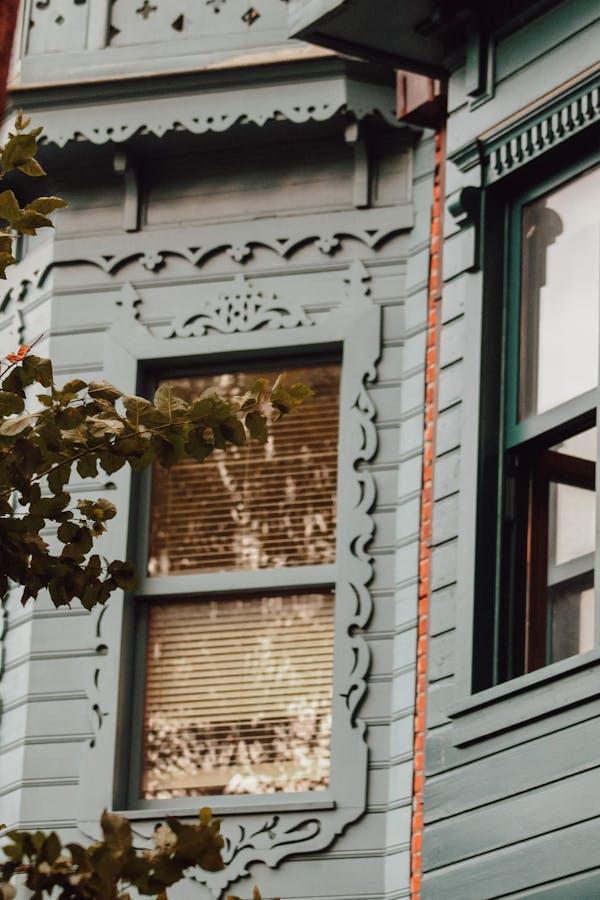
Historic home window restoration in Nevada City and Grass Valley almost always beats replacement on cost, character, and compliance — if the sash is still structurally sound. Nevada City's downtown historic district holds more than 90 contributing structures dating to 1850 through 1890, and Grass Valley's Mill Street and Boston Ravine neighborhoods add dozens more. Most of these homes still carry their original single-pane wavy cylinder glass in weight-and-pulley double-hung sash. That glass and that frame system are serviceable for another hundred years with the right work. A vinyl or fiberglass replacement window, by contrast, will be in a landfill by 2050.
I'm John, owner of Colfax Glass. We've restored windows in homes built before the transcontinental railroad reached Colfax in 1865, and we've also had the conversation with homeowners whose sash was too far gone to save. The honest answer depends on four things: the condition of the wood frame and sash, whether you're in a designated historic district, whether you're pulling a permit for something larger, and what your actual performance goals are. This guide walks through how to make that call and what the restoration path looks like when you choose it.
Before anything else: if your home is a contributing structure in the Nevada City Downtown Historic District or the Grass Valley Downtown Historic District, your window project is subject to design review through the local Historic District Advisory Commission (HDAC) or equivalent body. You cannot simply rip out original sash and drop in vinyl replacements. The review process governs what materials you can use, which muntin patterns are acceptable, and whether storm windows are installed interior or exterior.
Quick answer: Most original wood sash windows in Nevada City and Grass Valley homes can be restored for $350 to $900 per window (versus $1,200 to $3,500 per window for code-compliant historic-appropriate replacements). The California Historical Building Code and Title 24 Section 100.0(e) allow exemptions from modern U-factor and SHGC requirements for qualified historic properties. Interior storm window inserts bring a restored single-pane to roughly R-2.5 without altering the exterior. Get a free historic restoration assessment.
Why Nevada City and Grass Valley Are Different
These two towns are the densest surviving Gold Rush-era streetscapes in California, and that is a specific regulatory and practical reality, not marketing copy. Nevada City's core was platted in 1851. The Downtown Historic District was added to the National Register of Historic Places in 1985, and the city maintains a municipal historic district that covers roughly 90 contributing properties along Broad Street, Commercial Street, Pine Street, and Spring Street. Grass Valley's downtown was listed in 1985 as well, and the city additionally protects the Boston Ravine Historic District and the Mill Street commercial block.
The practical effect for a homeowner in either town: any exterior alteration visible from a public right-of-way — including window replacement — triggers a design review before a building permit can be pulled. In Nevada City, that review runs through the Historic District Advisory Commission. In Grass Valley, the Historic Commission handles it. Both bodies apply the Secretary of the Interior's Standards for Rehabilitation, which strongly prefer repair and restoration of original features over replacement.
Outside the designated districts, many older homes in Nevada City, Grass Valley, Colfax, Dutch Flat, and Downieville still have original fenestration but no design review requirement. In those cases, the choice between restoration and replacement is purely economic and aesthetic — though the economics still tend to favor restoration for a sound sash, as we'll see below.
- Nevada City Downtown Historic District: design review required, HDAC jurisdiction
- Grass Valley Downtown Historic District: Historic Commission review required
- Grass Valley Boston Ravine Historic District: review required for contributing structures
- Non-district historic homes (Colfax, Dutch Flat, outlying Nevada County): no design review, owner's choice
- California Register-listed individual properties: review through State Historic Preservation Officer (SHPO)
Restoration vs. Replacement: The Honest Cost Comparison
The cost argument is where most homeowners are genuinely surprised. A full restoration of a weight-and-pulley double-hung sash — reglazing, new sash cord, weatherstripping, paint prep and refinish, reglaze single-pane or swap to a matched restoration glass — runs $350 to $900 per window depending on wood condition. A historic-appropriate replacement window (true divided lite, simulated wavy glass, wood frame, matching muntin profile) runs $1,200 to $3,500 per window installed. The off-the-shelf vinyl retrofit that HDAC will not approve anyway runs $650 to $1,100.
On straight dollars, restoration wins. But it also wins on several other axes that matter for an older home: the original wood (typically old-growth Douglas fir or sugar pine) is denser and more rot-resistant than new-growth lumber, the weight-and-pulley system is repairable indefinitely with $20 in hardware, and the original wavy glass is part of what makes the house worth what it is worth. For historic preservation economics in California's Mother Lode, see the California Office of Historic Preservation's rehabilitation incentives program.
Where replacement does make sense: when the sash is rot-compromised beyond reasonable repair (more than about 30 percent of the wood needs replacement), when the window was replaced at some prior point with a non-original unit that has no historic value, or when the homeowner's energy-performance goals cannot be met with restoration plus storm windows. For a full comparison of replacement window options in foothills homes, see our retrofit vs. full-frame window replacement guide.
Pro tip: if you are buying a historic home in Nevada City or Grass Valley that still has original sash, get a window condition survey before closing. A good glazier can walk 15 windows in an afternoon and tell you which ones are sound, which need partial repair, and which need full replacement. That single hour of inspection often shifts the purchase math by $10,000 to $30,000.
| Approach | Typical Cost per Window | Performance (U-factor) | Best For |
|---|---|---|---|
| Full sash restoration + reglaze | $350 to $900 | ~1.0 (single-pane) | Sound sash, visible original glass preserved |
| Restoration + interior storm insert | $550 to $1,300 | ~0.40 (combined) | Sound sash, HDAC-approved performance upgrade |
| Historic-appropriate wood replacement | $1,200 to $3,500 | 0.27 (code-compliant) | Non-salvageable sash, full-performance goal |
| Standard vinyl retrofit | $650 to $1,100 | 0.27 (code-compliant) | Non-historic home, not HDAC-approved |
The chart above reflects typical pricing from glaziers and preservation carpenters working in Nevada County and Placer County in 2026. Actual costs vary with sash condition, accessibility (upper-story Victorian windows add labor), paint-removal requirements, and whether lead paint abatement is required under the federal Renovation, Repair, and Painting (RRP) rule for pre-1978 homes (U.S. Environmental Protection Agency, 2024).
Important: any work that disturbs more than six square feet of painted surface on the interior or 20 square feet on the exterior of a home built before 1978 triggers EPA RRP compliance. The contractor must be RRP-certified, and containment plus cleanup requirements add cost. Most Nevada City and Grass Valley homes built pre-1950 have lead paint somewhere on the windows.
The California Historical Building Code and Title 24 Exemption
California uniquely protects historic properties through the California Historical Building Code (CHBC), codified in Title 24 Part 8. The CHBC exists because the standard Title 24 code would be physically impossible to meet in a 140-year-old building without destroying its historic character. For qualified historic structures, the CHBC provides an alternative compliance path that prioritizes preservation.
For windows specifically, Section 100.0(e) of the California Energy Code (Title 24 Part 6) provides a direct exemption from prescriptive fenestration requirements for qualified historic buildings. The exemption applies when the building is listed on a national, state, or local historic register, and when meeting the prescriptive requirements would impair the historic character. The homeowner does not get to self-certify this — the exemption runs through the local building official with consultation from SHPO or the local historic commission.
What this means in practice: if you own a contributing structure in Nevada City's or Grass Valley's historic district, you can legally restore single-pane wavy glass sash that does not meet the Title 24 U-factor of 0.27. The permit still gets pulled, but the CF1R compliance form carries the CHBC exemption flag. For a deep breakdown of the underlying code, see our Title 24 window compliance guide for Placer County — the same rules apply in Nevada County, with the climate zone split running CZ 11 for Grass Valley and CZ 16 for Nevada City.
If your home is historic but not on a register, or is in a recognized historic district but not a contributing structure, the exemption does not automatically apply. You may still qualify for an alteration compliance path that exempts like-for-like sash replacements from full Title 24 compliance, but that requires case-by-case review. Every homeowner we've worked with in these districts has been able to find a legitimate compliance path — it just requires the conversation with the building official early in the process.
- CHBC (Title 24 Part 8) — alternative compliance framework for qualified historic structures
- CEC Section 100.0(e) — direct exemption from prescriptive fenestration requirements
- Contributing structure in National Register district — exemption eligible
- Individually listed on National, State, or local register — exemption eligible
- Non-contributing structure in district — case-by-case review, exemption not automatic
- Historic in character but not registered — standard Title 24 compliance applies
What a Full Sash Restoration Actually Involves
A proper double-hung weight-and-pulley sash restoration is a specific, well-documented process. It takes roughly 8 to 14 labor hours per window for a skilled glazier or preservation carpenter. Here is the sequence, start to finish, and what each step solves.
First, the sash comes out. Interior stops are removed carefully — they're often 140-year-old milled trim that cannot be replaced without a custom shaper setup. The lower sash comes out first, then the parting bead, then the upper sash. Sash cords are cut, and the cast-iron counterweights are lifted out through the pocket covers in the jamb. Everything gets labeled.
Second, the sash goes to the bench. Old glazing putty is removed with a gentle heat tool (never an open flame near historic glass), the glass is extracted and cleaned, wood rot is assessed. Minor rot is consolidated with epoxy. Major rot — typically the bottom rail or the bottom of the stile — gets a Dutchman repair: a new piece of matching wood let into the frame with epoxy and pegged. For a window with original wavy glass, the glass is preserved and reinstalled. If the original glass is broken or missing, a restoration glass panel from a specialty supplier (Bendheim, Lamberts, or similar) matches the period.
Third, reassembly. The glass is bedded in fresh linseed oil glazing compound, back-puttied against the rabbet, and finished with a new putty bead. Linseed oil putty — not modern acrylic caulk — is the historically correct material and lasts 30 to 50 years in a dry sash. The sash is primed with oil-based primer and painted with two topcoats of alkyd or modern waterborne alkyd. New sash cord (cotton, 6 or 7 millimeter) is tied to the counterweights and the sash is rehung.
Fourth, the jamb gets a rebuild. Parting bead is replaced if damaged. Interior stops get new felt or silicone weatherstripping — the single biggest performance upgrade available without changing the visible sash. The sash is re-tuned so it balances freely and stays open at any position.
For a deeper understanding of window frame materials more broadly, see our window frame materials comparison for Sierra Foothills homes — which covers why old-growth wood genuinely outperforms most modern materials for longevity, though not for thermal performance.
Pro tip: never strip lead paint from a historic sash with a heat gun above 1,100 degrees Fahrenheit. That temperature volatilizes lead and creates a serious inhalation hazard, even outdoors. Chemical strippers or low-heat infrared tools are the correct path. An RRP-certified contractor will know this; a general handyman often does not.
Interior Storm Window Inserts: The Performance Upgrade HDAC Approves
The biggest objection homeowners raise to historic window restoration is thermal performance. A restored single-pane sash has a U-factor around 1.0 and an R-value around 1.0 — far from the Title 24 requirement of 0.27 U-factor. That math is real. What the math leaves out is that an interior storm window insert brings the combined assembly to a U-factor around 0.40, which is a 60 percent performance improvement over the single pane alone, without altering the exterior at all.
Interior storm inserts are magnetically attached acrylic or low-iron glass panels mounted to a discreet interior frame. They are removable — they come out for cleaning and for summer ventilation — and they are fully reversible, which is the HDAC's primary concern. Leading brands include Indow Windows, Innerglass, and Climate Seal. A custom-fit Indow panel for a 30-by-60 Victorian sash runs $350 to $550, and installation is homeowner-doable or a couple hours for a professional.
Exterior storm windows — the kind you see on New England homes — are generally not appropriate for California Victorians because they were not part of the original assembly. HDAC commissions typically disallow exterior storm windows on visible elevations. They may be allowed on rear elevations or outbuildings. The interior storm is the correct answer for visible elevations in a historic district.
For a scientific breakdown of how window assemblies actually retain heat, see our single-pane vs. double-pane vs. triple-pane windows guide. For thermal performance in cold mountain climates specifically, see our double-pane window seal failure at elevation — restored single-pane plus storm insert actually outperforms a failed double-pane IGU at 3,000-plus feet.
| Assembly | U-Factor | Approximate R-Value | HDAC Compatibility |
|---|---|---|---|
| Original single-pane, untreated | ~1.0 | ~1.0 | Full approval (no change) |
| Restored single-pane + weatherstrip | ~0.85 | ~1.2 | Full approval |
| Restored + interior storm insert | ~0.40 | ~2.5 | Full approval (reversible) |
| Restored + exterior storm | ~0.45 | ~2.2 | Rear elevations only, case-by-case |
| Full wood replacement (dual-pane) | 0.27 | ~3.7 | Case-by-case with muntin match |
When the Sash Cannot Be Saved
Not every historic sash is restorable. After 140 years in a Sierra Foothills climate — pine-needle-packed roof valleys, 30-degree overnight winter temperatures, 95-degree summer afternoons, freeze-thaw cycling at 2,600 feet in Nevada City and 2,400 feet in Grass Valley — some sash are just done. The diagnostic is fairly clear: if more than 30 percent of the wood by volume requires replacement, or if the joinery (the mortise-and-tenon corners) has failed beyond glue-and-peg repair, a Dutchman repair is no longer economical versus replacement.
The right replacement for a Victorian home is a true divided lite (TDL) wood window from a specialty manufacturer like Marvin Ultimate, Kolbe Heritage, Jeld-Wen Custom Wood, or a regional shop like Mendocino Sash & Door. These windows use real muntins separating real panes of glass (sometimes with a dual-pane insulating option per lite, sometimes single with an interior storm). They can be ordered with simulated wavy glass — restoration-quality cylinder-pattern glass that matches the period. The cost is real, and HDAC review will govern the specification.
What the HDAC will typically not accept: simulated divided lite (SDL) where the muntins are applied to the interior and exterior surface of a single dual-pane unit, standard vinyl retrofit windows, aluminum-clad windows on visible elevations of high-contributing structures, or windows with grilles-between-the-glass (GBG). The objection is not aesthetic snobbery — these products genuinely look wrong on a pre-1900 house, and they compromise the contributing status of the building within the district. For the broader market landscape, our best window brands for the Sierra Foothills guide covers which manufacturers have historic-appropriate product lines.
- Rot exceeds 30 percent of wood volume — replacement typically required
- Mortise-and-tenon joinery has failed beyond glue-and-peg repair
- Sash was already replaced at some prior point with a non-original unit
- Glass is missing or broken beyond restoration-glass match capability
- Frame is out-of-square beyond what planing or shimming can correct
- Owner needs Title 24 performance and property does not qualify for CHBC exemption
Permits, Design Review, and the HDAC Process
For any exterior-visible window work on a contributing structure in the Nevada City Downtown Historic District or the Grass Valley Downtown Historic District, the sequence is: design review first, building permit second. Trying to pull the permit before HDAC approval is a waste of time — the building department will kick it back.
Design review applications in Nevada City are filed through the Community Development Department and heard by the Historic District Advisory Commission. Meetings are typically monthly, and the review is free for minor work (like in-kind window restoration) and carries a fee for major work (new window openings, material changes). Grass Valley's Historic Commission operates similarly through the Community Development Department. Both commissions evaluate proposals against the Secretary of the Interior's Standards — which, as a practical matter, means they approve restoration and repair quickly, and scrutinize replacement and modification more heavily.
Once HDAC approves, the building permit path follows normal Nevada County procedures for work in Nevada City or Grass Valley (the cities delegate residential building permits to the county for most routine work, with the city retaining planning and design review). For a full overview of California window permits, see our California window replacement permit guide. Straight restoration work — no change in opening size, no change in unit type, no change in glazing pattern — is usually exempt from a building permit entirely, but still requires HDAC review if the home is in a designated district.
For homes outside designated districts but identified as historic in character, no design review is required, but we still recommend it as a voluntary step for any homeowner who expects to sell the property to a preservation-minded buyer. A file note from HDAC confirming your restoration matches the Secretary's Standards is worth real money at resale.
Citation capsule: The Secretary of the Interior's Standards for Rehabilitation state that 'Deteriorated historic features shall be repaired rather than replaced. Where the severity of deterioration requires replacement of a distinctive feature, the new feature shall match the old in design, color, texture, and other visual qualities and, where possible, materials' (National Park Service, 36 CFR 67). Both Nevada City HDAC and Grass Valley Historic Commission apply these Standards directly.
Fire Hardening vs. Historic Preservation: The Tension in the Foothills
Nevada City, Grass Valley, Colfax, and most of the contributing historic districts in Nevada and Placer Counties sit in Very High Fire Hazard Severity Zones (VHFHSZ). This creates a direct tension: Chapter 7A of the California Residential Code requires wildland-urban interface (WUI) fire-resistive construction on new and replacement exterior components, and single-pane glass does not meet the dual-pane tempered requirement under Section R337.8.
The CHBC provides a partial resolution. For qualified historic structures, the prescriptive Chapter 7A requirements can be met through an alternative materials and methods submission that weighs preservation against fire performance. Most HDAC bodies and most building officials accept a package that combines: restored original single-pane primary sash, interior storm window insert (which brings the assembly to dual-pane effective), noncombustible exterior cladding within 5 feet of the window, and defensible space per California Public Resources Code Section 4291.
That combination is defensible fire-wise and preserves the historic character. What does not fly: simply restoring the original single-pane with nothing else done for fire hardening on a VHFHSZ lot. Building officials are tightening on this. For a full breakdown of WUI glass requirements, see our fire-resistant windows guide for foothills WUI zones and our guide to California wildfire home hardening grants for windows — which can sometimes fund the interior storm insert as a dual-pane alternative for historic properties.
The 2020 Jones Fire burned to within a few miles of Grass Valley. The 2021 River Fire burned more than 2,600 acres in Colfax. The 2017 Lobo Fire burned east of Grass Valley. These are not abstract risks. The right historic restoration in the foothills accepts fire hardening as part of the package, not an afterthought.
- Assess VHFHSZ status at CAL FIRE Fire Hazard Severity Zone viewer
- Restore original sash to good condition — weatherstripped, reglazed, painted
- Add interior storm insert with tempered or laminated glass face
- Upgrade adjacent exterior cladding to noncombustible within 5 feet
- Maintain Zone 1 (0 to 30 feet) defensible space per PRC 4291
- Document the assembly for permit review as CHBC alternative compliance
The donut above reflects the typical distribution we see surveying pre-1900 homes in Nevada City and Grass Valley. About 80 percent of original sash are fully restorable with minor to moderate work. About 11 percent need significant Dutchman repairs but still stay on the restoration path. About 9 percent — usually the lower rails of first-floor windows that have taken decades of water infiltration — genuinely need replacement. These are ballpark averages from our own project history, not a peer-reviewed dataset, but they match what preservation carpenters in the region will typically tell a homeowner.
How Long a Proper Restoration Takes
Timeline planning matters because most homeowners want windows in and out within a reasonable window. A single-window restoration in our shop runs 3 to 5 business days from drop-off to pickup. A whole-house restoration of 12 to 18 windows typically runs 6 to 10 weeks from start to finish, with 2 to 4 windows out of the home at any given time so the house is not open to weather. We board over openings with weather-resistant panels while sash are at the bench.
For homeowners who want a faster schedule, an in-place restoration is possible: reglazing, weatherstripping, and paint touch-up can happen with the sash still in the frame, though this limits what can actually be done. Full Dutchman repairs and full reglazing need bench work. Most Nevada City and Grass Valley Victorians end up being phased — a group of windows per season, or a whole-floor restoration scheduled during a kitchen or bath renovation so the disruption is consolidated.
For homeowners dealing with a specific window problem — say, a single fogged pane or a broken single-pane light — we can often do a same-week in-home visit and either repair in place or remove the single sash for bench work. See our foggy double-pane window repair guide for the modern-window version of this problem, and our window caulking and weathersealing guide for quick-fix scenarios that buy time until a full restoration.
Finding the Right Glazier for Historic Work
Historic sash restoration is a specialty skill. Not every window company does it, and some that claim they do are actually just pitching replacement under a different name. When you interview glaziers or preservation carpenters for a Nevada City or Grass Valley project, a few questions sort the capable ones from the rest quickly.
Ask whether they are RRP-certified (required for lead paint work on pre-1978 homes). Ask whether they have a bench shop with room to work on sash, or whether they subcontract bench work. Ask whether they stock linseed oil glazing putty (modern acrylic glazing is the wrong material for historic sash). Ask to see photographs of Dutchman repairs they've done — the joinery should be tight and the grain match should be careful. Ask whether they have worked with the Nevada City HDAC or Grass Valley Historic Commission before; a contractor who has navigated these bodies repeatedly brings real value.
A good historic glazier will also push back on some of the homeowner's wishes if they compromise the restoration. If you want to convert an original single-pane to a modern dual-pane IGU inserted into the original sash, a preservation-minded glazier will explain why that usually fails both structurally (the sash was not designed for dual-pane weight) and visually (the IGU creates a visible double reflection the original glass doesn't have). Listen for that pushback — it is a sign the glazier understands the work. For a discussion of IGU-only retrofits in modern windows, see our glass-only vs. full window replacement guide.
Pro tip: the Window Preservation Standards Collaborative publishes a free PDF of standards and best practices for historic window restoration. It is the single best document to hand a glazier you are vetting. If they have not seen it, they are not the right contractor for a Victorian.
Tax Credits, Grants, and Incentives for Historic Restoration
The federal Historic Rehabilitation Tax Credit provides a 20 percent tax credit on qualified rehabilitation expenses for income-producing historic properties (commercial buildings, rental housing). It does not apply to owner-occupied residences. The California Historic Rehabilitation Tax Credit was enacted in 2019 but has not received ongoing funding in every budget cycle — check current-year status before relying on it.
For owner-occupied Nevada City and Grass Valley homes, the Mills Act property tax abatement program is usually the most valuable incentive. Both cities participate. Mills Act contracts reduce property taxes on qualified historic properties by up to 40 to 60 percent in exchange for a 10-year commitment to maintain and rehabilitate the property per the Secretary's Standards. The savings on a Nevada City Victorian can easily fund the restoration work itself over the contract term. Applications run through the city planning department, with final approval at the city council.
For wildfire-related components of a historic restoration, CAL FIRE's home hardening programs sometimes fund interior storm inserts as part of a whole-home hardening package. The California Wildfire Mitigation Program expanded eligibility in 2024 for historic properties that need hardening under CHBC alternative compliance. See our California wildfire home hardening grants for windows guide for current availability.
- Federal Historic Rehabilitation Tax Credit — income-producing properties only (20%)
- California Historic Rehabilitation Tax Credit — check current funding cycle
- Mills Act property tax abatement — Nevada City and Grass Valley both participate
- California Wildfire Mitigation Program — historic-property hardening eligible
- PG&E Energy Savings Assistance — weatherization for income-qualified households
When We Tell Customers to Replace Instead of Restore
Honest answer from 15 years of glass work in the foothills: about 1 in 6 homeowners who call about historic window restoration end up being better served by replacement. That is not a sales pitch — it's a diagnostic reality. The sash condition, the owner's performance needs, the home's historic status, and the budget all have to line up. When they don't, replacement is the right call.
The clearest cases for replacement: the home is not in a designated district and has no historic register listing; the sash have already been replaced once with non-original units and there is nothing original left to preserve; the homeowner needs Title 24-compliant U-factor performance and cannot use the CHBC exemption; the wood is too far gone to Dutchman-repair economically. In those cases, a quality wood or fiberglass replacement window with true or simulated divided lites gives the homeowner what they actually need.
If your project falls into the replacement category, see our complete window replacement guide for Sierra Foothills homeowners for the full framework, and our vinyl vs. fiberglass windows comparison for the Sierra Foothills for frame material selection. For homes that also need egress upgrades as part of the project, see the California egress window requirements guide — historic windows often predate modern egress requirements and may need enlargement for any new bedroom conversion.