
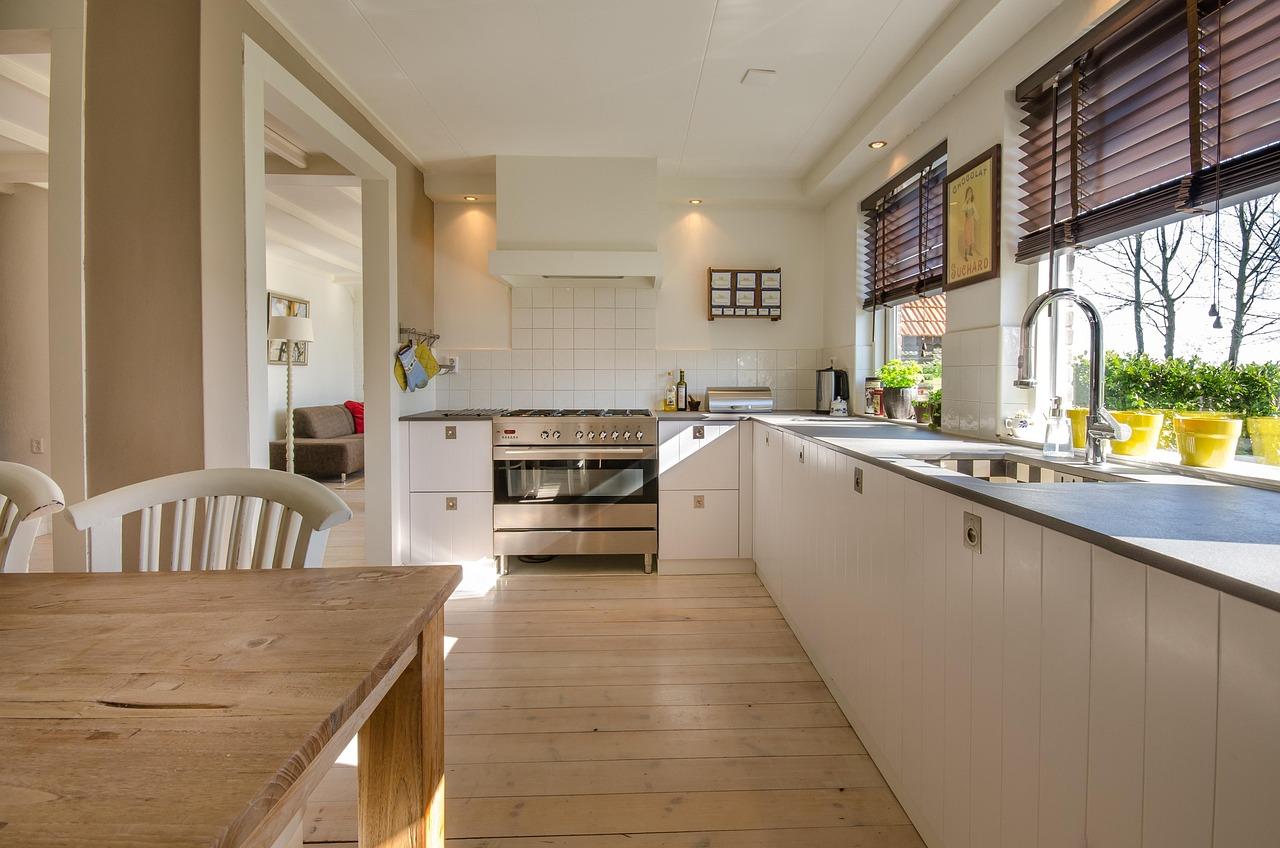
A back-painted glass backsplash costs $40 to $65 per square foot installed in 2026, according to pricing data from ABC Glass & Mirror. That puts a typical 30-square-foot kitchen backsplash at $1,200 to $1,950 total — roughly two to three times the cost of a ceramic tile backsplash covering the same area. The premium buys you a seamless, grout-free surface with a high-gloss finish that reflects light, resists stains, and wipes clean with a damp cloth.
Back-painted glass is exactly what it sounds like: a sheet of low-iron tempered glass with an opaque paint coating applied to the back surface. The paint sits behind the glass, protected from contact, moisture, and kitchen grease — similar to how custom mirrors use a backing layer behind the reflective coating. You see the color through the glass, which adds depth and a subtle reflective quality that flat paint or tile cannot replicate. Because the glass is fabricated as a single sheet (or a few large panels with minimal seams), there are no grout lines to scrub, seal, or watch discolor over time.
John, owner of Colfax Glass at 226 N Auburn St in Colfax, CA, fabricates and installs back-painted glass backsplashes for kitchens across the Sierra Foothills and Northern California. This guide breaks down real costs, compares glass against tile across eight factors that matter, covers the material and installation details most guides skip, and answers the heat resistance question that comes up in every consultation.
TL;DR: Back-painted glass backsplashes run $40 to $65 per square foot installed in 2026. A typical 30 sq ft kitchen backsplash costs $1,200 to $1,950 in glass vs. $450 to $1,200 in ceramic tile. Glass wins on maintenance, aesthetics, and longevity. Tile wins on upfront cost and DIY-friendliness. Tempered glass is safe behind stoves and cooktops.
How Much Does a Back-Painted Glass Backsplash Cost?
Back-painted glass pricing has three components: the glass material itself, the back-painting process, and installation labor. Each adds to the total, and each varies based on color choice, glass thickness, and project complexity.
The glass material is low-iron (ultra-clear) tempered glass. Standard float glass has a slight green tint caused by iron content in the raw material — visible when you look at the edge of any piece of regular glass. Low-iron glass eliminates that green cast, which matters when you are painting a specific color on the back. The glass alone costs $12 to $20 per square foot for 1/4-inch tempered low-iron, according to pricing from Fab Glass and Mirror.
The back-painting process adds $10 to $20 per square foot depending on color. Stock colors like white, black, and gray are the most affordable because the manufacturer keeps these in regular production. Custom color-matching — where the glass shop matches a specific paint swatch, cabinet color, or Pantone code — commands a premium because it requires a dedicated paint run and quality control verification.
Installation labor runs $15 to $25 per square foot, per Angi's 2026 installation data. Glass backsplash installation is more involved than tile. The panels are heavy, fragile during transport, and must be templated precisely to account for outlets, switches, and window openings. Cuts and holes must be completed before tempering — you cannot field-cut tempered glass.
Pro Tip: Stock colors — white, black, and gray — are the most affordable back-painted glass options and ship within days, according to ABC Glass & Mirror. Custom color-matched glass requires a dedicated paint run and adds 20 to 40 percent to the material cost. If your kitchen design allows a stock color, you save money and cut lead time significantly.
| Kitchen Size | Backsplash Area (approx.) | Glass Cost Range | Tile Cost Range (Ceramic) |
|---|---|---|---|
| Galley / small | 15–20 sq ft | $600–$1,300 | $225–$600 |
| Average L-shaped | 25–35 sq ft | $1,000–$2,275 | $375–$1,050 |
| Large U-shaped | 35–50 sq ft | $1,400–$3,250 | $525–$1,500 |
| Full wall (counter to ceiling) | 50–80 sq ft | $2,000–$5,200 | $750–$2,400 |
Back-Painted Glass vs. Tile: Head-to-Head Comparison
This is the comparison most homeowners are running in their heads when they consider a glass backsplash. Tile is the default — it is what most kitchens already have. Glass is the upgrade. The question is whether the upgrade is worth the cost difference for your specific kitchen and how you use it.
The comparison below covers the eight factors that matter most based on what Colfax Glass customers ask about during consultations. Costs reflect 2026 pricing for the Northern California market.
The biggest ongoing cost difference is maintenance. Tile grout absorbs moisture, oils, and kitchen grease — requiring sealing every one to two years and periodic deep cleaning to prevent discoloration. Glass has zero absorption. The Tile Council of North America rates glass at 0% water absorption, the lowest of any common backsplash material. Twenty years of zero grout maintenance adds up to meaningful time and cost savings.
| Factor | Back-Painted Glass | Ceramic / Porcelain Tile |
|---|---|---|
| Material + install cost (per sq ft) | $40–$65 | $15–$30 |
| Grout lines | None — seamless panels | Yes — require sealing every 1–2 years |
| Daily cleaning | Damp cloth or glass cleaner | Tile wipes easily; grout traps grease and stains |
| Heat resistance | Tempered glass handles 470°F+ | Ceramic/porcelain is heat-proof |
| Durability | Scratch-resistant surface; impact can crack the panel | Individual tiles are replaceable; grout degrades |
| Design flexibility | Any solid color; high-gloss reflective finish | Thousands of patterns, textures, shapes, sizes |
| DIY-friendly | No — requires professional templating and install | Yes — subway tile is a common DIY project |
| Lifespan | 20–30+ years (no grout to degrade) | 15–25 years (grout limits lifespan) |
Why Homeowners Choose Glass Over Tile
Cost alone does not explain why back-painted glass backsplashes continue to gain traction in California kitchen renovations. The practical advantages are what drive the decision for most homeowners we work with at Colfax Glass.
The seamless surface is the primary draw. A 30-square-foot tile backsplash using standard 3-by-6-inch subway tile contains roughly 240 tiles and over 100 linear feet of grout lines. A back-painted glass backsplash covering the same area uses two to four large panels with silicone-sealed joints that are nearly invisible. That difference is visible from across the room — glass reads as a single plane of color, while tile reads as a grid.
Light reflection is the second factor. Back-painted glass has a naturally reflective surface that bounces light around the kitchen, making smaller or darker kitchens feel larger and brighter. This matters in many Sierra Foothills homes where kitchen windows face north or are partially shaded by mature trees. A white or light-colored back-painted glass backsplash amplifies available natural light in a way that matte tile cannot.
Cleaning effort is the third — and for many homeowners, the deciding factor. Cooking generates airborne grease particles that settle on every surface within several feet of the cooktop. On tile, those particles land on both the tile face and the grout. The tile wipes clean; the grout absorbs the grease. Over months and years, grout behind a stove darkens noticeably. Glass has no grout to absorb anything. A quick wipe with a damp cloth or glass cleaner restores the surface completely.
- Seamless surface: Two to four large panels replace 200+ individual tiles and 100+ feet of grout lines
- Light amplification: Reflective finish bounces natural and artificial light, making kitchens feel brighter and larger
- Zero-absorption cleaning: Glass has 0% water absorption per the Tile Council of North America — grease, wine, and food splatter wipe away completely with a damp cloth
- Color precision: Back-painting can match any color swatch, Pantone code, or cabinet finish for a fully coordinated design
- Longevity: No grout to crack, stain, or reseal — back-painted glass backsplashes last 20 to 30 years with minimal maintenance
Is Tempered Glass Safe Behind a Stove or Cooktop?
This is the most common question we hear during back-painted glass backsplash consultations. The short answer: yes, tempered glass is safe and code-compliant behind stoves and cooktops.
Tempered glass withstands temperatures up to approximately 470 degrees Fahrenheit (243 degrees Celsius) before reaching its stress threshold, according to Fab Glass and Mirror. A residential gas burner produces flame temperatures around 3,500 degrees Fahrenheit at the tip, but the radiant heat reaching the backsplash 4 to 6 inches behind the burner is far lower — typically 150 to 250 degrees Fahrenheit under normal cooking conditions. That leaves a substantial safety margin.
The key specification is that back-painted glass backsplashes use tempered glass, not annealed. Tempered glass is four to five times stronger than annealed glass of the same thickness and is heat-treated specifically to withstand thermal stress. If tempered glass does break (from impact, not heat), it shatters into small, roughly cube-shaped granules rather than dangerous shards — the same safety characteristic required for shower doors and automotive glass.
For California kitchens, Colfax Glass uses 1/4-inch tempered low-iron glass for all backsplash installations. The 1/4-inch thickness provides adequate rigidity and impact resistance for a wall-mounted application. We recommend leaving a minimum 1/2-inch gap between the glass and the cooktop surface to allow air circulation and prevent direct heat transfer from hot cookware handles.
Pro Tip: If your cooktop is a commercial-style range with high-BTU burners (over 20,000 BTU), mention that during your consultation. Colfax Glass can specify a thicker panel or recommend positioning adjustments to maintain the proper thermal gap. Standard residential ranges present no heat concern for tempered glass backsplashes.
Material Options and Color Choices
Back-painted glass uses ultra-clear, low-iron glass as the base material. Standard float glass contains iron oxide impurities that produce a visible green tint — especially noticeable when paint is applied to the back. Low-iron glass (sometimes marketed as Starphire, Optiwhite, or Diamant depending on manufacturer) removes that green cast so the painted color reads true.
Color options fall into three tiers based on cost and lead time.
Stock colors include white, black, and gray. These are the workhorses of back-painted glass and account for the majority of backsplash projects. White back-painted glass is particularly popular in California kitchens because it pairs cleanly with white or light-toned cabinetry while adding the reflective depth that painted drywall lacks. Stock colors are the most affordable option — starting at approximately $43 per square foot installed for white, according to ABC Glass & Mirror.
Designer neutrals include navy, charcoal, taupe, sage, and similar tones that glass fabricators keep in regular rotation. These colors are available within days and cost 10 to 20 percent more than stock white. They work well as accent walls or in kitchens where the backsplash needs to contrast with cabinetry rather than match it.
Custom color-matching is the premium tier. The glass shop mixes paint to match a specific swatch — your cabinet color, a Sherwin-Williams or Benjamin Moore shade, or a Pantone code. Custom colors add 20 to 40 percent to material cost and require an additional 5 to 10 business days for the paint run and quality verification. Custom matching is worthwhile when the backsplash color is central to the overall kitchen design.
- Stock colors (white, black, gray): Most affordable, ships within days, starting at ~$43/sq ft installed
- Designer neutrals (navy, charcoal, taupe, sage): 10–20% premium over stock, available within a week
- Custom color-matched: 20–40% premium, 5–10 extra business days, matched to any swatch or paint code
- Low-iron glass base: Eliminates green tint present in standard float glass — critical for accurate color rendering
How Back-Painted Glass Backsplashes Are Installed
Glass backsplash installation differs significantly from tile. There is no thinset, no grout, no spacers, and no cutting on site. The process has five distinct phases, and the precision requirements at each stage are why professional installation is non-negotiable.
Phase 1 — Templating. A technician measures the backsplash area and creates a precise template that accounts for electrical outlets, switches, under-cabinet lighting, window openings, and any irregularities in the wall or countertop. Measurements must be accurate to within 1/16 of an inch because tempered glass cannot be cut or modified after heat treatment. Every cutout — outlet boxes, switch plates, pipe penetrations — must be marked on the template.
Phase 2 — Fabrication. The glass is cut to the template dimensions, all cutouts are routed, and edges are finished. The glass then goes through the tempering furnace at approximately 1,150 degrees Fahrenheit. After tempering, the back surface is cleaned, primed, and painted with a specialized glass paint. The paint cures under controlled conditions.
Phase 3 — Wall preparation. The wall behind the backsplash must be flat, clean, and dry. Any old tile, adhesive residue, or damaged drywall is repaired. For best adhesion, the wall should be primed with a bonding primer.
Phase 4 — Installation. The glass panels are mounted using structural silicone adhesive applied to the back of each panel. The installer positions each panel, checks level and alignment, and secures it with temporary support while the adhesive cures. Joints between panels receive a bead of clear or color-matched silicone sealant.
Phase 5 — Finishing. After the adhesive cures (typically 24 to 48 hours), temporary supports are removed, outlet covers are reinstalled, and the surface is cleaned.
Total timeline from templating to finished installation: 10 to 18 business days. Tempered glass fabrication accounts for most of that lead time.
- Templating: 1–2 hours on site — precision measurements including all cutouts for outlets and switches
- Fabrication and tempering: 7–10 business days — glass cutting, tempering, back-painting, and curing
- Wall preparation: 1–3 hours — removal of old backsplash, drywall repair, priming
- Installation: 2–4 hours — silicone adhesive mounting, leveling, sealing joints
- Cure time: 24–48 hours before the backsplash is fully load-bearing
When Tile Is the Better Choice
Back-painted glass is not the right answer for every kitchen. Several situations favor tile over glass — and being honest about those helps homeowners make the right investment for their specific project.
Budget-driven renovations benefit from tile. If the backsplash is part of a broader kitchen renovation and the budget is already stretched across cabinetry, countertops, and appliances, ceramic tile at $15 to $30 per square foot installed delivers a quality backsplash at 40 to 60 percent less than glass. Subway tile in particular offers a timeless look at the lowest price point in the backsplash market — HomeGuide reports standard ceramic subway tile at $7 to $15 per square foot installed in 2026.
Pattern and texture variety is another tile strength. Back-painted glass offers solid colors with a high-gloss finish. For bathroom applications where privacy matters, frosted and textured glass options exist — but for kitchen backsplashes, back-painting is the standard. Tile offers mosaics, hand-made textures, geometric patterns, Moroccan zellige, and hundreds of other design options that glass simply cannot replicate. If the design vision for your kitchen depends on texture or pattern, tile is the clear choice.
DIY-friendly projects favor tile. A competent homeowner can install a subway tile backsplash over a weekend with basic tools and YouTube tutorials. Glass backsplash installation requires professional templating, factory fabrication, and skilled mounting — it is not a DIY project under any circumstances.
Rental properties and short-term holds are better served by tile. If you plan to sell or significantly renovate the kitchen within five years, the lower upfront cost of tile makes more financial sense. The maintenance advantage of glass compounds over 10 to 20 years of ownership — it does not matter much in a five-year window.
Maintenance and Long-Term Care
One of the strongest selling points of a back-painted glass backsplash is how little maintenance it requires compared to tile. The maintenance difference is not marginal — it is fundamentally different.
Daily cleaning requires only a soft cloth dampened with water or a standard glass cleaner. That is the entire routine. There is no grout to scrub, no sealant to reapply, and no textured surface to trap grease or food particles. CBD Glass notes that messes "lift off the backsplash immediately, no leftover residue" with basic soap and water.
Long-term, the surface stays consistent. Back-painted glass does not fade, yellow, or discolor from UV exposure because the paint layer sits behind the glass and is protected from direct light. The glass surface itself is non-porous and scratch-resistant under normal kitchen use — though it is not scratch-proof. The same durability principles that make glass partitions viable in commercial settings apply here: tempered glass holds up well to normal daily contact but is not indestructible. Abrasive scrubbers and scouring pads will micro-scratch the surface over time, so avoid them.
If you need to understand the broader glass repair cost landscape in the Colfax area, we have a separate guide covering that.
The one maintenance concern is impact damage. Glass is rigid, and a hard impact from a dropped cast-iron pan or an aggressively swung cabinet door can crack a panel. Unlike tile, where you can replace a single damaged tile, a cracked glass panel typically requires replacing the entire panel section. That said, this is uncommon — wall-mounted backsplashes do not experience the same impact exposure as countertop glass or floor tile.
For Sierra Foothills homeowners, the maintenance advantage is particularly relevant. Many homes in the Colfax, Auburn, and Grass Valley area have kitchens that see heavy use year-round — wood stove season means more indoor cooking, and summer entertaining means more kitchen traffic. A surface that maintains its appearance with minimal effort is worth the upfront premium for homeowners who plan to stay in their home long-term.
Avoid abrasive cleaners, scouring pads, and razor blade scrapers on back-painted glass. Use a soft microfiber cloth with water or standard glass cleaner for daily cleaning. For stubborn grease, a 50/50 vinegar and water spray works well. That is the full maintenance routine — for the life of the backsplash.
How to Get a Back-Painted Glass Backsplash Quote from Colfax Glass
A back-painted glass backsplash is a custom-fabricated product, so accurate quoting starts with precise measurements and a clear understanding of your color preference, kitchen layout, and timeline.
Colfax Glass provides free on-site measurements and consultations throughout the Sierra Foothills — Colfax, Auburn, Grass Valley, Nevada City, Foresthill, Loomis, Rocklin, Roseville, and Sacramento. During the consultation, John assesses the wall condition, measures for all cutouts, discusses color options, and provides a detailed quote.
When requesting a quote, have these details ready: approximate kitchen backsplash dimensions (length and height), number of electrical outlets and switches in the backsplash area, your color preference (stock, neutral, or custom match), and whether you need old tile or backsplash material removed.
Lead time from initial measurement to completed installation runs 10 to 18 business days for stock colors. Custom color-matched projects add 5 to 10 business days for the paint process. If you are coordinating the backsplash with a broader kitchen renovation, schedule the glass consultation after countertops are installed — final measurements depend on the actual countertop height and edge profile.
Contact Colfax Glass through the website contact form or visit the shop at 226 N Auburn St in Colfax, CA for a free consultation and quote.