
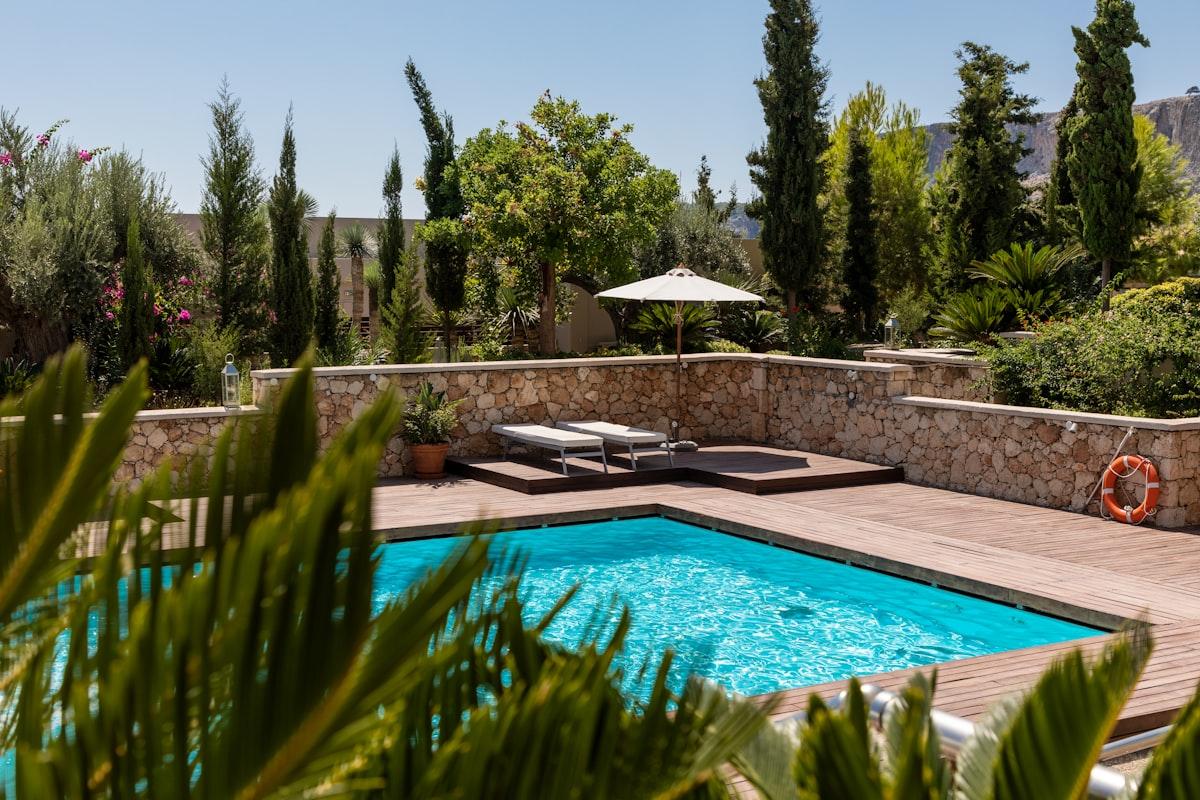
Glass pool fences cost $95 to $210 per linear foot installed in the Colfax and Sierra Foothills area, depending on fence style, glass thickness, hardware, and site conditions. For a typical residential pool with 80 to 120 linear feet of fencing, that puts the total project cost at $7,600 to $25,200. Frameless glass pool fences sit at the top of the range at $150 to $210 per foot, semi-frameless systems run $115 to $175 per foot, and framed (post-and-panel) systems are the most affordable at $95 to $130 per foot.
Those numbers come from 2026 pricing data published by HomeGuide, Angi, and specialty glass fence contractors. Northern California labor rates and Placer County site conditions (slope, soil type, accessibility) can push costs toward the higher end of these ranges.
I'm John, owner of Colfax Glass at 226 N Auburn St in Colfax, CA. I've been working with tempered and safety glass across the Sierra Foothills for over 25 years. While pool fence installation involves both glass fabrication and structural hardware, the glass panels themselves are the core of the project — and understanding glass types, thickness requirements, and code compliance is what determines whether the fence performs safely for 20+ years or develops problems. This guide covers what each style costs, California pool barrier code requirements, the glass specifications that matter, and the installation factors specific to foothill properties.
Bottom line: glass pool fences cost $95 to $210 per linear foot installed. Frameless systems ($150–$210/ft) offer the cleanest look with the highest cost. Semi-frameless ($115–$175/ft) balances aesthetics and budget. Framed post-and-panel ($95–$130/ft) is the most affordable option. For an average residential pool perimeter of 100 linear feet, expect a total project cost of $9,500 to $21,000.
Glass Pool Fence Cost by Style
The fence style is the biggest cost variable in a glass pool fence project. Each style uses different hardware, glass thickness, and installation methods — all of which directly affect the per-foot price and the total project cost.
The table below shows 2026 installed pricing for the three main glass pool fence styles. These prices include tempered safety glass panels, hardware (posts, spigots, clamps, or frames), a self-closing/self-latching gate, and professional installation. Prices do not include permit fees, which vary by jurisdiction.
Frameless glass pool fences use the thickest glass — 12mm (half-inch) tempered panels — because the glass must support itself between base-mounted spigots or clamps without any intermediate posts. According to US Glass Fence, the thicker glass and precision hardware requirements drive the cost premium. The result is a near-invisible barrier that provides unobstructed sightlines across the pool area.
Semi-frameless systems use slim vertical posts (typically 2-inch square aluminum or round stainless steel) between glass panels. The posts carry structural load, which means the glass panels can be thinner — 8 to 10mm instead of 12mm. The posts are visible but relatively unobtrusive, especially in dark finishes like matte black or bronze. This is the most popular style for residential pools because it balances the clean look of glass with a lower price point than fully frameless.
Framed systems surround each glass panel with a complete aluminum or steel frame. They use the thinnest glass (6 to 8mm) because the frame carries all structural load. The visual profile is more prominent than frameless or semi-frameless, but the glass panels still provide far more transparency than mesh, wrought iron, or wood fencing alternatives.
| Fence Style | Cost Per Linear Foot | Glass Thickness | Hardware | Visual Profile |
|---|---|---|---|---|
| Frameless | $150 – $210 | 12mm (1/2") | Spigots or base mounts only | Near-invisible, maximum transparency |
| Semi-frameless | $115 – $175 | 8–10mm (5/16"–3/8") | Slim aluminum or stainless posts between panels | Mostly transparent, visible posts |
| Framed (post-and-panel) | $95 – $130 | 6–8mm (1/4"–5/16") | Full aluminum or steel frame around each panel | More visible frame, still transparent glass |
What Drives the Total Project Cost?
Beyond fence style, five additional factors move the total glass pool fence cost up or down. Understanding these helps you compare contractor quotes accurately and anticipate line items that do not always appear in initial estimates.
Pool perimeter length is the most straightforward multiplier. Measure the total linear footage of fencing required — this is the perimeter around the pool area minus any sections where a house wall, retaining wall, or other approved barrier substitutes for fencing. A typical backyard pool in the Sierra Foothills requires 80 to 120 linear feet of fencing. Larger properties or pools set away from the house may need 150+ feet.
Gate cost is often underestimated in initial quotes. California pool barrier code requires a self-closing, self-latching gate that opens away from the pool. A glass pool fence gate costs $800 to $2,500 depending on size and style — frameless glass gates are at the top of that range because of the heavy-duty self-closing hinges and magnetic latches required to swing a 50- to 80-pound glass panel. Most pools need at least one gate; properties with multiple access points may need two or three.
- Pool perimeter length: 80–120 linear feet is typical for residential pools — measure the total fence line minus any walls acting as barriers
- Gate cost: $800–$2,500 per gate for self-closing, self-latching glass gates that meet California code — most pools need 1–2 gates
- Site conditions: flat, accessible sites are the baseline — slopes, rocky soil, and limited access add $500–$2,000 to excavation and footer costs
- Footer/footing type: concrete core-drilled footings (standard on existing pool decks) vs. new concrete footings in soil — new footings add $20–$40 per linear foot
- Hardware finish: standard mill-finish aluminum or 304 stainless steel is the baseline — marine-grade 316 stainless steel (+15–25%), powder-coated custom colors (+$200–$500 total)
- Permit and inspection fees: Placer County requires a pool barrier permit — fees typically run $150–$400 depending on project scope
California Pool Fence Code: What Glass Fences Must Meet
California has some of the strictest pool barrier requirements in the country, and glass pool fences must meet every specification. The governing codes are the California Building Code (CBC) Chapter 31, the California Swimming Pool Safety Act (Health & Safety Code Section 115920-115929), and Placer County's local amendments. According to the Placer County Building Department, all pool enclosures must be permanent and non-removable, and must meet the following specifications.
The minimum fence height is 60 inches (5 feet), measured from the exterior side of the fence (the side facing away from the pool). This is a non-negotiable requirement — glass panels shorter than 60 inches do not meet California code regardless of local jurisdiction.
The maximum gap at the bottom of the fence is 2 inches from grade. Glass panels must sit close to the ground or deck surface with no more than a 2-inch clearance. For glass pool fences installed on uneven ground — common on sloped Sierra Foothills properties — each panel must individually meet the 2-inch gap requirement, which sometimes requires custom panel heights.
No opening may allow passage of a 4-inch sphere. For glass pool fences, this typically applies to the gaps between panels and posts in semi-frameless and framed systems. Frameless fences with panel-to-panel seals generally meet this requirement by default.
The fence surface must not provide footholds that enable climbing. Glass panels inherently meet this requirement because they are smooth and flat. However, the hardware — particularly spigots and post brackets — must be designed so that they do not create climbable projections.
Pro Tip: Placer County requires a pool barrier to be in place and inspected before the pool is filled with water. If you are building a new pool or retrofitting an existing pool without code-compliant fencing, get the fence permit and installation scheduled before the pool contractor fills the pool. The building inspector will verify fence height, gap clearance, gate operation, and hardware at the final inspection. Do not assume your contractor knows the local amendments — check the Placer County pool enclosure requirements directly or call the Building Department at 530-745-3010.
- Minimum height: 60 inches (5 feet) measured from the exterior side facing away from the pool
- Maximum bottom gap: 2 inches from finished grade to the bottom of the glass panel
- No 4-inch sphere passage: gaps between panels, posts, and hardware must not allow a 4-inch sphere to pass through
- No climbable features: hardware and frame components must not create footholds — glass panels are inherently non-climbable
- Gate requirements: must open away from the pool, be self-closing and self-latching, with the latch at least 60 inches above grade
- Glass type: must be tempered safety glass (minimum) — laminated tempered glass is also accepted and provides additional safety if a panel breaks
- Permanent installation: the fence must be permanently anchored — temporary or removable glass panels do not meet code
Tempered Glass vs. Laminated Glass for Pool Fences
All glass pool fences in California must use tempered safety glass at minimum, but you have a choice between standard tempered glass and laminated tempered glass. The decision affects safety, cost, and maintenance — and it is worth understanding the difference before committing to a fence style.
Standard tempered glass is four to five times stronger than regular glass. When it breaks, it shatters into small, relatively dull pieces rather than large sharp shards. This is why building code requires tempered glass in all pool barrier applications. Tempered glass is the standard product in most glass pool fence systems and is the least expensive option. I cover the full comparison in my tempered vs. laminated glass guide.
Laminated tempered glass uses the same tempered panels but bonds two layers together with a PVB (polyvinyl butyral) interlayer. If the glass breaks, the pieces stick to the interlayer rather than falling to the ground. This means the panel remains in place as a barrier even when broken — a significant safety advantage for a pool fence where a broken panel could leave the pool temporarily unprotected.
The cost premium for laminated over standard tempered glass in a pool fence is typically 30 to 50 percent on the glass component alone. For a frameless fence at $150 to $210 per foot with standard tempered glass, upgrading to laminated tempered adds roughly $30 to $60 per linear foot.
Pro Tip: If your pool area is accessible to young children and you want the safest possible glass pool fence, laminated tempered glass is worth the premium. The key advantage is that a broken laminated panel stays in place as a barrier — you have time to schedule a replacement rather than dealing with an immediate gap in the pool enclosure. For families with kids under 10, this is the single most valuable upgrade you can make to a glass pool fence.
| Feature | Standard Tempered Glass | Laminated Tempered Glass |
|---|---|---|
| Break pattern | Shatters into small pieces, falls from frame | Cracks but pieces stick to interlayer, panel stays in place |
| Post-break barrier | No — panel must be replaced immediately | Yes — damaged panel still functions as a barrier until replaced |
| Cost premium | Baseline | +30–50% on glass cost ($30–$60/ft more installed) |
| Sound reduction | Moderate | Better — interlayer dampens sound transmission |
| UV protection | Blocks some UV | Blocks 95%+ of UV — better protection for poolside furniture |
| Weight | Standard | Heavier — may require upgraded hardware in frameless systems |
| Code compliance | Meets California Building Code | Exceeds California Building Code |
Glass Pool Fence vs. Other Pool Fence Materials
Glass is the premium option for pool fencing, and it costs significantly more than alternative materials. The question most homeowners ask is whether the cost premium is justified for their specific situation. Here is how glass compares to the most common pool fence alternatives in terms of cost, visibility, maintenance, and lifespan.
Mesh safety fencing is the most affordable option at $15 to $25 per linear foot installed. It is designed to be removable and stores compactly when not in use. The trade-off is aesthetics — mesh fencing is functional but does not enhance the look of the pool area. It meets California code when installed as a permanent barrier with proper anchoring, though the removable nature is its primary appeal.
Wrought iron or aluminum ornamental fencing costs $30 to $75 per linear foot installed and provides a traditional, decorative look. Vertical bars obstruct the view more than glass but are less visually intrusive than wood. The 4-inch sphere rule limits the spacing between bars, and the fence must not have horizontal rails that create climbable footholds.
Wood fencing costs $25 to $60 per linear foot installed. It provides complete privacy but blocks all views of the pool — a safety drawback because supervision requires being inside the fenced area. Wood also requires more maintenance than glass in the Sierra Foothills climate, where summer heat and winter moisture cycle accelerate rot and warping.
The primary advantages of glass over other materials are visibility and aesthetics. Glass pool fences allow unobstructed supervision of the pool from outside the fenced area — you can watch children in the pool from the patio, kitchen, or living room without having to be inside the fence. That supervision advantage is a legitimate safety benefit, not just an aesthetic one.
Glass also preserves the open feel of the outdoor space. Where wrought iron and wood fences create visual barriers that make the yard feel smaller, glass fencing maintains sightlines and lets the pool area visually integrate with the surrounding landscape. For Sierra Foothills properties with views of rolling hills or pine-covered ridges, a glass fence preserves the view that a solid or bar-style fence would block.
The glass railings guide I wrote covers many of the same glass and hardware considerations for deck and balcony applications. The code requirements differ (pool barriers have stricter height and gap rules), but the glass types, mounting systems, and maintenance practices overlap significantly.
| Material | Cost Per Linear Foot | Visibility | Maintenance | Lifespan |
|---|---|---|---|---|
| Glass (frameless) | $150 – $210 | Maximum transparency | Low — periodic cleaning | 20–30+ years |
| Glass (semi-frameless) | $115 – $175 | High transparency | Low — clean glass + check posts | 20–30+ years |
| Aluminum ornamental | $30 – $75 | Moderate — bars obstruct view | Low — powder coat touch-ups | 20–30 years |
| Wrought iron | $40 – $75 | Moderate — bars obstruct view | Medium — rust prevention required | 25–50 years with maintenance |
| Mesh safety fence | $15 – $25 | Moderate — mesh visible close up | Low — removable for storage | 10–15 years |
| Wood | $25 – $60 | None — fully blocks view | High — staining, rot prevention | 10–20 years |
Installation Process for Glass Pool Fences
Glass pool fence installation is a specialized project that combines concrete work, precision glass handling, and hardware alignment. Here is the step-by-step process based on typical residential installations in the Sierra Foothills area.
The process starts with a site survey and measurement. The installer walks the pool perimeter, marks the fence line, locates utilities and obstructions, assesses soil conditions, and takes precise measurements for panel fabrication. On sloped or irregular terrain — common in the foothills — each panel may need to be a different height to maintain the 60-inch minimum while following the grade. This survey determines the number of panels, gates, and hardware components needed.
After the survey, panels are ordered from the glass fabricator. Standard tempered panels ship in 2 to 4 weeks. Custom sizes or laminated tempered panels may take 4 to 6 weeks. During this lead time, the installer typically pulls the permit from Placer County or your local building department.
Pro Tip: For pools with existing concrete decks, core-drilled footings are the fastest and least disruptive installation method. The installer drills holes directly into the existing concrete and sets the spigots or posts with structural epoxy. This avoids digging new footings and disturbing the deck surface. If your pool deck is in good condition, ask your installer about core-drilling versus new footings — core-drilling is typically $10 to $20 per linear foot less expensive.
- Step 1: Site survey and measurement — installer maps the fence line, assesses terrain, locates utilities, and determines panel sizes (1–2 hours)
- Step 2: Permit application — submit plans to Placer County Building Department; approval typically takes 1–3 weeks
- Step 3: Glass fabrication — tempered panels are custom cut and heat-treated to specification (2–6 weeks depending on glass type)
- Step 4: Footer installation — core-drill into existing concrete deck or pour new concrete footings in soil (1 day for most residential pools)
- Step 5: Hardware mounting — install spigots, posts, or frame channels into cured footings (concrete must cure 24–48 hours minimum before glass installation)
- Step 6: Glass panel installation — set each panel into the hardware, level, and secure with clamps or glazing (1–2 days for most residential pools)
- Step 7: Gate installation — hang self-closing, self-latching gate, adjust closing tension and latch alignment
- Step 8: Final inspection — building inspector verifies height, gaps, gate operation, and hardware compliance
Maintenance and Cleaning for Glass Pool Fences
Glass pool fences require less structural maintenance than wood or wrought iron alternatives, but they do need regular cleaning to maintain their transparency and appearance. Pool water splash, hard water deposits, dust, and pollen are the primary enemies of glass clarity in the Sierra Foothills.
Cleaning frequency depends on how close the fence is to the pool and whether your property has hard water. In the Colfax area, municipal water comes from the Placer County Water Agency and has moderate mineral content. Well water in the foothills tends to have higher mineral content. Hard water splashing onto glass panels leaves white mineral deposits (calcium and lime scale) that become increasingly difficult to remove the longer they sit.
For routine cleaning, a squeegee with a mild dish soap solution works well. Clean the glass panels once every 2 to 4 weeks during swimming season and once a month in the off-season. For hard water deposits that have built up, a white vinegar solution (50/50 vinegar and water) applied and left for 5 to 10 minutes before wiping dissolves most mineral scale. Avoid abrasive pads or scouring powders that can scratch the glass surface. The same cleaning principles I describe in my frameless shower glass cleaning guide apply to pool fence glass — hard water is the same enemy in both cases.
Hardware maintenance is minimal but important. Check spigots, posts, and clamps twice a year for corrosion, loose fasteners, and alignment. Self-closing gate hinges should be tested monthly — the gate must swing closed and latch automatically from any open position. If the gate hesitates or fails to latch, adjust the hinge tension or replace the latch mechanism before it becomes a code violation.
- Clean glass panels every 2–4 weeks during swimming season with mild soap and a squeegee
- Remove hard water deposits with a 50/50 white vinegar and water solution — let it sit 5–10 minutes before wiping
- Avoid abrasive cleaners, scouring pads, and razor blades on tempered glass — scratches are permanent
- Check hardware (spigots, posts, clamps) twice a year for corrosion and loose fasteners
- Test self-closing gate monthly — it must close and latch from any open position to meet code
- Apply a hydrophobic glass coating (like Rain-X or a professional ceramic coating) every 6–12 months to repel water and reduce mineral buildup
- Inspect the bottom gap under each panel annually — soil settling or deck movement can increase the gap beyond the 2-inch code maximum
How Sierra Foothills Conditions Affect Glass Pool Fences
The Sierra Foothills environment creates specific considerations for glass pool fence installations that differ from valley or coastal locations. Understanding these factors upfront helps you specify the right materials and avoid problems down the line.
Temperature extremes are the primary environmental factor. According to Weather Spark, Colfax experiences summer highs near 89 degrees and winter lows near 37 degrees, with daily temperature swings of 30 to 40 degrees in spring and fall. Glass handles thermal cycling well — tempered glass is designed for temperature differentials far beyond what the foothills produce. The hardware is more vulnerable. Standard 304 stainless steel spigots and clamps hold up well in the foothills. Marine-grade 316 stainless steel is overkill for inland foothill installations (it is designed for saltwater environments) and adds 15 to 25 percent to hardware costs without meaningful benefit.
Sloped terrain is common on Sierra Foothills properties and adds complexity to glass pool fence installation. On flat ground, all panels are the same height and the installation is straightforward. On a slope, panels must be stepped or raked (angled) to follow the grade while maintaining the 60-inch minimum height at every point along the fence. Stepped panels are more common because they are easier to fabricate, but they create small triangular gaps at the bottom where the panel steps down — each gap must stay within the 2-inch maximum clearance.
Wildfire considerations matter in the Sierra Foothills. Glass pool fences are inherently fire-resistant — tempered glass withstands temperatures up to 470 degrees Fahrenheit, and the fence contains no combustible materials. In a wildfire evacuation scenario, a glass fence will not burn or contribute to ember spread the way wood fencing can. For homeowners in high or very high fire hazard severity zones — which includes much of the Colfax area — glass fencing scores well on fire resistance. I cover fire-rated glass requirements for windows in my fire-resistant windows guide; the same fire-resistance principles apply to tempered glass pool fence panels.
- Temperature cycling: tempered glass handles foothills temperature swings without issue — 304 stainless steel hardware is sufficient for inland installations
- Sloped terrain: stepped or raked panels required — adds 10–20% to installation cost for surveying, custom panel fabrication, and precision hardware placement
- Wildfire resistance: glass and metal pool fences are non-combustible — a significant advantage over wood fencing in fire hazard severity zones
- Soil conditions: rocky or clay-heavy soils common in the foothills can make footing installation more difficult — core-drilling into existing concrete decks avoids this issue
- Snow and ice: at 2,400+ feet, light snow accumulation on glass panels in winter is possible but does not affect structural performance — ice at the base can be cleared to maintain the 2-inch gap requirement
- UV exposure: higher elevation means stronger UV — glass handles UV well, but rubber gaskets and plastic hardware components may degrade faster than at lower elevations
How to Save Money on Glass Pool Fence Installation
Glass pool fences are a premium product, but there are legitimate ways to manage the cost without compromising safety or code compliance.
Choose semi-frameless over frameless if your budget is tight. The cost savings of $35 to $50 per linear foot adds up fast on a 100-foot perimeter — that is $3,500 to $5,000 in savings. Semi-frameless fences still provide excellent transparency and a modern look. The visible posts are a design element, not a flaw.
Minimize the fence perimeter by using existing walls as barriers where code allows. California pool code allows a house wall, solid masonry wall, or other approved structure to substitute for fencing along that section of the pool perimeter. If your pool is adjacent to the house with a wall that meets the 60-inch height requirement and has no doors or windows below 60 inches, that wall eliminates one side of the fence. Each 20-foot section of wall-as-barrier saves $1,900 to $4,200 in fencing costs.
- Choose semi-frameless over frameless — saves $35–$50 per linear foot ($3,500–$5,000 on a 100-foot perimeter)
- Use existing walls as barriers where code allows — each 20-foot section saves $1,900–$4,200
- Get three quotes from specialized glass fence installers — pricing varies 20–30% between contractors
- Standard tempered glass is code-compliant — upgrade to laminated only if you specifically need the post-break barrier feature
- Schedule installation during fall or winter — lower demand means better scheduling and sometimes better pricing
- Plan the fence during pool construction, not after — installing footings before the deck is poured saves on core-drilling costs
- Ask about standard panel sizes — custom heights and widths cost 15–30% more than stock dimensions
Frequently Asked Questions About Glass Pool Fences
These are the questions I hear most often from homeowners in the Sierra Foothills when considering a glass pool fence. Each answer reflects code requirements and conditions specific to the Colfax, Auburn, and Grass Valley area.