
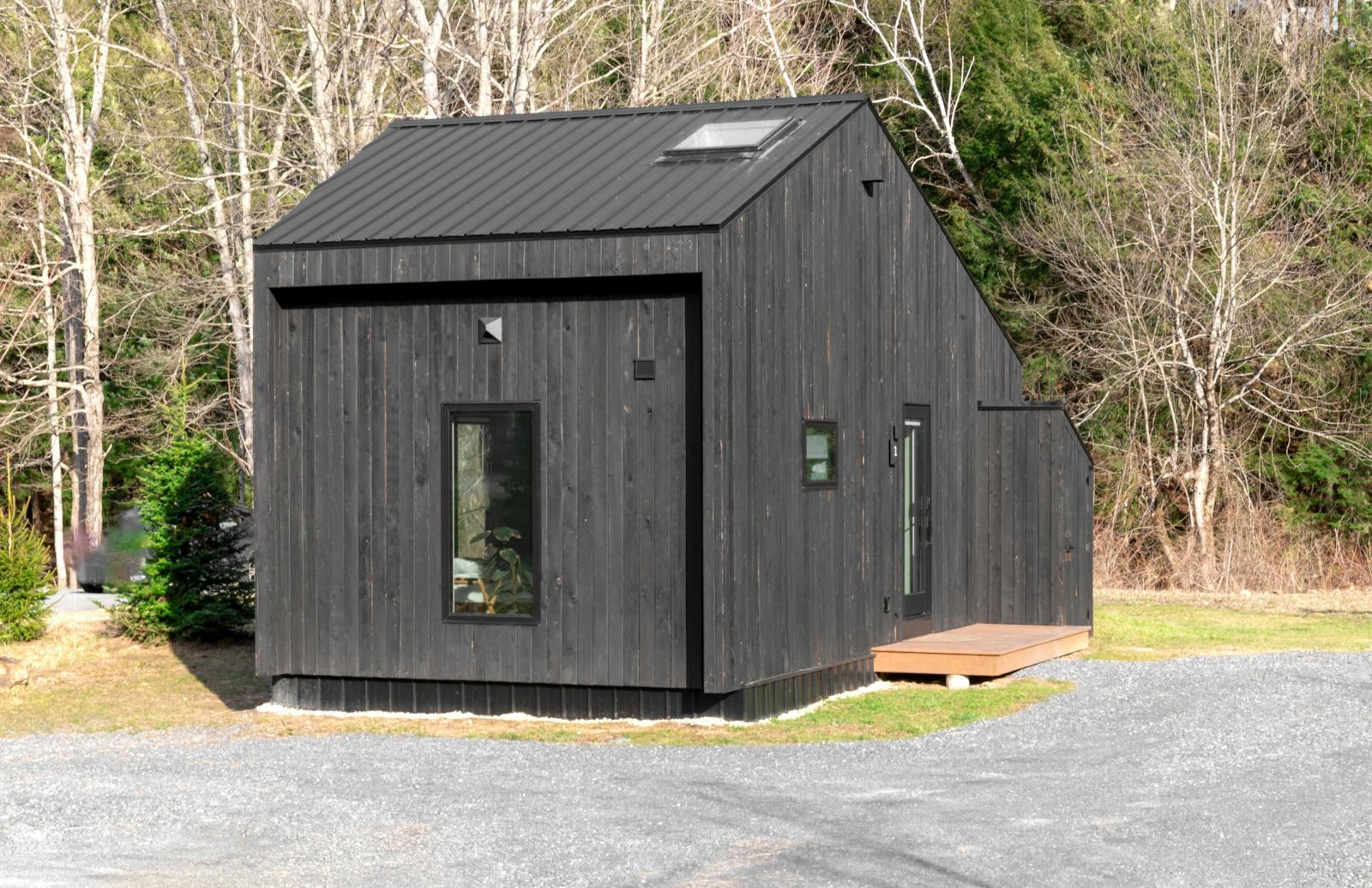
Every accessory dwelling unit (ADU) permitted in California in 2026 must meet the same fenestration rules as a primary residence: Title 24 Part 6 energy code, California Residential Code (CRC) Section R310 egress, and California Building Code (CBC) Section 2406.4 hazardous-location glazing. For Placer and Nevada County ADUs in Climate Zone 11, that means a maximum U-factor of 0.27 and SHGC of 0.23 on every window. For higher-elevation parcels in Climate Zone 16, the U-factor stays at 0.27 with no SHGC limit. Every sleeping-room window needs at least a 5.7-square-foot clear opening (5.0 at grade), a 24-inch minimum height, a 20-inch minimum width, and a sill no higher than 44 inches. Tempered glass is mandatory near doors, in tubs and showers, near floors, and in several other hazardous locations.
I'm John, owner of Colfax Glass. Since SB 1211 took effect in 2025 and California's pro-ADU statutory framework continued to expand through 2026, the Sierra Foothills has seen a quiet wave of backyard cottage builds. We've glazed ADUs in Colfax, Auburn, Grass Valley, and Nevada City over the last 18 months — detached new builds, garage conversions, and junior ADUs (JADUs) carved out of existing primary residences. The window and glass code is the part that catches most homeowners off guard. Plan check and final inspection are unforgiving, and rework after a failed inspection is expensive.
This guide covers every window and glass code requirement for a 2026 California ADU: Title 24 prescriptive ceilings, CRC R310 egress dimensions, CBC 2406.4 tempered-glass triggers, garage-conversion fenestration rules, JADU specifics, and the Placer County permit path. No tax credit promises — federal residential energy credits expired December 31, 2025 under the One Big Beautiful Bill Act. Just the code that gets a backyard ADU through plan check and inspection in 2026.
Quick answer: California ADUs must meet Title 24 Part 6 (U-factor 0.27, SHGC 0.23 in CZ 11; U-factor 0.27, no SHGC limit in CZ 16), CRC Section R310 egress (5.7 sq ft clear opening, 24-inch min height, 20-inch min width, 44-inch max sill), and CBC 2406.4 tempered-glass requirements in hazardous locations. SB 1211 (effective 2025) raised allowed unit counts on multifamily lots but did not relax window or glass code. Get a free ADU window code review.
Does Title 24 Apply to ADUs?
Yes. Title 24 Part 6 applies to every newly conditioned space in California, and an ADU — by definition — is conditioned living space. The 2025 California Energy Code, effective January 1, 2026, treats new detached ADUs as new construction (CF1R-NCB), garage-to-ADU conversions as additions of conditioned space (CF1R-ADD), and JADUs carved out of an existing main house as additions or alterations depending on the scope (CF1R-ADD or CF1R-ALT-02).
The practical effect is the same as on a primary residence. Every window must meet the prescriptive U-factor and SHGC ceilings for the climate zone, every NFRC label must stay attached until final inspection, and every project files a CF1R compliance form with the building permit (California Energy Commission, 2025). The performance compliance path is available — typical for ADUs with view-oriented designs that push prescriptive limits — but most stock-size ADU windows from name-brand vinyl, fiberglass, or composite product lines hit the prescriptive ceilings without modeling.
For a deeper walk-through of how the 2026 code reads for a Placer County permit, see the Title 24 window compliance guide for Placer County. The energy code rules for an ADU are identical to the rules for a primary residence in the same climate zone — what changes is the form (CF1R-NCB vs CF1R-ALT-02) and whether area-weighted fenestration limits apply.
Additions of new conditioned space, including new ADUs, also face area-weighted glazing limits under Title 24 Section 150.1(c). Total fenestration area in the ADU cannot exceed 20 percent of the conditioned floor area without performance-path tradeoffs. A 600-square-foot ADU is therefore allowed up to 120 square feet of total window and door glazing under the prescriptive path. Most reasonable backyard ADU designs come in well under that limit; view-heavy designs can hit it.
- New detached ADU: CF1R-NCB (new construction) + Title 24 area-weighted glazing rules
- Garage-to-ADU conversion: CF1R-ADD (newly conditioned space) + envelope upgrades to wall and ceiling assemblies
- JADU within existing house (no new conditioned area): CF1R-ALT-02 if windows are altered, no envelope addition required
- Detached ADU added to existing footprint (e.g. attached ADU): CF1R-ADD if conditioned space increases
- Manufactured ADU on permanent foundation: still subject to Title 24 in California, despite federal HUD overlap
ADU Egress Window Requirements: CRC Section R310
Every sleeping room in a California ADU — by code, that's any room intended for sleeping, whether labeled bedroom, loft, or den — must have at least one operable emergency escape and rescue opening (EERO) that meets California Residential Code Section R310. Plan check enforces this strictly. ADUs that are otherwise code-compliant on energy still get red-tagged at final if a sleeping-room window fails egress.
The R310 dimensions for a 2026 California ADU are: a clear (unobstructed) opening of at least 5.7 square feet, with a minimum opening height of 24 inches and a minimum opening width of 20 inches (California Residential Code, 2025). Grade-floor openings — where the bottom of the opening is no higher than the grade outside — qualify with a reduced 5.0-square-foot clear opening. Whether an opening counts as grade-floor comes down to the finished exterior grade, and that gets locked in when the ADU pad is cleared and graded well before the window schedule is final — worth confirming the grades with your earthwork contractor while sizes are still editable. The sill height (finished floor to bottom of clear opening) cannot exceed 44 inches. The opening must be operable from inside without keys, tools, or special knowledge.
This usually rules out small awning windows and forces a casement, single-hung, or sliding window in any sleeping room. A 24x36-inch single-hung window does not pass — even though the rough opening looks fine, the operable sash only opens half the window, leaving 24x18 = 3 square feet of clear opening, well under the 5.7 minimum. We've replaced more failed-egress sleeping-room windows in Sierra Foothills ADUs than any other type of code-driven correction. The fix is a wider casement or a much larger single-hung — typically a 30x60 single-hung, a 32x48 casement, or a wider slider.
For a deeper guide to egress dimensions and which window styles pass, the California egress window requirements guide walks through the math on every common window style. The R310 rule is the same for an ADU as for a primary house, but ADU layouts are tight and homeowners often try to save money on small windows for sleeping rooms. That's the trap.
Pro tip: design every sleeping-room ADU window for casement or single-hung egress before you order, not after. Ordering a 24x36 window because it fits the design wall is the most common rework I see on ADU final inspections. Spec a 30x60 single-hung or a 32x48 casement on every sleeping room from day one.
| Window Style | Typical Size | Clear Opening (sq ft) | Passes R310? |
|---|---|---|---|
| Single-hung 24x36 | 24w x 36h | ~3.0 | No |
| Single-hung 30x60 | 30w x 60h | ~5.8 | Yes |
| Casement 32x48 | 32w x 48h | ~9.5 (full sash open) | Yes |
| Slider 60x36 | 60w x 36h | ~6.0 | Yes (grade floor) |
| Awning 36x24 | 36w x 24h | ~3.0 | No |
| Fixed picture | Any size | 0 | No (not operable) |
Tempered Glass Requirements: CBC Section 2406.4
California Building Code Section 2406.4 lists the hazardous locations where safety glazing — typically tempered or laminated glass — is required. The list is the same for ADUs as for primary residences, but ADUs have small footprints and a higher density of code-triggering locations than the average house. Plan check now reviews glazing-hazard compliance on every ADU permit.
Tempered glass is required in any glazing within 24 inches of a door (horizontal arc), in glazing within 60 inches of any walking surface adjacent to a tub or shower (regardless of height), in glazing where the bottom edge is less than 18 inches above the finished floor and the top edge is more than 36 inches above (and the panel exceeds 9 square feet), and in glazing along stairs and ramps (California Building Code, 2025). The tempered-or-laminated-vs-annealed decision is made before the window is ordered, because tempered glass cannot be cut or modified after manufacture.
The locations that catch ADU homeowners off guard are bathroom windows over a tub or shower, kitchen windows that double as a backsplash zone, sliding glass patio doors and adjacent sidelights, and any glass within 24 inches of an entry door. We always spec tempered glass for any ADU window with a sill below 18 inches, every bathroom window, every patio door system, and every transom or sidelight near an entry. The price difference is roughly $40 to $80 per window for a tempered glass package versus annealed.
For a deeper comparison of tempered vs laminated glass and where each is appropriate, the tempered vs laminated glass guide breaks down both safety glass types. A small note: in some bedroom egress applications, laminated glass over tempered is preferred because tempered glass shatters into small pebbles when broken — fine for safety, but in an emergency egress, the broken pebbles can carpet the inside floor and complicate the actual escape. Code allows either; experienced glaziers think about both ways.
- Within 24 inches of any door (entry, patio, interior to garage): tempered required
- Within 60 inches of a tub, shower, or bath area: tempered required regardless of height
- Sill below 18 inches with panel over 9 sq ft and top edge above 36 inches: tempered required
- Glass on stairs, ramps, or landings within 36 inches: tempered required
- Sliding glass doors, French doors, sidelights: tempered required (typically dual-tempered)
- Windows facing pools, spas, or hot tubs within 60 inches: tempered required
ADU Climate Zones in Placer and Nevada County
Placer County and Nevada County both span Title 24 climate zone boundaries, which means an ADU on one parcel might be in CZ 11 and another a few miles up the hill might be in CZ 16. The energy code requirements and the SHGC rules differ. ADU plans submitted with the wrong climate zone assumption fail plan check on energy compliance.
In Climate Zone 11 — Colfax, Auburn, Roseville, Rocklin, Loomis, Grass Valley, the lower portion of Penn Valley, the western half of Nevada City — the rules are U-factor 0.27 and SHGC 0.23. Hot inland summers dominate the energy load, so blocking solar gain through the glass matters more than collecting passive solar heat in winter. Every Colfax-area ADU we glaze gets a low-solar-gain Low-E coating like Milgard SunCoat MAX, Pella AdvancedComfort Low-E, or Andersen SmartSun.
In Climate Zone 16 — Alta, Dutch Flat, Baxter, Soda Springs, Norden, North San Juan above 4,000 feet, the high country portion of both counties — the U-factor stays at 0.27 but there is no SHGC ceiling. Mountain ADUs rely on passive solar gain for winter heating, so blocking it would raise heating costs. Milgard PassiveSun, Pella AdvancedComfort High SHGC, or Andersen HeatLock fit this profile. The SHGC values for these glass packages run from 0.40 to 0.55, which would fail in CZ 11 but is perfectly legal in CZ 16.
The zone boundary follows elevation contours, not mailing zip codes. The official line runs roughly along the 4,000-foot contour. We've seen Colfax-zip parcels in CZ 16 and Alta-zip parcels in CZ 11. Confirm with the county building department or the California Energy Commission climate zone search tool before specifying glass packages for an ADU.
| Climate Zone | Sample Areas | U-Factor Max | SHGC Max | Typical Glass Package |
|---|---|---|---|---|
| CZ 11 (Inland Foothills) | Colfax, Auburn, Grass Valley, Penn Valley, Roseville | 0.27 | 0.23 | Milgard SunCoat MAX, Pella AdvancedComfort Low-E |
| CZ 16 (Mountain) | Alta, Dutch Flat, Soda Springs, Norden, North San Juan high country | 0.27 | No limit | Milgard PassiveSun, Pella AdvancedComfort High SHGC |
Garage Conversion ADUs: A Special Case
Converting an existing detached garage into an ADU is one of the most popular Sierra Foothills ADU paths, and it has the trickiest fenestration rules. The garage was unconditioned, so converting it to conditioned ADU space adds it to the home's conditioned envelope. Title 24 treats garage conversions as additions of newly conditioned space, which means CF1R-ADD, area-weighted glazing limits, and full envelope code on walls, roof, and floor — not just windows.
Most garages have either no windows at all or a single small awning over a workbench. Converting the garage to an ADU means cutting in new openings to meet the glazing area minimum (Title 24 has both a maximum and an effective minimum for daylight in habitable rooms), egress windows in any new sleeping room, and entry-door requirements. Every new opening triggers structural review for header sizing and shear-wall continuity. Some 1970s and 1980s Placer County garages have to be substantially re-framed before windows can be cut, because the original detached garage was not designed to current shear-wall standards.
The key fenestration choices in a garage-to-ADU conversion are: where to put the front door (replacing the old roll-up garage door entirely versus carving out a smaller opening), where to put sleeping-room egress windows (often the old back wall facing the yard), and how much daylight glazing the kitchen and living area need. Code minimums require that habitable rooms have natural light from windows equal to at least 8 percent of the floor area, with at least half of that operable for ventilation, unless an approved mechanical system is used (CRC R303). Most of our garage-conversion ADUs meet this with a kitchen window, a living room slider, and an egress casement in each sleeping room.
For cost and labor planning, expect garage-to-ADU window scope to run higher than a comparable new build. The new build can have its window openings framed to size from day one. The conversion has to cut into existing walls, re-frame headers, weather-detail brand-new openings into existing siding, and integrate flashing into older weather-resistive barriers. Add 15 to 25 percent to the typical ADU window scope budget for a garage conversion.
Pro tip: if your garage was built before 1980 in the foothills, get a structural engineer to look at the wall framing before you spec windows. We've had multiple Colfax garage conversions where the original garage had inadequate shear-wall length for current code, and adding new window openings made it worse. The fix — sometimes a full perimeter re-framing — has to happen before the glazing scope is finalized.
JADU Window Requirements: When the ADU Is Inside the House
Junior accessory dwelling units (JADUs) are ADUs carved out of the existing primary house — typically converting a master suite, an attached garage, or a daylight basement into a self-contained unit with kitchenette and bathroom. State law caps JADUs at 500 square feet. The window requirements depend on whether you're adding new openings or working with what's already there.
If you're using existing windows in their existing locations, with no enlargement and no new openings cut, Title 24 generally treats the JADU as an alteration rather than an addition. CF1R-ALT-02 applies. The existing windows do not have to be replaced unless they're being altered as part of the project — the code does not require like-for-like upgrades on windows the project doesn't touch. However, every sleeping room in the JADU must still have an R310-compliant egress window. If the existing window in that room doesn't pass, you have to enlarge or replace it.
If you're adding new openings — a new bathroom window where there was none, a new kitchenette window, a new entry door with sidelights — those new openings file under CF1R-ALT-02 with the prescriptive 0.27 U-factor and applicable SHGC. They also count against any envelope-area calculations for the project. The new entry door, often required for JADUs to have a separate exterior entrance, typically falls within 24 inches of a sidelight or transom, which means tempered glass under CBC 2406.4.
The most common JADU window failure I see is on basement and garage-attached conversions where the existing 24x18 window worked fine for storage but does not pass R310 egress for a sleeping room. The fix is cutting the rough opening larger and installing a wider casement or single-hung. That triggers a permit, a CF1R, and structural review of any header changes — so a project that started as a simple JADU conversion turns into a substantial fenestration alteration. Plan for this from the start; the rework cost on an unpermitted enlargement caught at final inspection is brutal.
- Existing windows in unaltered locations: no Title 24 trigger, no CF1R required
- New windows or openings: CF1R-ALT-02, prescriptive Title 24 ceilings apply
- Every sleeping room: R310 egress required regardless of whether window is new or existing
- New separate entry door: typically triggers tempered glass on adjacent sidelights
- Daylight basement JADUs: existing small windows almost always fail R310 and must be enlarged
ADU Window Costs in Placer and Nevada County (2026)
Window scope on a typical 600-to-800-square-foot detached ADU in the Sierra Foothills runs $4,500 to $9,000 installed for 6 to 10 windows plus a patio slider, depending on product line, climate zone, and tempered-glass count. JADU and garage-conversion scopes vary much more — anywhere from $2,500 for a minor existing-window project to $15,000 or more for a full re-glazing with new openings and structural re-framing.
The drivers of cost are predictable: product line (vinyl is least expensive, fiberglass middle, wood/composite highest), climate zone (CZ 16 mountain glass packages cost slightly more than CZ 11 valley packages), tempered glass count (every tempered window adds $40 to $80), egress sizing (larger casements and single-hungs cost more than smaller stock sizes), and labor for new opening cutting (significantly more than re-framing existing openings). For a deeper cost breakdown by window style and product line, the California window replacement cost guide walks through 2026 pricing.
The other variable is permit fees and CF1R authoring. Placer County permit fees for an ADU window scope run $300 to $600 as part of the broader ADU permit. Nevada County runs slightly higher, $400 to $800. CF1R authoring through CEC software (EnergyPro or CBECC-Res) adds $200 to $500 if you hire a third-party energy consultant; most contractors and homeowners can do simple CF1R-ALT-02 forms directly through the CEC online portal at no cost.
For budgeting purposes, allocate roughly 8 to 12 percent of the total ADU project cost to windows and exterior glazing. A $200,000 detached ADU build typically has $16,000 to $24,000 of window and door glazing scope, including the patio slider and entry door system. JADUs and garage conversions can come in lower or higher depending on existing-window reuse versus new-opening additions.
| ADU Type | Typical Window Count | Cost Range (Installed, 2026) | Permit Path |
|---|---|---|---|
| Detached new ADU (600-800 sq ft) | 6-10 windows + slider | $4,500-$9,000 | CF1R-NCB |
| Garage conversion ADU | 5-8 new openings + entry | $5,500-$12,000 | CF1R-ADD |
| JADU within existing house | 0-3 altered openings | $1,200-$5,500 | CF1R-ALT-02 |
| Attached ADU (new addition) | 5-9 windows + slider | $4,000-$9,500 | CF1R-ADD |
| Manufactured ADU on permanent foundation | Pre-glazed | Included in unit cost | CF1R-NCB |
SB 1211 and the Updated ADU Statutory Framework
Senate Bill 1211, effective January 1, 2025, was the most recent major change to California's ADU statutory framework. It raised the allowed unit count on multifamily lots from one detached ADU to up to eight detached units on certain qualifying parcels, plus permitted JADUs in addition. SB 1211 also clarified that local agencies cannot impose objective design standards on ADUs that are more restrictive than those applied to the primary residence. The bill did not change Title 24, R310, or 2406.4 — those remain the floor for all units.
What SB 1211 did do for backyard ADU builders in Placer and Nevada County is reduce friction on parcel-level approvals. ADU permits in 2026 move faster through plan check than they did in 2022, and the building code review on a stock detached ADU is not meaningfully different from a small detached primary residence. The window and glass code is identical: Title 24 prescriptive ceilings, R310 egress, 2406.4 hazardous-location glazing. There is no special ADU-only exception or reduced standard.
SB 1211 layered on top of the existing pro-ADU statutory framework — SB 9, SB 10, AB 2221, AB 1033 — that has been steadily expanding the by-right ADU permit path since 2017. For homeowners considering an ADU in the Sierra Foothills today, the planning-level permits are easier than they used to be. The building code is not. If anything, the 2025 California Energy Code that took effect January 1, 2026 made the prescriptive Title 24 fenestration rules tighter than the 2022 version that preceded it, and CRC R310 and CBC 2406.4 enforcement has tightened across both Placer and Nevada Counties.
For homeowners researching ADU rules, the California Department of Housing and Community Development (HCD) maintains an ADU handbook that summarizes statutory framework. For window and glass code specifically, your authoritative sources are Title 24 Part 6 (energy), CRC Section R310 (egress), and CBC Section 2406.4 (hazardous glazing). All three are state code; both Placer and Nevada Counties enforce them at plan check and final inspection.
The Placer County ADU Permit Path
An ADU permit in Placer County moves through Community Development Resource Agency (CDRA) at 3091 County Center Drive in Auburn, with online submissions through the Placer ePermits portal. ADU permits as of 2026 typically clear plan check in 4 to 8 weeks for a stock detached new build, 3 to 6 weeks for a JADU, and 6 to 10 weeks for a garage conversion. The Title 24, R310, and tempered-glass review happens within this larger plan check cycle.
For window and glass scope, the documents you submit with the ADU permit application are: a CF1R-NCB or CF1R-ADD compliance form (covering Title 24), a window schedule showing every opening with rough size, finished size, NFRC-rated U-factor and SHGC, manufacturer and product line, glass type (annealed, tempered, or laminated), and egress designation; a floor plan showing every room and the window assigned to that room; an exterior elevation showing window placement, sill heights, and egress designations; and manufacturer cut sheets or NFRC label images for every product. Missing any of these in a submission almost always triggers a plan-check correction request.
During construction, you'll typically have a rough-in or pre-drywall inspection (where the inspector checks rough openings, header sizing, flashing, and window installation) and a final inspection (where the inspector verifies CF1R compliance, NFRC labels, R310 egress, and 2406.4 tempered-glass placement). The final is also where the window replacement permit California compliance documentation gets signed off — the CF2R-ENV-01 installer-signed certification.
For inspection scheduling, the Placer ePermits portal handles requests, with typical 1-to-3-business-day lead times. Inspectors group requests geographically; Colfax and Alta projects often get a narrower daily window than Auburn or Rocklin. Plan ahead for inspections and have your CF1R, NFRC labels, and R310 documentation organized — first-pass approval is the goal. Most ADU final inspections in our experience pass on the first visit when the documentation is in order.
- Step 1: Confirm climate zone (CZ 11 or CZ 16) and Fire Hazard Severity Zone classification
- Step 2: Specify every window with NFRC-rated U-factor 0.27 and applicable SHGC
- Step 3: Verify every sleeping-room window meets R310 egress (5.7 sq ft, 24-in min height, 20-in min width, 44-in max sill)
- Step 4: Identify all tempered-glass locations under CBC 2406.4 — doors, baths, low sills, stairs
- Step 5: Generate CF1R-NCB (detached ADU), CF1R-ADD (conversion), or CF1R-ALT-02 (JADU)
- Step 6: Submit ADU permit with complete window schedule, floor plan, elevations, and cut sheets
- Step 7: Pass plan check, install windows with NFRC labels intact
- Step 8: Pass rough-in inspection (flashing, headers, openings)
- Step 9: Pass final inspection (CF1R, NFRC, R310, 2406.4, CF2R-ENV-01)
Common ADU Window Inspection Failures
Placer and Nevada County inspectors see the same handful of ADU window problems repeatedly. Knowing what gets flagged ahead of inspection day is the difference between a one-visit final and a corrections list that drags the project two or three weeks. We've worked dozens of ADU projects through final inspection in the Sierra Foothills and the failure patterns rhyme.
The most common failure is sleeping-room egress. A homeowner picks a 24x36 single-hung for a small bedroom because it fits the design wall, and the inspector measures the clear opening at 3 square feet. Fail. Rework involves cutting the rough opening larger, re-framing the header, ordering a new wider window, and re-flashing — typically $1,500 to $3,500 of extra cost depending on location. Always design sleeping-room egress windows for R310 from day one.
The second is missing tempered glass within 24 inches of an entry door. A patio slider with an annealed-glass sidelight, a kitchen window adjacent to a back door, a transom over an entry that's just under the 24-inch trigger — all common ADU configurations that need tempered. Spec tempered for any glazing within arc reach of any door, even if the architect didn't specifically call it out.
Third is NFRC labels stripped before final. Trim carpenters or homeowners pull the stickers off for a clean look, and the inspector cannot verify Title 24 compliance without either visible labels or a signed CF2R-ENV-01 from the installer. Photograph every NFRC label before the trim crew shows up. Keep the photos with your CF1R submission.
Fourth is product mismatch on the CF1R. A homeowner files for a Milgard Tuscany SunCoat MAX configuration, and the supplier substitutes a similar but slightly different glass package at delivery. NFRC numbers don't match. The CF1R has to be amended and re-submitted, which can be done at final but adds delay. Verify product line and glass package on every window at delivery, before installation.
Fifth is missing flashing or sill-pan integration. Newer code (especially as updated through the 2025 cycle) is unforgiving on building envelope detailing. Inspectors look for sill pans with positive drainage, head flashing integration with weather-resistive barriers, and proper sealant joints. Skip any of these and the inspector will fail it. The retrofit vs full-frame window replacement guide covers proper full-frame flashing and pan integration.
My honest advice: budget $1,000 to $2,000 in your ADU project contingency for window-related plan-check corrections. Even with careful planning, ADU plan check often comes back asking for revised window schedules, additional CF1R documentation, or clarification on tempered-glass placement. Better to plan for it than be surprised.
Can I Use Existing Windows in an ADU Conversion?
Sometimes. A garage-to-ADU or attic-to-ADU conversion can sometimes reuse existing windows, but only if those windows happen to meet current code on the points that apply to the project. The two non-negotiables are R310 egress in sleeping rooms and 2406.4 tempered glass in hazardous locations. Title 24 is more flexible — existing fenestration in an unaltered location is generally exempt from prescriptive U-factor and SHGC ceilings under the alteration rules — but if the project enlarges, alters, or replaces the window, current code applies.
For a garage conversion in Colfax or Auburn, the typical existing windows are a small awning or sliding window for natural light over a workbench. These almost never meet R310 egress (clear opening too small) and rarely meet 2406.4 tempered-glass placement (originally designed for an unconditioned space, not adjacent to the entry door of a new dwelling unit). Most garage conversions therefore replace every existing window during the conversion. For a daylight basement JADU, the same usually applies: existing 24x18 windows do not pass R310 in a sleeping room.
For a master-suite-to-JADU conversion, where the room was already a sleeping room with R310-compliant egress, the existing window typically stays. The Title 24 alteration rules don't trigger replacement of an unaltered window, and the existing R310 egress is grandfathered. The same applies to bathroom windows that meet 2406.4 placement. The CF1R for these projects is CF1R-ALT-02 covering only the new openings (kitchenette window, perhaps a new entry door system) and existing windows are listed as 'unaltered, existing' with no compliance requirement.
For every other configuration, plan to replace existing windows that do not meet current R310 and 2406.4. Title 24 prescriptive U-factor and SHGC apply to any window that's altered, replaced, or installed in a new opening. The decision tree is essentially: does R310 apply? Does 2406.4 apply? Does the project alter the opening? If yes to any, current code applies, and a replacement is usually the right call.
Putting It All Together for Your California ADU Project
A 2026 California ADU window scope is not complicated, but it has multiple code layers that must all be satisfied: Title 24 Part 6 for energy, CRC Section R310 for sleeping-room egress, and CBC Section 2406.4 for hazardous-location safety glazing. Confirm your climate zone (CZ 11 for valley and lower foothills, CZ 16 for mountain elevations). Order windows with U-factor 0.27 and applicable SHGC (0.23 in CZ 11, no limit in CZ 16). Spec every sleeping-room window for R310 (clear opening 5.7 sq ft, 24-inch min height, 20-inch min width, 44-inch max sill). Spec tempered glass everywhere CBC 2406.4 requires it. File CF1R-NCB, CF1R-ADD, or CF1R-ALT-02 depending on whether the ADU is new construction, an addition of conditioned space, or an alteration within existing space.
The exceptions and edge cases are real but limited. SB 1211 changed unit-count rules on multifamily lots, but did not relax window and glass code. Garage conversions add structural and envelope work that simple ADU-permitting talk doesn't always cover. JADUs in existing space sometimes reuse existing windows, but only when those windows already meet R310 and 2406.4. Manufactured ADUs come pre-glazed but are still subject to all three California codes. There is no shortcut around the prescriptive Title 24 path for a backyard cottage in 2026.
This is also where local knowledge changes the project. A Colfax or Auburn glass company that handles ADU permits regularly already knows which Milgard, Pella, Andersen, or Marvin product lines hit 0.27/0.23 in CZ 11, what passes plan check at the Auburn CDRA office, and what the inspector flags on a typical Sierra Foothills ADU final. We've worked through ADU window scopes from quick JADU conversions in Grass Valley to full detached new builds in Colfax and Penn Valley. If you want a project scoped with the code already factored in — no surprises at plan check, no surprises at final — request a free ADU window code review and we'll walk through your scope before the permit application.